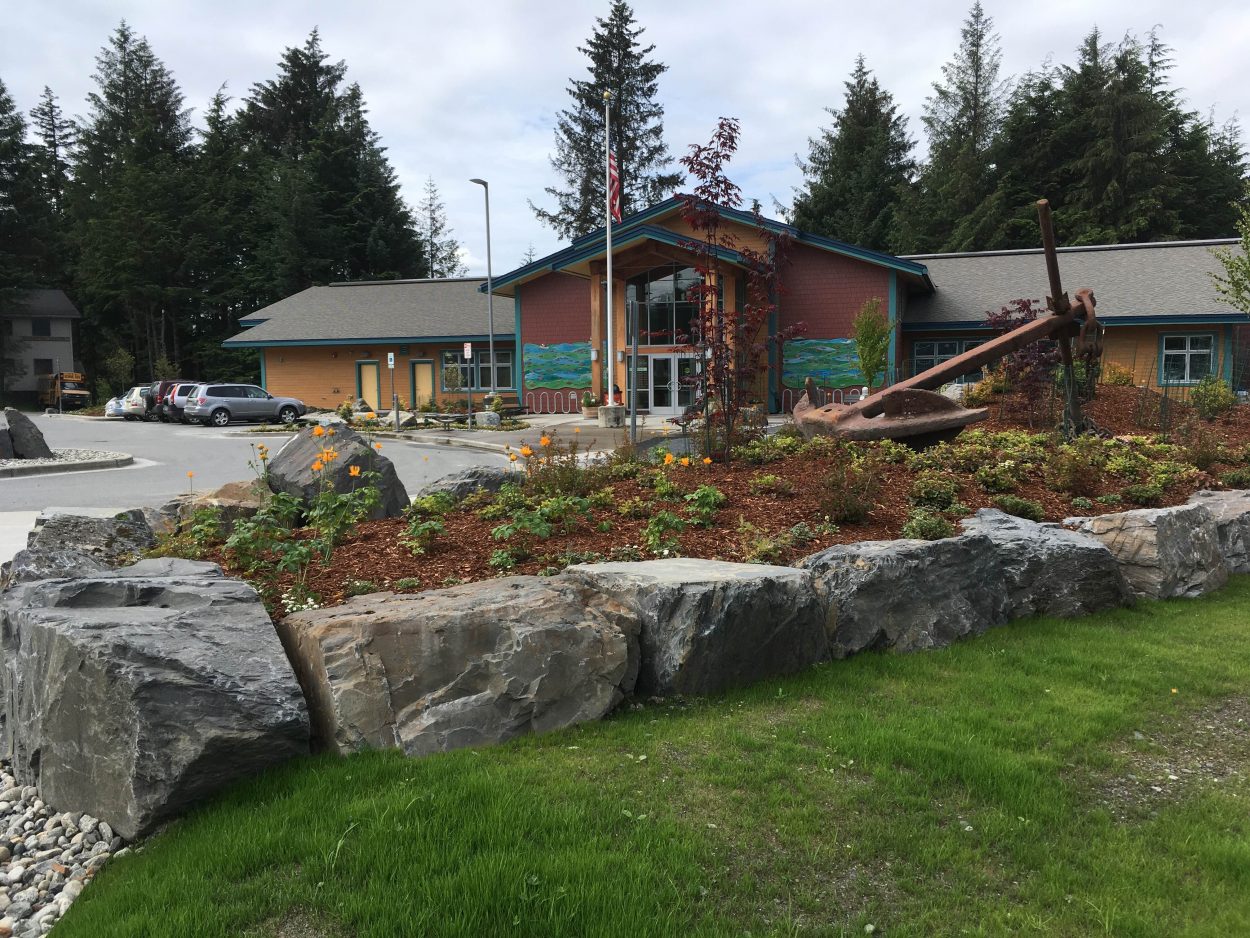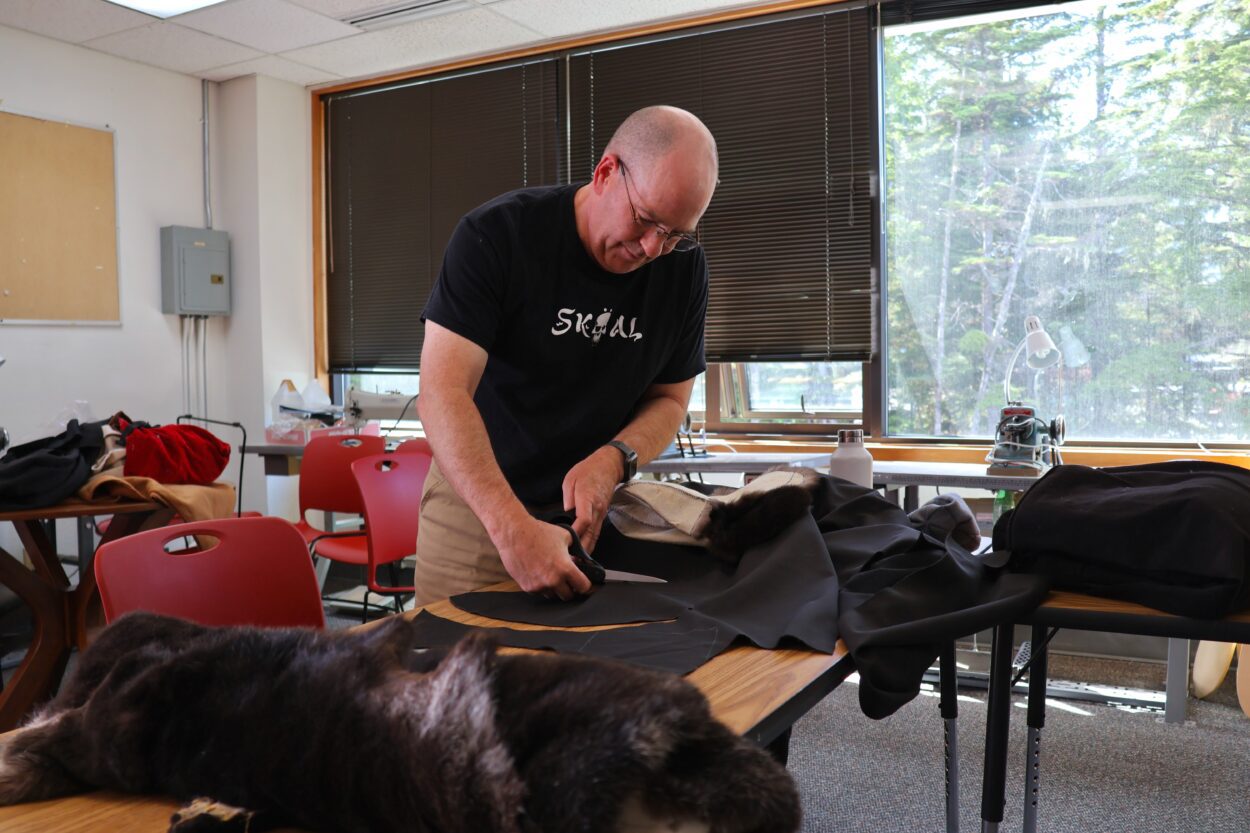
During a three-day workshop from July 25 – 27, a group of students sewed together otter and beaver hides inside the Hallingstad – Peratrovich Building in Petersburg.
Instructor Aanutein Deborah Head came from Craig on Prince of Wales Island to teach the tradition of skin sewing to adult students, showing them how to make hats and scarves out of the hides. The class was organized by the Sealaska Heritage Institute, a nonprofit whose mission is to “advance Tlingit, Haida, and Tsimshian cultures of Southeast Alaska.”
Head has led classes like these around Southeast Alaska for decades now.
“It’s what I was supposed to do in my life,” Head said. “I enjoy it, whether it’s leather and fur, sewing, weaving, [or] spruce root gathering.”
Skin sewing is familiar to some students, like Scott Horchover. It was his fourth time coming to a class, and Head was his third different instructor.
“Everyone … has different techniques, different insights, and ways of approaching challenges,” Horchover said. “So it’s been a joy to learn from different people.”
Horchover sewed together a trapper’s hat from a sea otter hide. Sealaska Heritage Institute provided the sea otter hides, which they said are each worth $450, for the class. The cost of registration was $100 per participant. They also provided beaver hides for “those who do not meet the federal blood quantum requirement.”
Sea otters are federally protected under the Marine Mammal Protection Act. This October, the U.S. Fish and Wildlife Service clarified that anyone who is either at least a quarter Alaska Native or an enrolled member of a coastal Alaskan tribe can harvest sea otters. The sea otter populations in Southeast Alaska have increased in recent years, and now some are calling for population control measures.
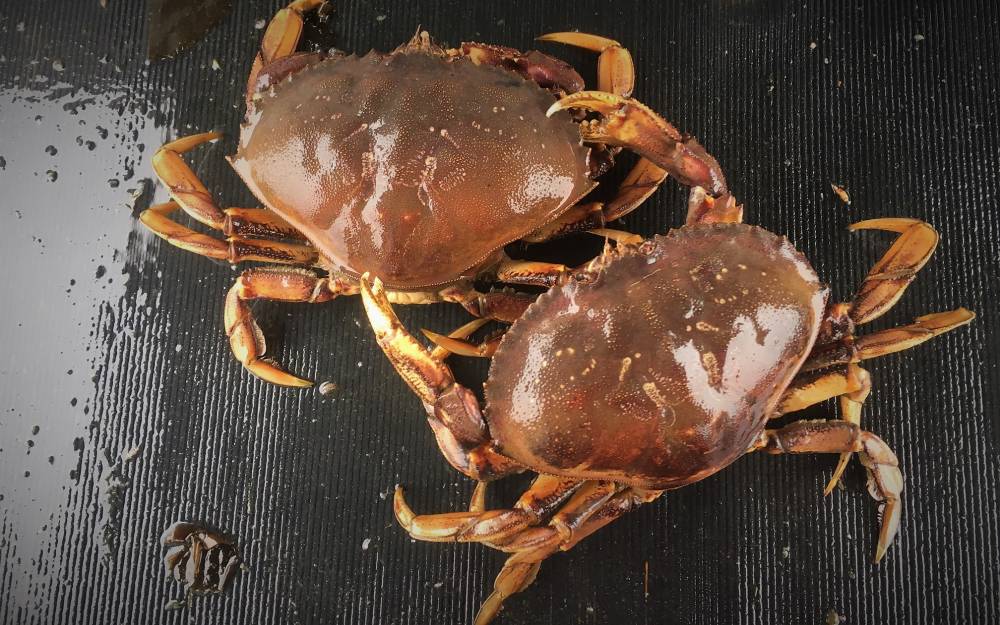
“People, they say, ‘Oh, you know, Scott, you’re part Native. Why don’t you go hunt some, some otters?’” Horchover said. “Take a little stress off of the crustaceans, like crabs, that seem to be diminishing as the otter population is exploding.”
Horchover said he wants to go out and hunt them, but his wife thinks they’re too cute. The otter pelts for this class were all harvested by Head. Harvesting and creating clothing with animal skins is part of a traditional way of life for many Alaska Natives. For Head’s grandmother, it was a means of income, too.
“I remember looking over at her table, and she would be chewing on the fronts of the moccasins that she had tanned herself,” Head said. “I don’t even know if she had a three-bladed needle back then.”
Head used to be an elementary school teacher. After she retired, she shifted to teaching these classes for adults. She said it’s an important demographic because many missed out on Native cultural education.
“In the early 60s, things weren’t taught. Things were still shoved into closets for many different reasons,” Head said. “I’ve heard so many comments in the last probably five years of the power that it’s given to various individuals that they didn’t realize they possessed, and how healing it can be.”
Boarding schools suppressed and even punished Alaska Natives throughout the 20th century for using their Indigenous languages and culture. In recent years, interest has surged among Alaska Natives hoping to reconnect with their culture.
Head said she hopes Petersburg will continue teaching and learning skin sewing from each other, even once she returns to Craig.
“You don’t need Debbie Head to be here for you to have a class,” she said. “You have a lot of people within your communities.”