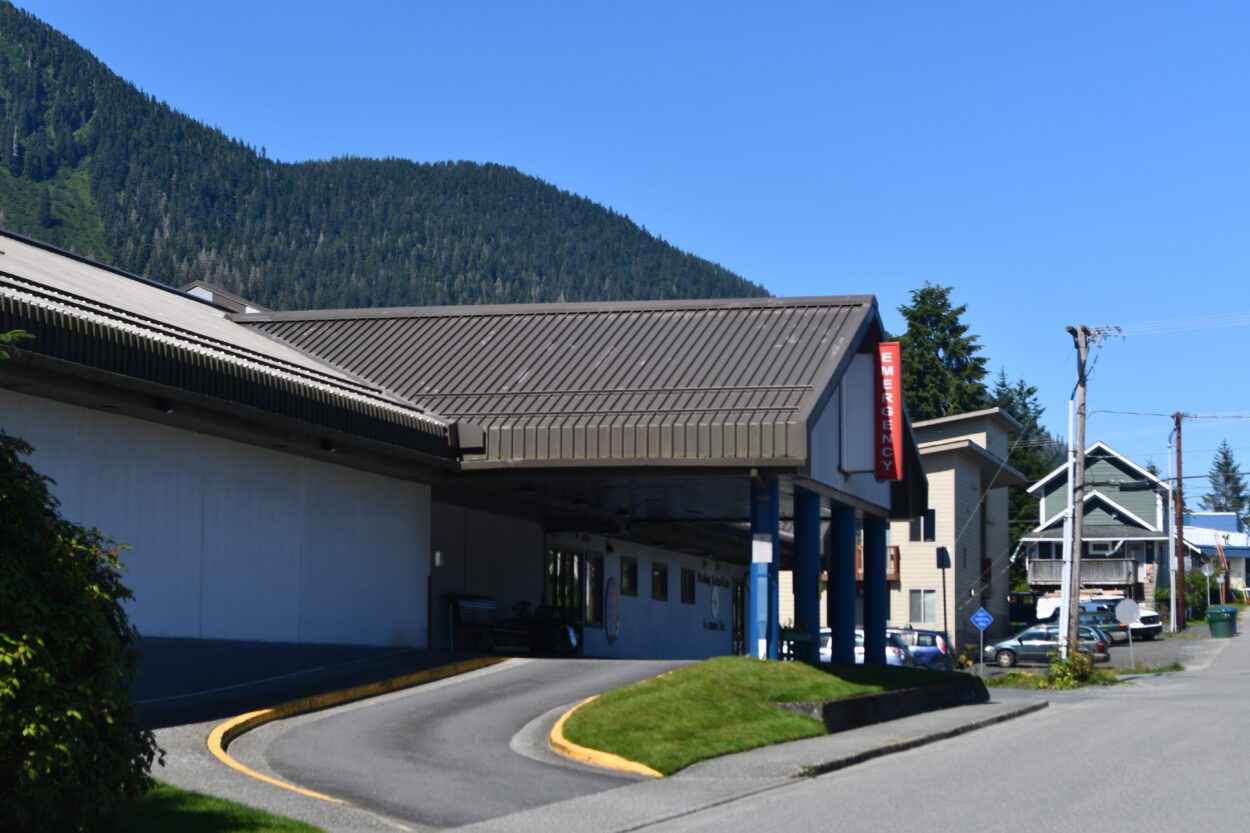
When Dr. Kamey Kapp visits Petersburg, she can be found in the specialty clinic at the Petersburg Medical Center. Kapp uses the space to provide optometry appointments to local residents.
But Kapp doesn’t live anywhere near Petersburg. Her optometry practice is based in Nome, where she serves 15 villages in the Norton Sound region.
“Only one of them is accessible by anything other than plane, and it’s only during the summer months there’s a road there,” said Kapp. “The rest of them, we fly in small planes or helicopters to get to.”
Kapp has been practicing optometry in Alaska since 2008. She first started at a clinic in Bethel, and she’s practiced in rural areas ever since.
“I’ve always done village travel as part of my practice,” she said. “I think I would honestly be bored to tears if I had to do the same location every single day.”
And every other month, Kapp flies over 1,000 miles to provide eye care in Petersburg, where there is no local optometrist. Kapp said her services improve the quality of life in places that don’t have an eye doctor full-time.
“I have villages that I’ve been going to since 2008, and I’m not giving them up to anyone else, because they’re my people,” she said. “We like that continuity, we think that it really builds a better level of trust. We feel like better care is provided when the same person is taking care of people at any given time.”
Petersburg Medical Center CEO Phil Hofstetter agrees.
“We don’t want to start a specialty only for six months, and then they’re not there,” he said. “We want to make sure there’s continuity of care within our system, so that patients have the ability to go with a specialist and continue on in that way.”
Visits from specialists like Kapp mean residents can get care in Petersburg instead of flying out of town. That can save residents money while keeping them at a hospital they already know. But for rural hospitals, finding specialists — and making sure they keep coming back — is an ongoing challenge.
In addition to Kapp, the hospital regularly hosts a dermatologist and an ear, nose and throat specialist at the clinic. Hofstetter said when the hospital is considering a new specialist, they have to make sure they will keep coming back. That can be a big ask.
“It’s really complicated,” he said. “It’s very hard to find specialists that are able to come in […] and travel in and out on a consistent basis.”
Kelly Zweifel is the clinic manager at the hospital. She said that even after the hospital finds a specialist, it takes a whole team of departments to make sure the clinic is a success.
“There’s a lot of challenges going in, and pre-work to get them ready to go,” she said.
Depending on the provider, the hospital may help patients schedule and check in. They may also provide specialists with necessary tools. That can be a lot of work, but Zweifel said it’s worth it.
“I think it’s always great when people don’t have to travel for services,” she said. “Some of the things are simple everyday things that you’re like, ‘Oh, I don’t want to go spend $1,000 to fly here and do this.’”
A specialist doesn’t always have to be face-to-face to help patients. While telehealth can’t replace certain types of appointments, Hofstetter said the technology has made it easier to connect Petersburg residents with providers.
“That’s been a game changer for a lot of different specialties,” he said.
For example, Petersburg doesn’t have a radiologist, so the hospital will send imaging scans to a group in Oregon. The hospital also regularly connects patients to a psychiatrist using online appointments.
It’s a complicated process, but Hofstetter said he wants to bring more specialty clinics to Petersburg. He also wants to bring back services the hospital used to provide, like colonoscopy clinics.
Hofstetter, Zweifel and Kapp all agreed that providing this kind of specialty care makes a big difference in rural areas.
The Petersburg Medical Center will have three different specialists visiting in September. An ear, nose and throat doctor will be in Petersburg starting Sept. 2, a dermatologist will visit from Sept. 15-19, and Dr. Kapp will return for eye appointments from Sept. 29-Oct. 8.