The Supplemental Nutrition Assistance Program (SNAP) is a federal program that helps low-income households pay for groceries. In the Petersburg Borough, 12.7% of the population relies on SNAP benefits, according to Census data from 2022 — that’s roughly 430 participants in the small town of 3300.
But a month into the government shutdown, SNAP recipients learned that the debit cards they use to buy goods wouldn’t be refilled, starting Nov. 1.
Just a few days into the delays, KFSK’s Olivia Rose sat down with Ashley Kawashima, president of Humanity in Progress (HIP) — a local nonprofit that serves the basic needs of community members, like clothing and food.
Kawashima said there’s already been a sharp increase from the existing need, and HIP anticipates it will give out around triple the amount of food this month than it usually does if the trend continues.
Listen here:
Food insecurity was already present in Petersburg before the record-breaking government shutdown resulted in less federal support. Local organizations throughout town are working to meet the rising needs in the community.
Resources
Ready-to-eat grab and go food bags are available at HIP (208 Haugen Drive). Kitchen bags, for people who have a place to cook, will be handed out at HIP from 11 a.m to 1 p.m. on Sunday, Nov. 9 and Nov. 23. HIP will also collect food donations during those distribution dates.
HIP’s donation match program for the Petersburg School District food and hygiene pantry can be found online here; monetary donations can go toward the district’s pantry or general food assistance. People interested in volunteering for HIP can contact the nonprofit through its website, PSGhumanity.org.
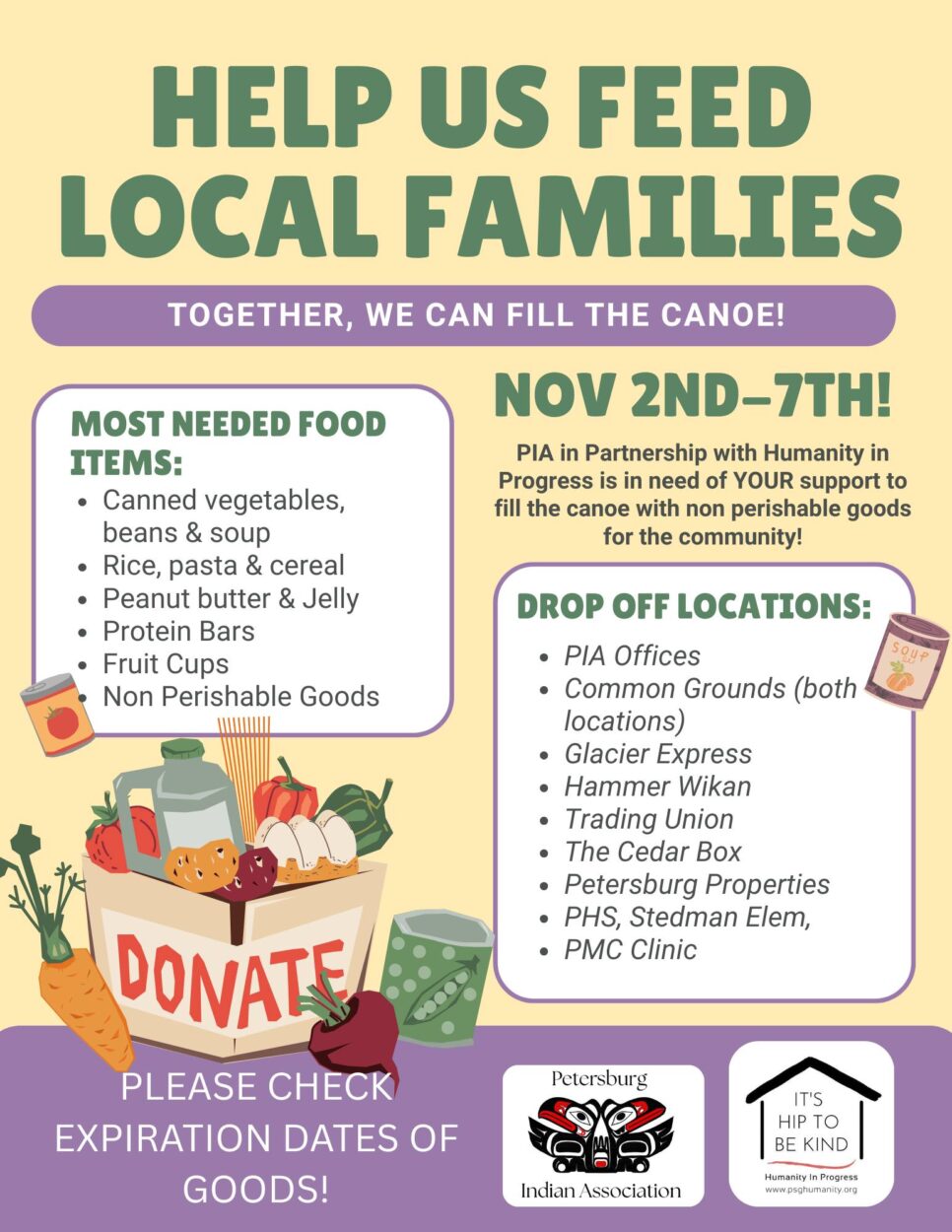
The week-long food drive through Petersburg Indian Association (PIA) ends Friday, Nov. 7. Collection totes for non-perishable goods are set up at several local stores and offices.
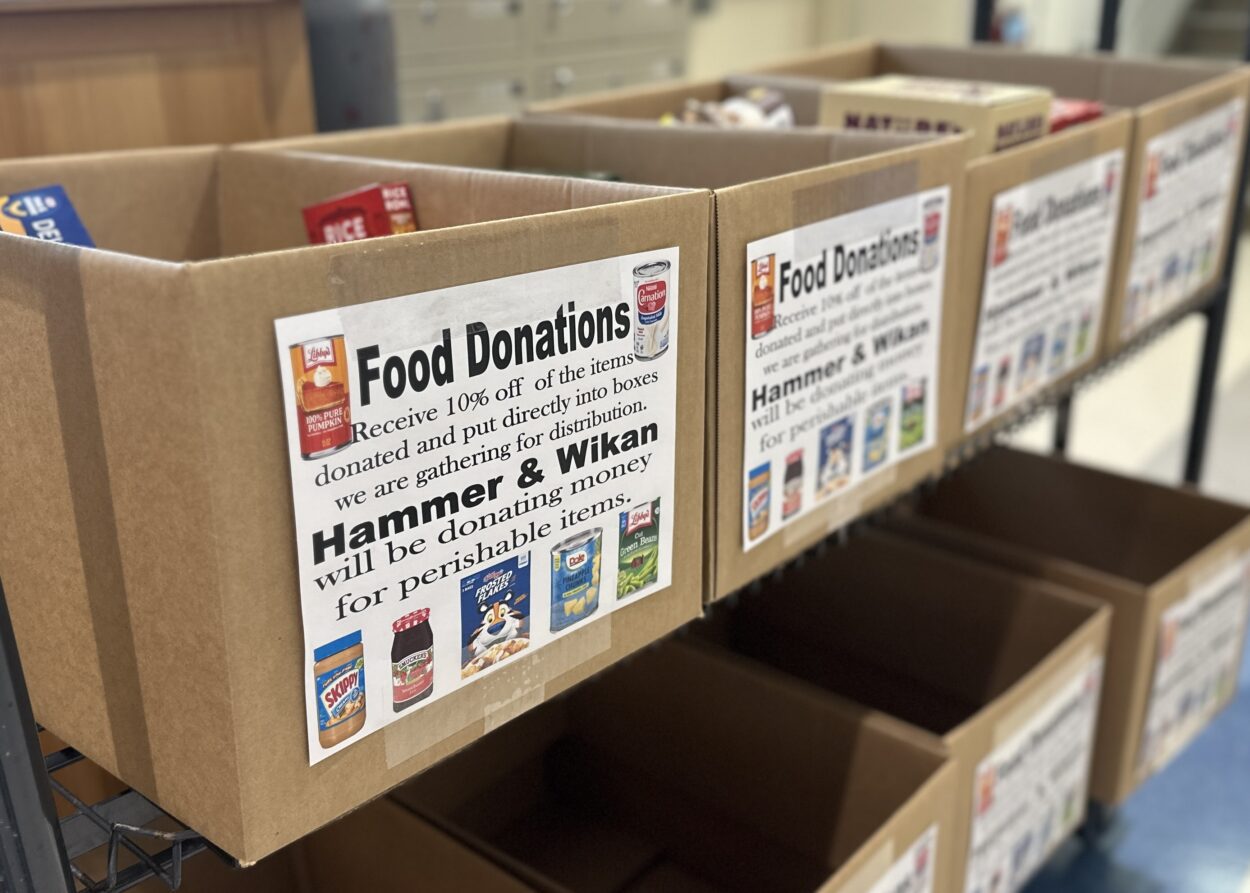
Hammer and Wikan is organizing another food drive in partnership with PIA, HIP, the Salvation Army, the Petersburg Borough and the Chamber of Commerce. Non-perishable food donations can be dropped off at the Parks and Recreation lobby this Saturday, Nov. 8, during regular open hours (7 a.m. to 9 p.m.). Donation boxes are also set up at the Hammer and Wikan grocery store.
The Salvation Army is also accepting food donations. To set up a time with them to pick up food bags, call 907-512-6758. The regular commodities distribution is slated for Nov. 28; sign up for Thanksgiving food boxes by Nov. 14, for distribution on the 24th.
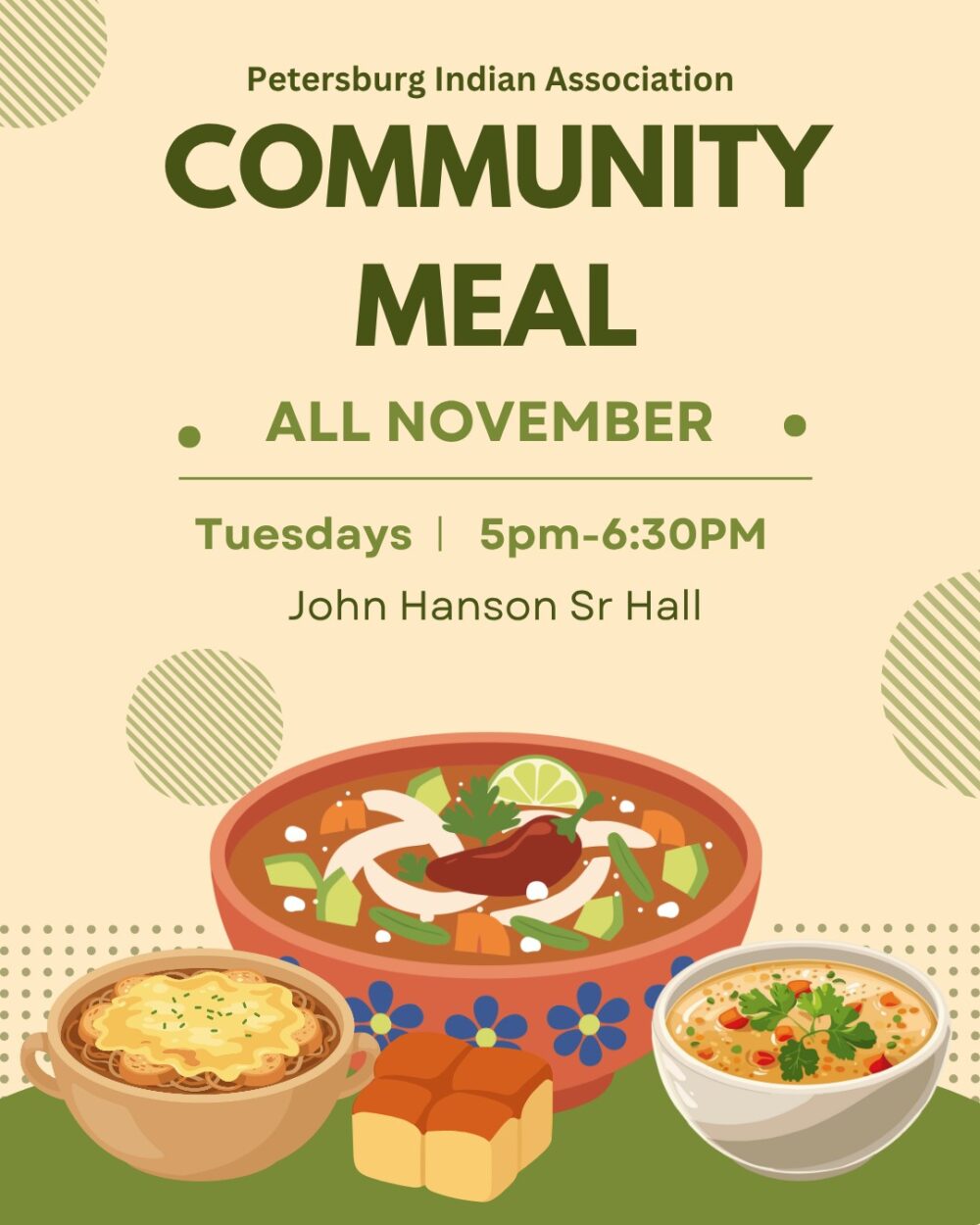
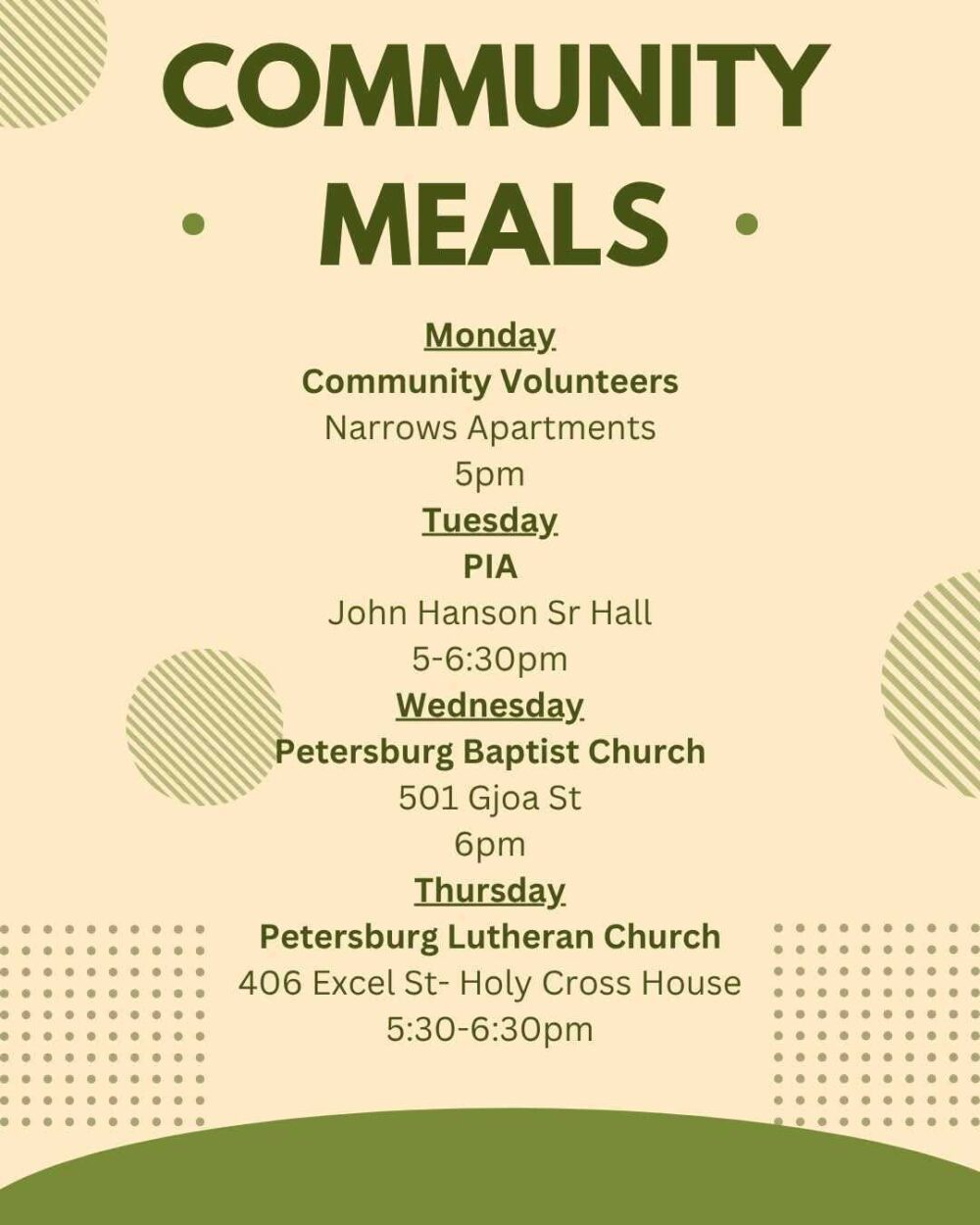
PIA is hosting community meals every Tuesday in November at the John Hanson Sr. (ANB) Hall, from 5–6:30 p.m. Contact PIA at 907-772-3636 for more information.
Other free community meals include Mondays at 5 p.m. at the Narrows Inn, Wednesdays at 6 p.m. at the First Baptist Church, and Thursday evenings from 5:30 to 6:30 at the Holy Cross House of the Lutheran Church.
The project connect resource fair happens in January; Kawashima says HIP is collecting various donated items starting Nov. 12.
SNAP is federally funded, and administered through the state. For questions about your benefit amount, the state SNAP benefits number is 1-888-997-8111.
Transcript

KAWASHIMA: We are reading things that there is a possibility that funds will become available, you know, through a couple of different sources, for the SNAP benefits — that’s already delayed. It’s already been five days, and … that’s a really long time to go without having funds to purchase food. And so we’re really just trying to fill those gaps right now as best we can.
REPORTER: And right now, HIP is working with other partners in the community. Is that right?
KAWASHIMA: Yeah. So we’ve had a lot of organizations reach out to us and individuals just about what need we’re seeing and how they can help and things like that. It’s been really great.
Right away, you know, we were working on a plan to get more food coming our way and on our shelves, just so we could be prepared for the extra need. We’re handing out extra food bags. Right now, we kind of have a budget to make about 600 of those a month. And we’ve already seen a huge uptick in people coming and needing those bags just this month already. So we’re anticipating, you know, doubling or tripling that need.
And PIA (Petersburg Indian Association) is helping with a food drive. They’re doing donation spots all over the community, and those canned goods and non-perishables will be donated to HIP.
And then we’re also partnering, HIP is partnering with the [Petersburg] school district. We’re trying to help them bolster their pantry as well for food and hygiene items, because there’s a lot of school age students who are looking for basic needs right now also, and who have been over the past couple months. I mean, outside of just this month, cost of purchasing essential items is expensive. And so humanity in progress is running a donation match program on our Donor Box. So we’re hoping to raise about $3,000 for them, if possible.
REPORTER: To basically purchase the goods, to stock the food and hygiene pantry at PSD?
KAWASHIMA: Yeah. And, you know, HIP, like, we know we can’t meet all the need. We’re just doing what we can. And so we really want to support other entities and organizations that are, you know, trying to do this work as well.
REPORTER: Yeah, and support folks in the community who rely on these resources, especially during a time like now. I’m wondering your thoughts on, like, does this stop with SNAP? Or is this a bigger issue than just the SNAP delays?
KAWASHIMA: So we were already experiencing working with a lot of participants that were having issues with SNAP.
I’m also a behavioral health clinician at the hospital, so I work with a lot of participants there who are trying to access basic needs support as well. And you know, with us trying to call and help them advocate for those resources, we’ve run into a lot of roadblocks that really don’t make sense, and get a lot of mixed information that makes it very challenging to navigate the public assistance system.
REPORTER: What kind of roadblocks?
KAWASHIMA: Them saying, like, they didn’t get things that we already sent in. And that now you have to submit a new application, but now they’re not going to back-pay you for those things, because you have to submit a new application — but, I mean, we already turned one in, and so it’s not really [the applicant’s] fault. Or saying that they had change of income when they didn’t, you know, different things like that.
Or just not being able to get through. So if you wait on hold a lot of times after four hours, it’ll just hang up on you, and then you have to call again.
REPORTER: Four hours on the phone with the state.
KAWASHIMA: Yes.
So it’s just been a lot of hoops to jump through and frustrations during a time that is already just like really hard for people. So again, that’s when HIP kind of tries to swoop in and do what we can, and other organizations are doing the same.
There are so many people in our community who live paycheck to paycheck. And a lot of them are working jobs that don’t have benefits, and so if they’re sick for a few days, then they go without pay. So without those funds, it’s just so easy to fall behind and fall on hard times.
REPORTER: What are you hearing from folks that you interface with in this situation?
KAWASHIMA: Mostly, we just hear a lot of thank yous, and a lot of people who you know have really tried their best to make ends meet before reaching out to us. You know, we have a lot of conversations with people who feel just very nervous to reach out for help. But a lot of people, you know, they’re really just trying to decide between paying rent and utilities, and buying food for themselves and their families — and that’s such a tough position to be in.
REPORTER: What is the main message that you would like to say as someone who’s involved with trying to meet the needs in the community, the basic necessities for people here in Petersburg?
KAWASHIMA: I think with everything going on right now, there can be a lot of conversations about different sides of who’s utilizing public assistance, and who should qualify, and all those types of things. And for us, it’s not really about that. It’s about food insecurity, and it’s about people that are hungry, and it’s about making sure that, as much as we’re able, that we do not have community members that are going without food.