Listen here:
Dozens of elders and youth from around Alaska learned how to process a seal and discussed the importance of the marine mammal to coastal cultures at the Elders and Youth Conference held in Anchorage last month.
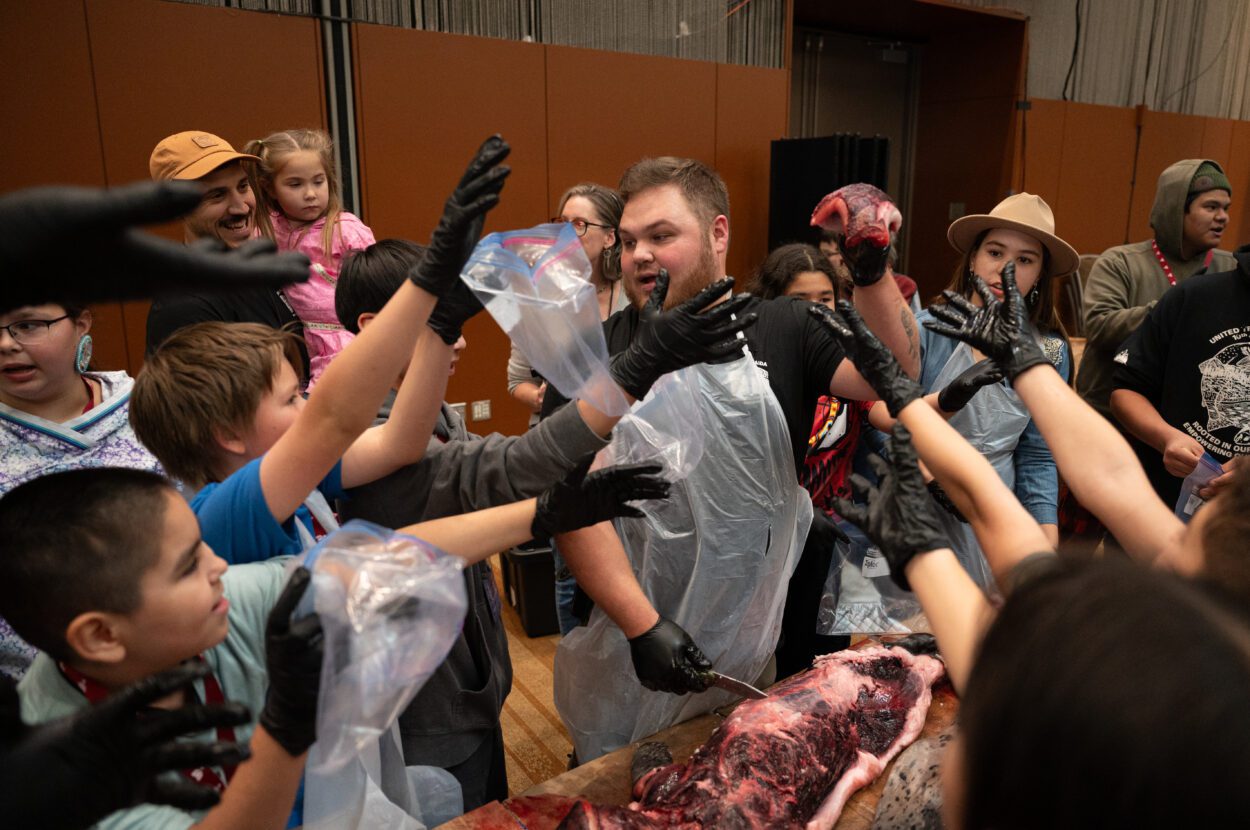
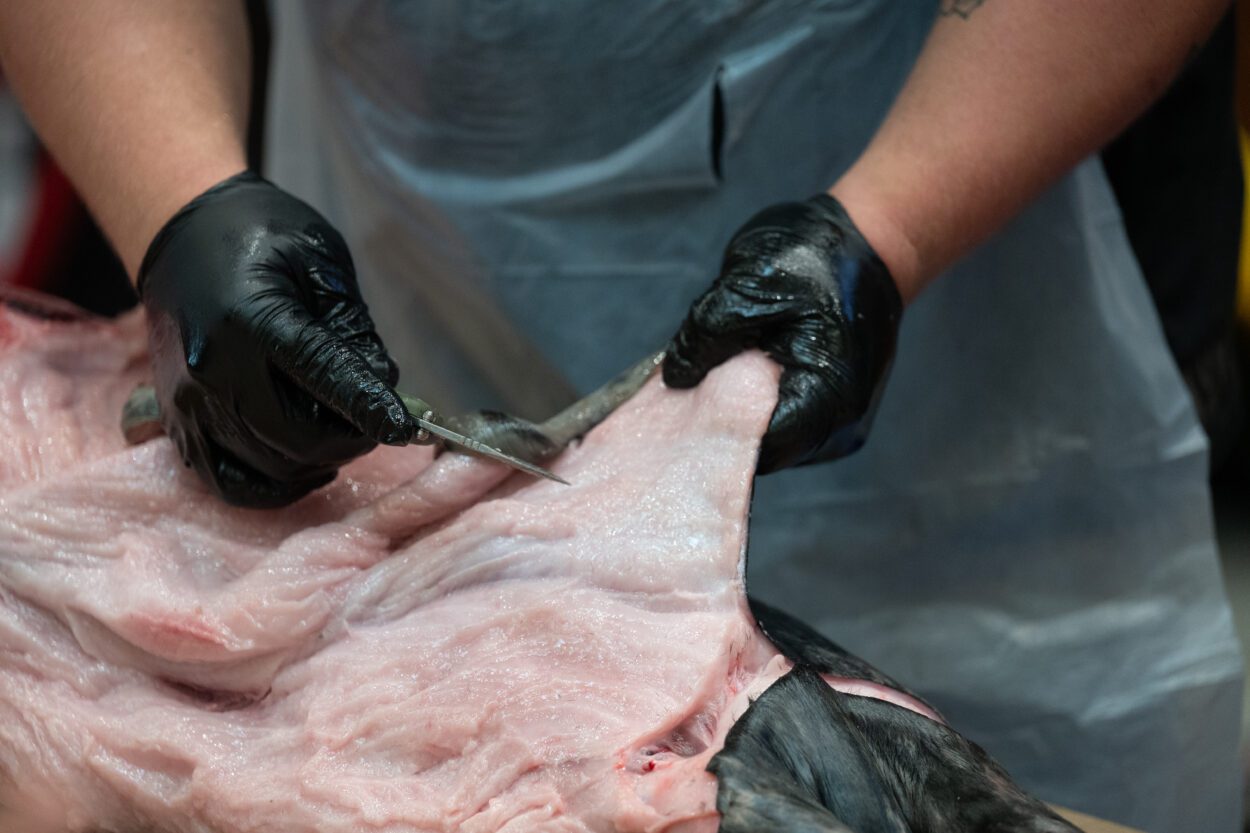
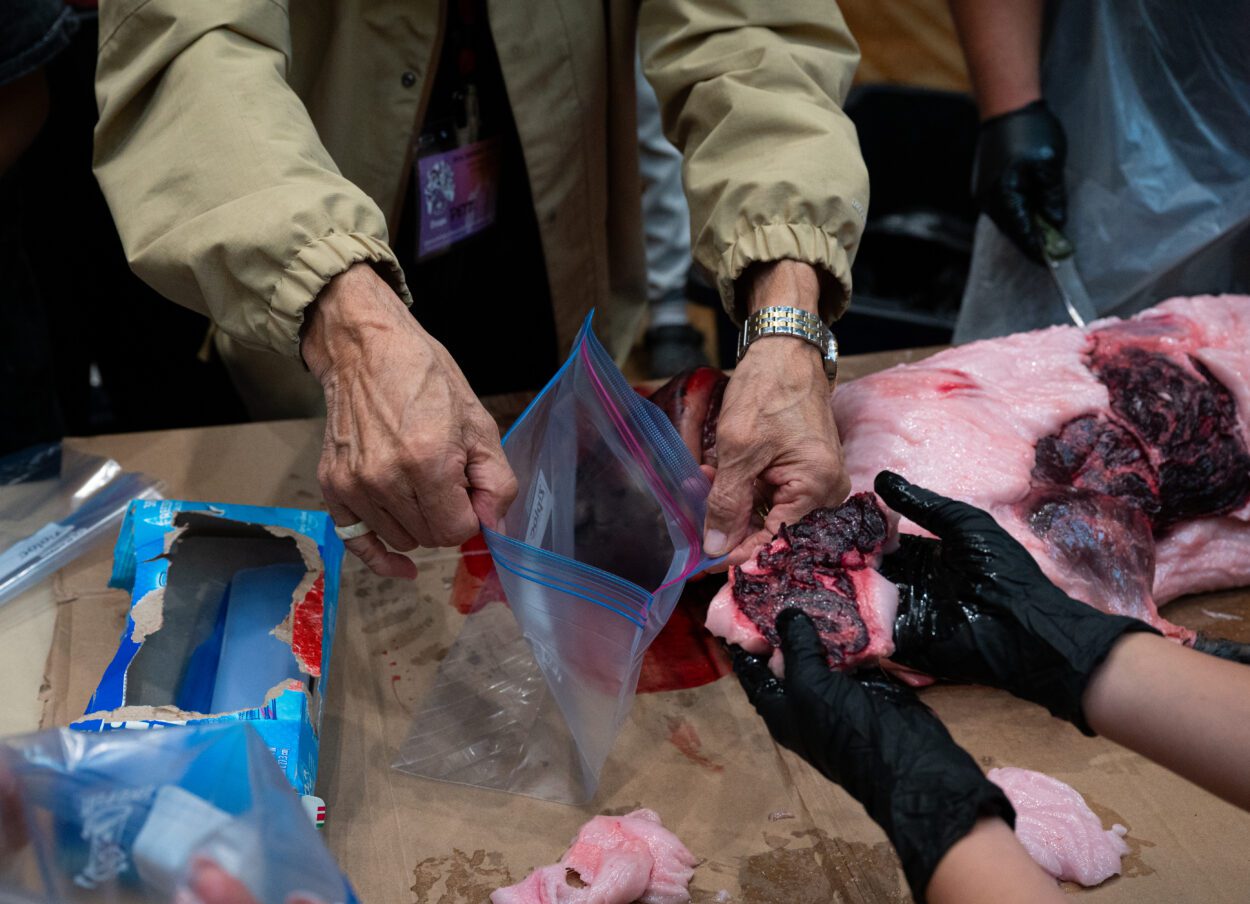
Inside a large conference room at the Dena’ina Convention Center, teens and youth surrounded Shaal Aani Brandon Ware at a table covered in cardboard. He was skinning a small harbor seal with silvery fur and tiny, dark spots.
“I’m sure, as many of you know, the trick is with seal … you always got to start off small, making real small cuts, separating that hide from the fat,” Ware said.
The 25-year-old harvested the seal near his home in Petersburg in Southeast Alaska, then froze it, and flew it to Anchorage for the conference.
Seals are an important part of many Alaska Native diets and lifestyles. The marine mammals are valued for their iron-rich meat, unsaturated blubber that’s rendered into oil, and skin for clothing and crafts. Up to 3,000 harbor seals are harvested each year in Alaska for subsistence, according to the Alaska Department of Fish and Game.
“It’s very much a superfood to us,” said George Dalton, an elder from Hoonah in Southeast Alaska. He was one of many elders watching Ware’s seal skinning demonstration from nearby tables. They took turns standing up and sharing knowledge, including some modern-day comparisons.
“The equivalent of McDonald’s hamburgers — you’d have to eat 24 hamburgers to equal just six ounces of this seal meat, and you’d have to eat 48 hot dogs,” Dalton said.
For some elders at the workshop, learning how to process a seal is a matter of survival. Henry Koonook is Inupiaq from Point Hope on the northwest coast of Alaska. Growing up, seal was a staple of his diet; nearly every part was eaten.
“Once a week, sometimes every day, for a long time when there’s no caribou, when there’s no fish, no more whale meat, no more whale muktuk,” Koonook said. “That’s what we survive on a lot.”
The skin had many uses: for mukluk boots, shoelaces, and rope for whaling boats. A whole seal skin could be sewn into a type of buoy or float for whaling, attached to a harpoon with a toggle line. Each float was marked with a family symbol so it was clear whose harpoon hit the whale. Koonook said it’s important for today’s youth to learn these skills.
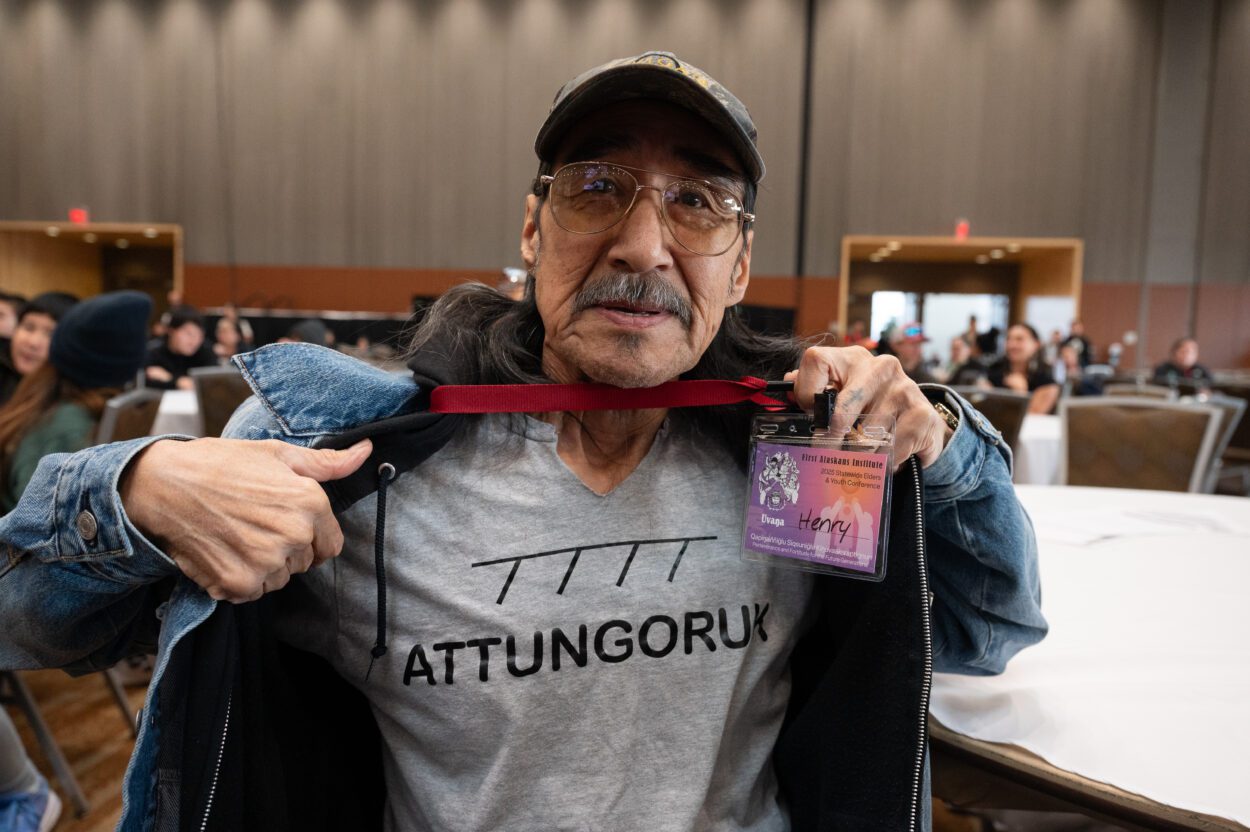
“In the future, just like our elders used to say, everything is going to go away — a lot of the modern stuff,” he said. “And if you can’t survive, this might be the only thing you ever live on.”
After the seal is skinned, Ware chopped through the meat and fat and distributed it to the group. Everyone was eager, holding out open Ziplock bags.
12-year-old Joshua Guy waited patiently. His favorite part is the blubber, which he likes to chew on.
“It’s really good,” he said. “I call it like gum because it’s really, truly gum.”
Guy is Yup’ik and lives in Anchorage, but he has family in western Alaska. He knows that sharing with elders is important.
“I went to hunt seal for my first time this year, April 23, caught two seals,” he said. “Gave one to my grandma, and she was so happy.”
Ware, the workshop leader, was stunned at the reception.
“People were taking home the bones,” he said. “It was incredible.”
Ware started hunting seals with his dad at age 8. However, in middle and high school, he got into sports and didn’t have much time. Ware said he didn’t return to traditional harvesting until he was about 21. But he wants others to know that that’s okay; it’s never too late to learn.
“If you’re not involved in your culture, but you want to learn, just take that step,” said Ware. “Just take that step because you never know where it’ll lead you and how much you’ll learn from it.”
One clear lesson at the workshop was the value of sharing. Dozens of elders and youth took away bags of nutritious seal to share with their loved ones at home.