The commercial red king crab fishery that opened in Southeast Alaska on Nov. 1 is generating more money than it has in the past two decades combined.
Red king crab is a low-volume, high-value fishery. It last opened in Southeast Alaska in 2017. The catch that year was over 120,000 pounds, worth $1.2 million at the docks.
Eight years later, the value has skyrocketed to roughly $5 million.
“It’s definitely at a historic high,” said Adam Messmer, a regional shellfish biologist for the Alaska Department of Fish and Game.
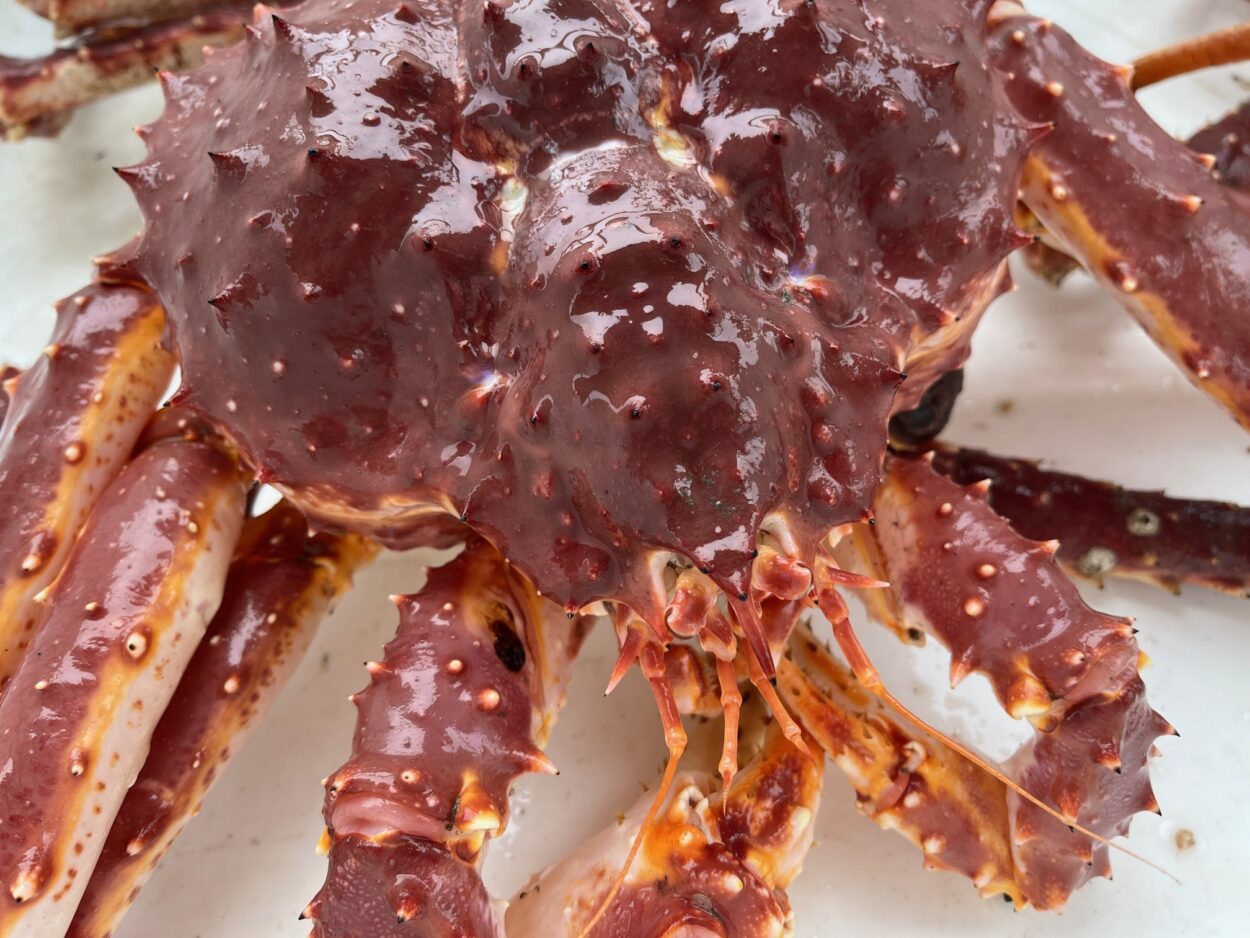
Weighing 6.5 to 7.5 pounds each and selling for $26 to $30 a pound, the red king crab are worth about $200 a piece.
Messmer said expectations going into the fishery were high, but the starting price was “above everybody’s wildest dreams.”
He said fishermen have caught around 190,000 pounds of crab so far, leaving roughly 21,000 pounds still available to harvest in the region. In other words, there’s about half-a-million dollars left to make.
Jeremy Woodrow, executive director of the Juneau-based Alaska Seafood Marketing Institute, said the factors at play in the “historically high” value include inflation and rarity.
There’s less king crab in the marketplace due to low population and harvest numbers in Alaska in recent years. Low crab stocks have prevented the commercial fishery from opening in Southeast Alaska for most of the decade, and Bristol Bay’s commercial red king crab fishery crashed a few years ago.
Woodrow also said the Russian seafood ban had helped boost the value of Alaska’s product — that domestic demand had increased since the less expensive Russian king crab was banned from the U.S. market.
“We went through the roughest patch that Alaska’s commercial fisheries have seen ever these last few years, and being able to keep Russian seafood out of the U.S. market has helped stabilize the price of all of our species,” Woodrow said. “It’s really helped, you know, kind of keep our coastal economies going.”
So who buys this rare, expensive crab? Woodrow said it’s not an everyday meal for most families, but some people will splurge to celebrate at high-end restaurants or for the holidays. One example he gave is Tracy’s Crab Shack in Juneau, where Alaskan red king crab sold for about $85 a pound before closing for the winter.
“It’s great because people are making money, and they’re making good money, and our fishermen should be rewarded for that,” Woodrow said.
Petersburg is home to over half of the 59 permit holders for Southeast Alaska’s commercial red king crab fishery, which saw 53 vessels participate this fall.
Woodrow said the remarkably high value of Southeast Alaska’s commercial red king crab fishery is a positive thing for the state, the permit holders who participated and their communities.
“It’s exciting to see that fishermen are getting that type of value for their catch,” Woodrow said. “A little crab goes a long way.”
The state is managing the fishery bay by bay this year based on how much crab is available in each area and on daily catch numbers reported by fishermen. Messmer, with Fish and Game, said managers hoped to spread out the harvest effort with this approach.
“And that seems to be working,” he said. “[We’re] able to monitor where those crab are harvested a little bit better than in the past, and make decisions on that so we can keep fishing on them in the future.”
Several of the fishery areas have closed for the season. Fishermen have been hitting harvest targets without dramatic overages so far, which Messmer says “bodes well for the future.”
“I think we’re in a good spot with red crab for the time being,” he said.
Editor’s Note (Nov. 26): The audio has been corrected. The fishery’s value is roughly quadruple and its price-per-pound is more than double the previous fishery that opened in 2017.