The Alaska Legislature created a bipartisan education task force this summer to seek solutions for the state’s ongoing challenges, such as how to fund a system that falls short of what educators across the state say is needed.
The task force doesn’t expect to present many changes in the next legislative session – they’re tasked with making recommendations in January of 2027.
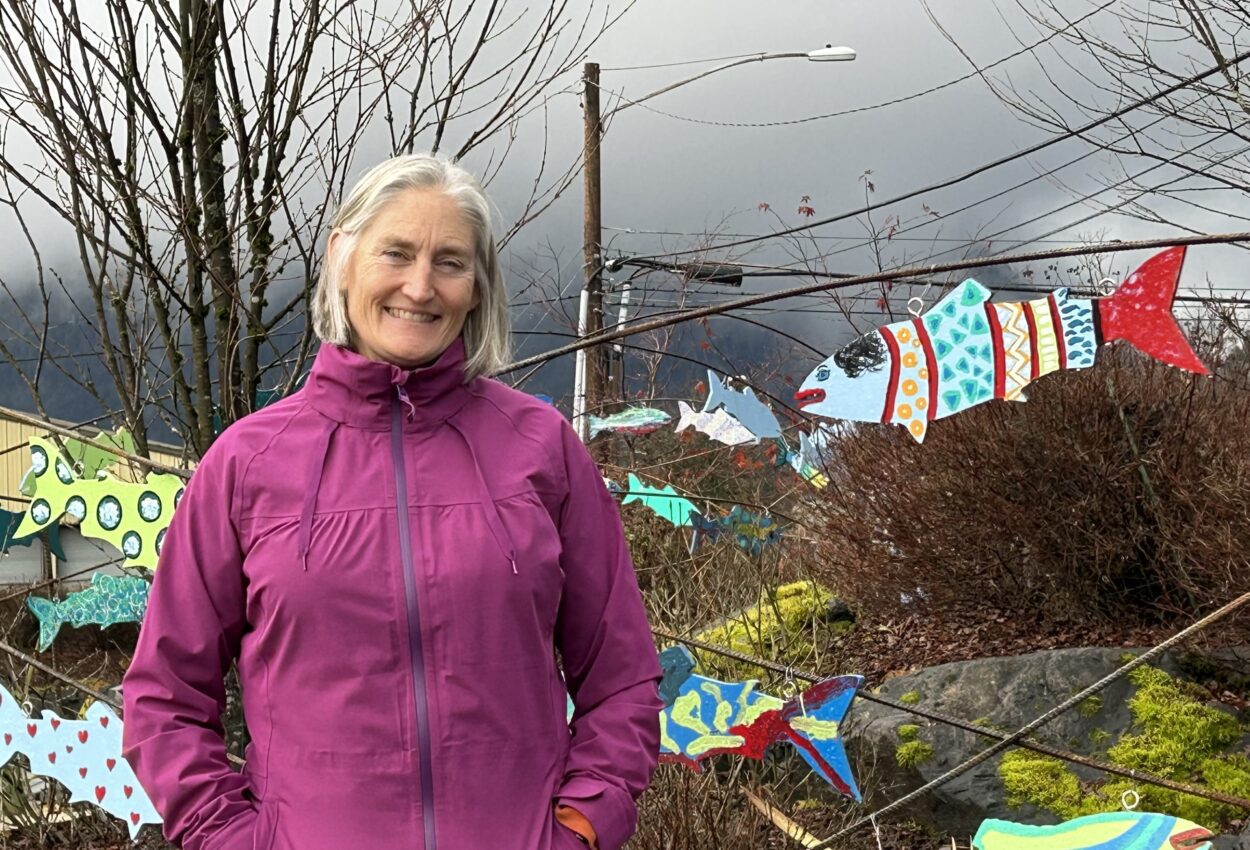
House District 2 Rep. Rebecca Himschoot, a Sitka independent, is a co-chair of the task force. She taught for over 25 years and served on the state’s Board of Education. She spoke with CoastAlaska’s Angela Denning about a study the task force is planning and their goal to increase trades education in rural Alaska, also known as CTE, or Career and Technical Education. She says task force members recently visited on-the-road schools around Anchorage and the Kenai Peninsula and saw the potential.
Transcript:
Himschoot: They’re doing incredible things because of the economy of scale – they’re able to offer these things. When I go to Kake, they have an incredible wood shop that’s not really being used. You know, one of the issues that we see in career and technical education is that we used to have a university sort of pipeline where you would graduate with that as your major, or your emphasis or your credential or whatever. And now we’re seeing that people have to come out of a career in the trades and transition into teaching, or you have to be a teacher with an interest and move into the various CTE courses that are offered. And so just even staffing those courses has become a challenge that really wasn’t there before. I’m not sure why universities stopped preparing what we used to call Vo-Tech teachers. I don’t know why that happened. I think we can do more there to make sure that we have staff, and like I said, making sure that those opportunities are available in some form. Is it a two-week intensive where an instructor flies in, whether that’s metals, which we have in Sitka, or small engine repair or whatever? To make those workshops come back to life in rural districts, would be a huge win.
CoastAlaska: Do you think that there’s additional funding needed?
Himschoot: Our schools will make good use of anything they’re given. So when you say, is more funding needed, one of the things we need to do is called an adequacy study. That kind of a study can take a full year to get back, but it will come with recommendations [about] if more funding is needed in this area, and maybe there’s neglect in this area. And so exactly how and how much more to fund would come through an adequacy study that we’re hoping will be conducted in 2026. It’s usually work that’s contracted, and there are specialists across the nation who provide this kind of information. So, in my personal opinion, yeah, we know that the schools had their highest purchasing power in about 2011, we’ve had 38% inflation since 2011, and we’ve increased our funding to schools less than 10%. So, the $700 increase last year was what was politically feasible, but nowhere near what was needed. So realistically, will we add anything this year to keep up with inflation, if we use a five-year average? So, looking back at inflation over the past five years and applying that to our current base student allocation, we would need to come up with another $260-some just to keep up with inflation. And that feels like anything less than that is losing ground when we already weren’t really on firm ground. How we use the dollars matters a whole lot, and so the fixed costs that districts face, such as energy costs, insurance costs, those continue to go up at a steep incline while our funding is not matched. So, with that, with that gap between what we’re able to fund and the actual costs of things that districts can’t say no to – you can’t not turn the lights on, and you can’t not insure your buildings and your employees – those are the kinds of things that this task force is going to look at.
CoastAlaska: What about the gubernatorial race as you see it? You know, what’s at stake for Alaska’s educational system?
Himschoot: I think education should be a major part of everyone’s decision on who to support in this election. We have had quite a focus for some time now on trying to expand school choice opportunities. Those choices will probably never be available in House District 2. We’re unlikely to have a charter school at any point, so withholding funding to the overall system in order to leverage more choices doesn’t mean a whole lot in our region. So moving to a new governor who will take a very serious look at what’s available in the rural districts and bring parity between that and urban districts would be a huge step forward in the well being and the successes of all of our schools. This is a really, really important election. Our schools have withstood several years of underfunding. A lot of that has to do with the state budget, but too much of it has been a political decision. So, I would welcome a governor who takes the politics out and works on the constitutional obligation, and basically, our responsibility.
[House District 2 covers Southeast’s outer-coast communities from Yakutat south to Hydaburg on Prince of Wales Island, including Sitka and Petersburg.]