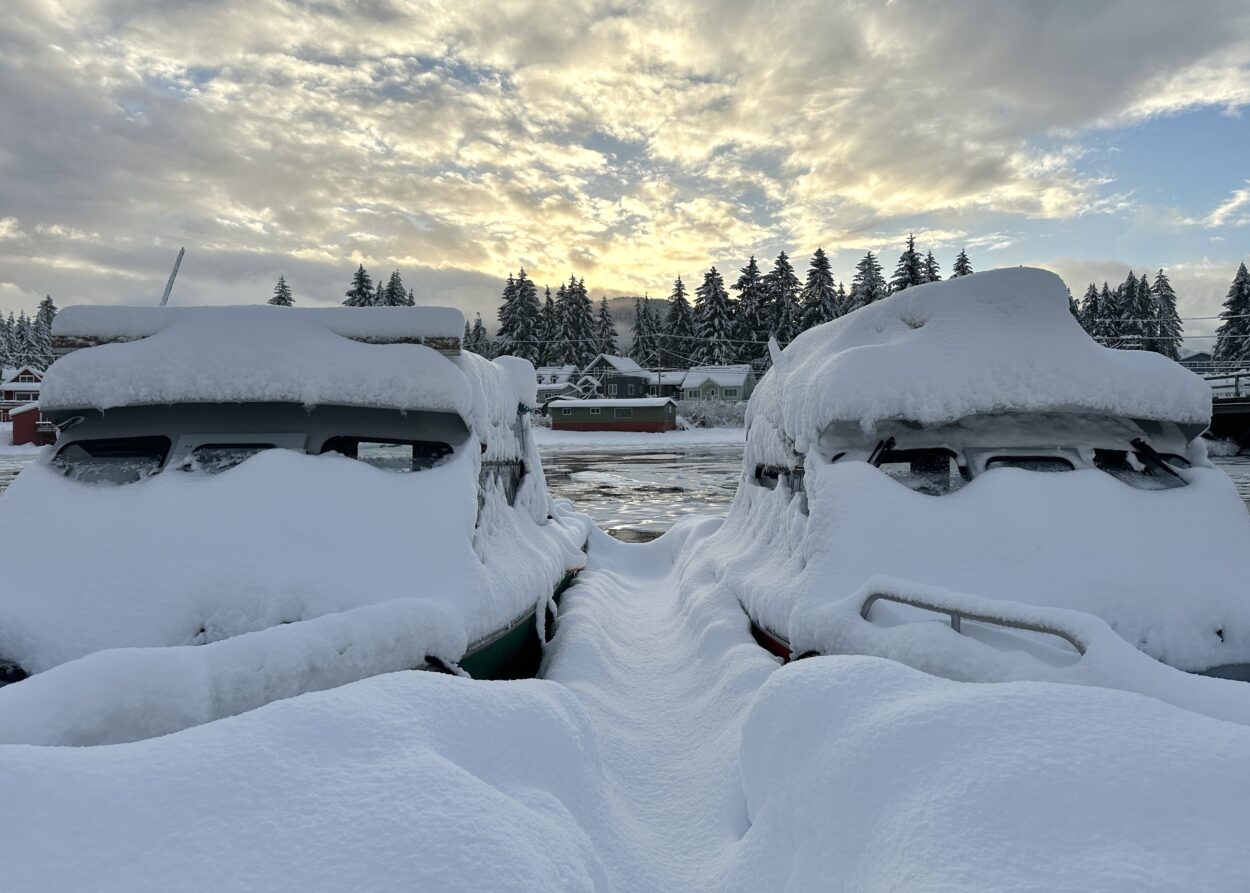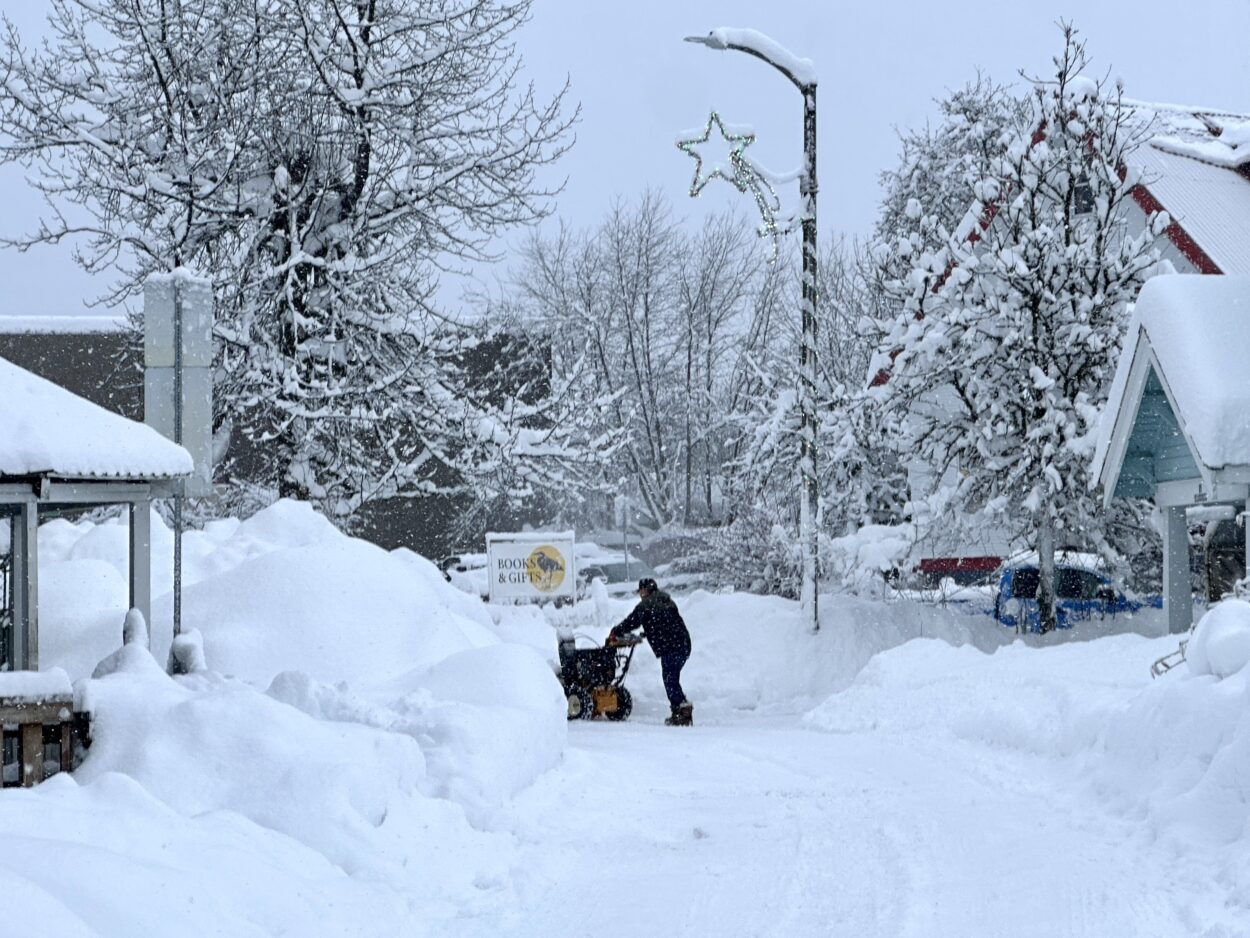
People who have been shoveling snow in central Southeast Alaska might feel a bit like Sisyphus, rolling his boulder uphill. But the heavy snowfall that buried many panhandle communities this past week is no myth.
Over 40 inches of snow has fallen on Petersburg since Monday, Dec. 8. Edward Liske, a meteorologist with the National Weather Service in Juneau, said that’s already more than the town got all of last winter.
Sixteen inches of snow fell in Petersburg on Sunday, Dec. 14, breaking the local record for that date by six inches. It was the second local daily record broken within the week.
In an interview Monday morning, Liske said Wrangell and Kake saw significant snowfall over the weekend, too. Wrangell got about nine inches of snow, and Liske said “Kake is getting buried as well,” with reports of over a foot of snow falling in a single night.
The weather service recorded a total of 2.5 inches of new snow in Petersburg on Monday. Liske noted “it’s still a lot of snow” for the town; the average amount of daily snowfall, according to decades of recorded data, is around half an inch.
Liske said the main band of snow moved north. Juneau got several inches of snow over the weekend, and several more on Monday, breaking its local daily record for Dec. 15 with 9.2 inches of snow. Juneau’s previous record for that date was 8.7 inches.
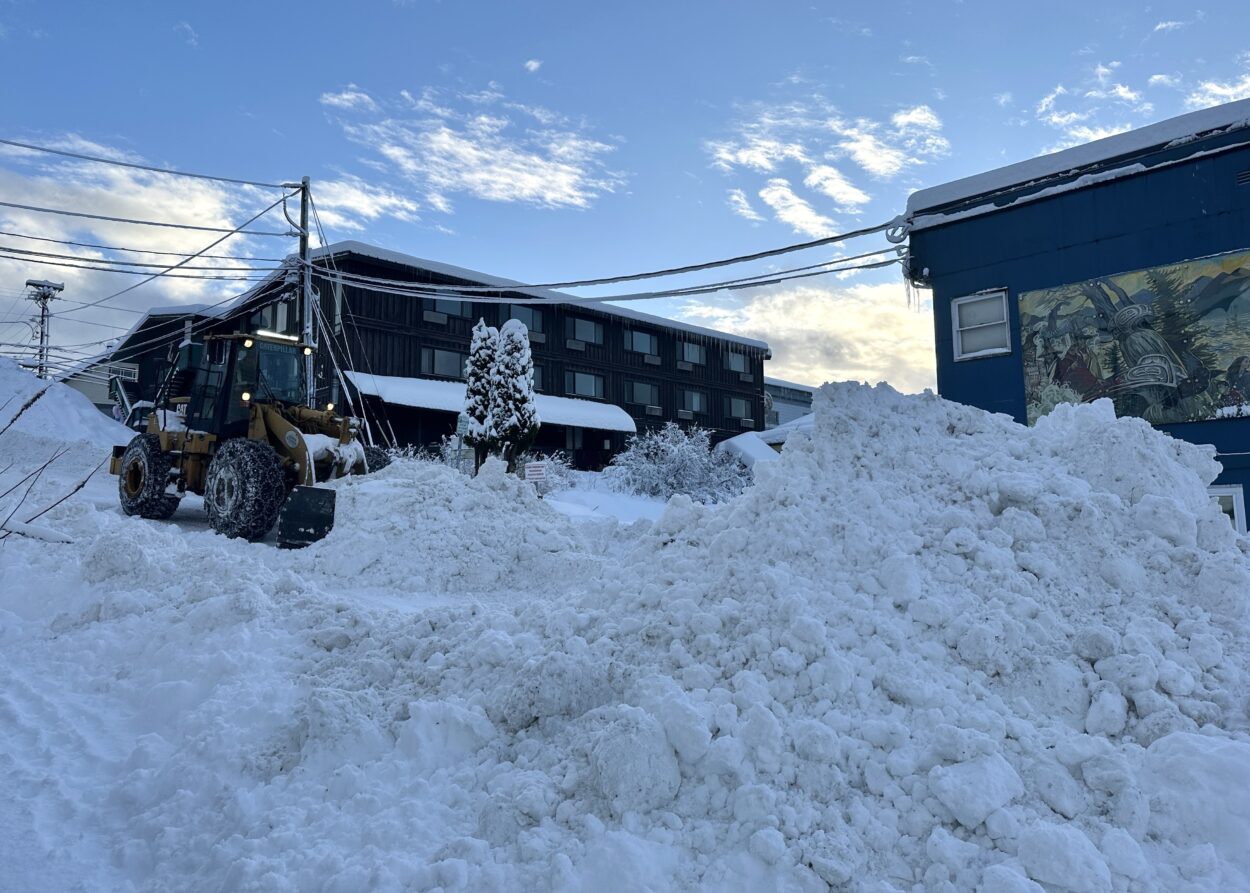
Looking ahead, Liske said snowfall is expected to diminish in the panhandle. Residual, intermittent snow showers are forecast for northern Prince of Wales Island and into Kupreanof Island. A couple more inches of snow could fall this week in Petersburg and nearby communities, but it won’t be as heavy.
“It’s not going to be the snowpocalypse that you had recently,” he said with a laugh.
The recent heavy snowfall on the panhandle followed a warm and wet previous two months. Then December brought a cold snap.
“The cold looks like it’s going to be here to stay, at least through the rest of the month here,” Liske said. “Be prepared for possibly more snow and cold temperatures.”
Unless temperatures warm up, which is unlikely, Liske said Southeast communities like Petersburg are set to have a white Christmas.