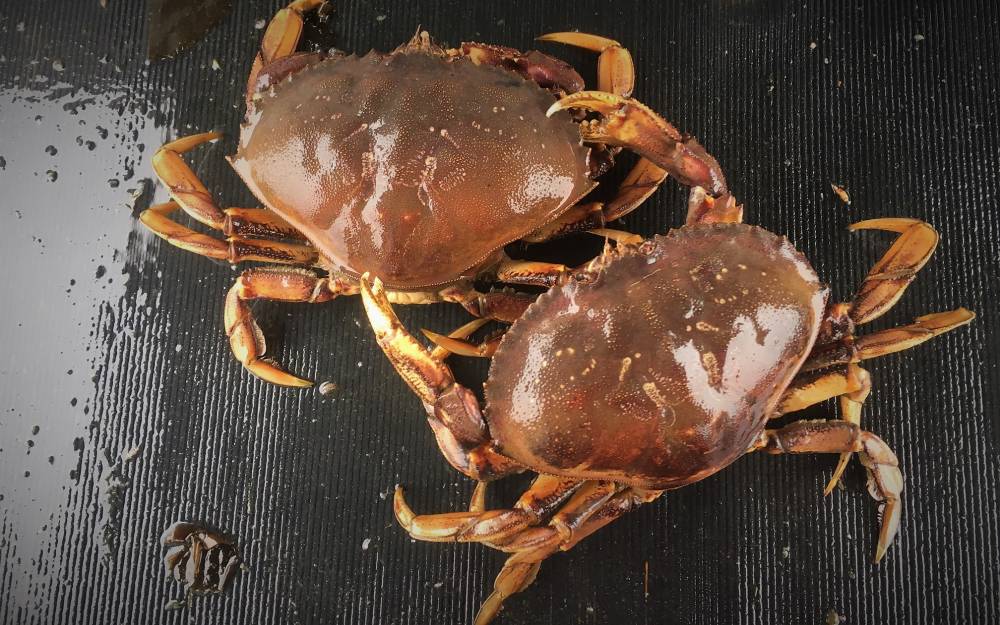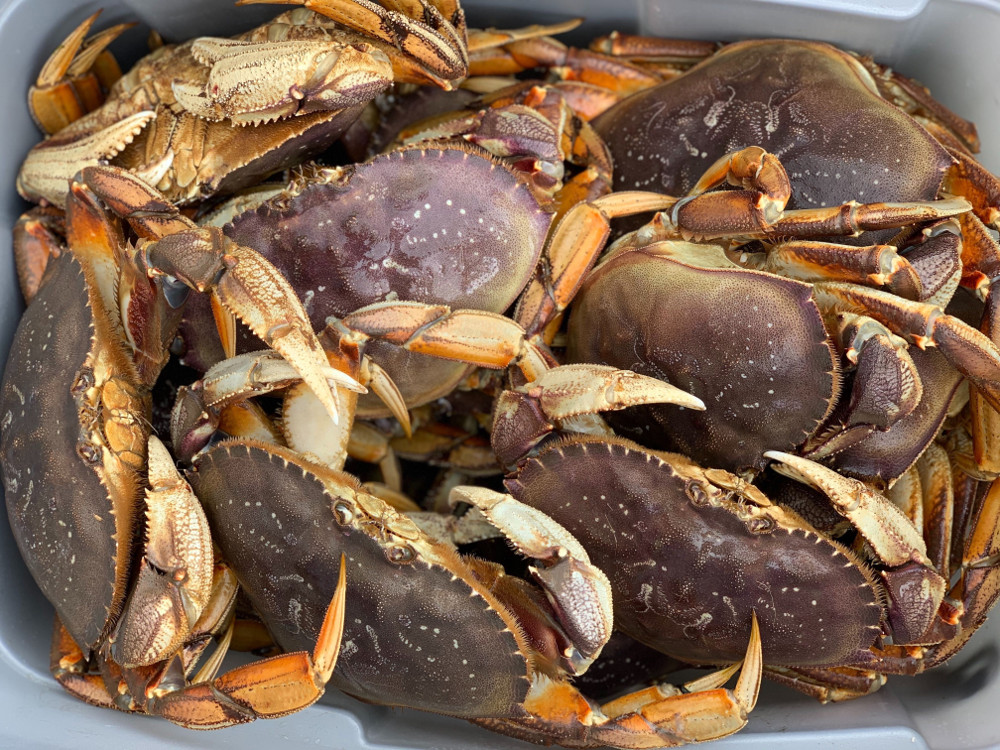
The numbers are in for Southeast Alaska’s 2025-26 commercial Dungeness crab season. Participants harvested 2.07 million pounds of crab during the summer and fall/winter fisheries combined. With the estimated overall price averaging $4.17 a pound, the full season amounts to a total value of $8.64 million.
Joe Stratman is a regional shellfish biologist for the Alaska Department of Fish and Game, which manages the fishery. He said the full harvest came in lower than what the fishery has seen over the past five years or so.
“I think you could say it was below-average this summer, I think you could say it was below-average for the fall/winter, I think you could say it was below-average for the full season combined,” he told KFSK in an interview.
The five-year average full season harvest is about 3.6 million pounds. But Stratman noted that figure is “buoyed” by some high-harvest seasons, like in 2020, which was the second-largest on record.
Even though fewer crabs were harvested, they sold at above-average prices this season.
The average price for the fall/winter fishery was about $4.04 per pound. That’s roughly the same as the previous fall, but down from the summer’s $4.19 average.
Most Dungeness crab caught during a given season are taken during the summer fishery, and that was especially true in 2025. About 84% of the overall harvest was taken in the summer, and 16% was caught in the fall/winter. Usually, the split is 78% and 22%, according to Stratman.
While the summer 2025 fishery accounted for most of the overall harvest, poundage and effort was up slightly from the previous summer, which had a lower value. About 1.75 million pounds of Dungeness crab were harvested by 168 permit holders last summer, amounting to about $7.3 million.
“It was a below-average season. However, the price was decent,” Stratman said. “So I think it maybe kept some people fishing longer than they would have if the price was low, because you can still make some money at a lower catch rate.”
The 2025 summer fishery was shortened by six days because legal-sized, soft-shell crabs contributed to low harvest projections, which doesn’t happen often. But the department later allowed for a full-fall season after accounting for the soft-shell crab that were left in the water in early summer.
The fall fishery opened in October; most of the region closed at the end of November, but a couple areas stayed open through February. 66 permit holders landed about 325,000 pounds of crab in the fall/winter fishery, adding up to about $1.3 million.
Fishermen can expect information for the next Southeast Alaska Dungeness crab season, which starts in mid-June, to be announced by the department in early April.