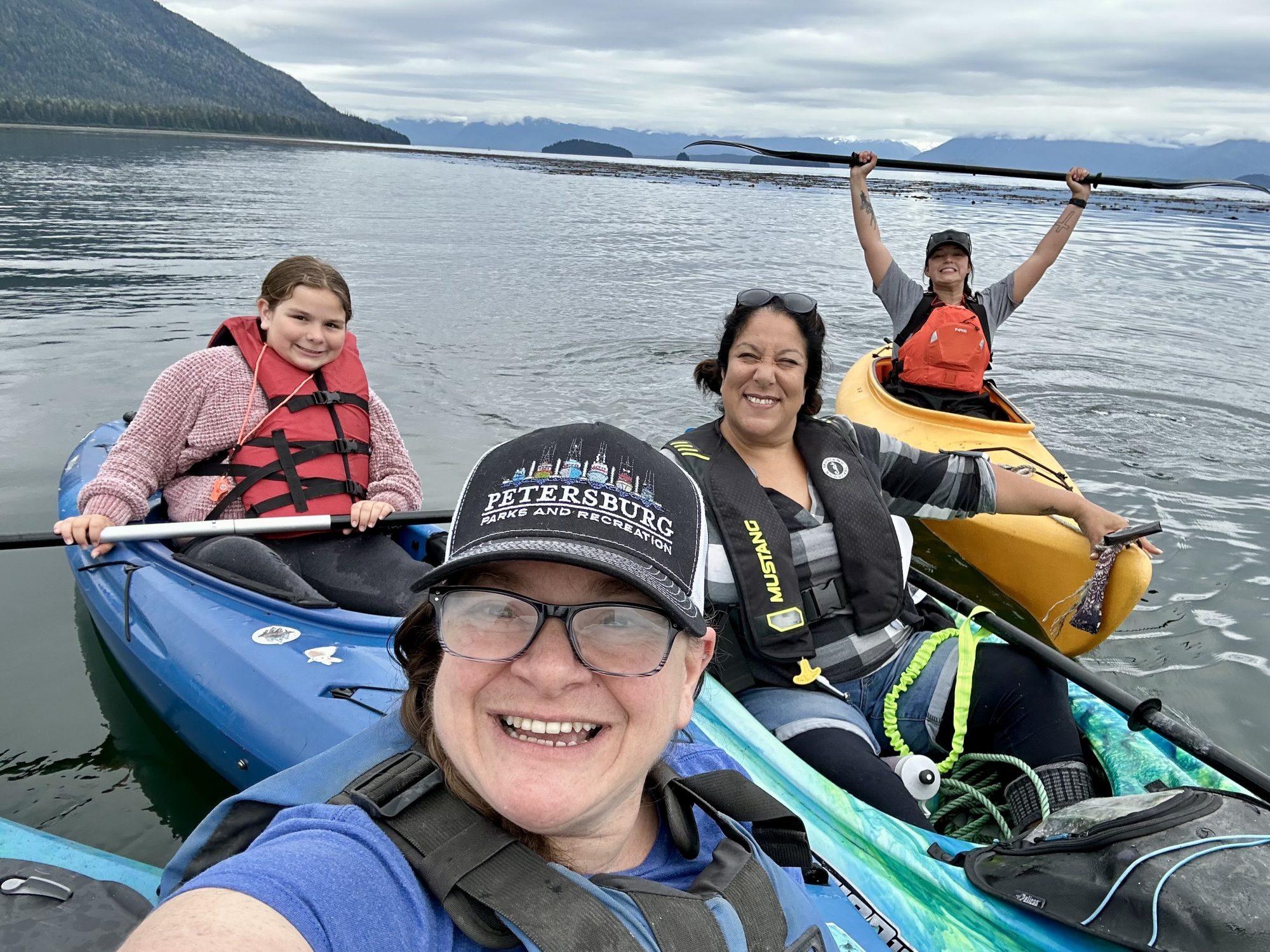
As Parks and Rec Director Stephanie Payne points out, there’s water everywhere you look in Petersburg. But there’s a lot to know about recreating safely and comfortably in those waters.
KFSK’s Taylor Heckart sat down with Payne to talk about an all-day course this Saturday, April 4, that’s geared toward recreational boaters, kayakers, and paddleboarders.
The class will include lessons on knot-tying, using fire extinguishers and what to do if your engine fails. Payne said it will all be very hands-on — and will also cover things like cold water survival, boating laws and handling emergencies.
Listen here:
The free course, hosted by Petersburg Parks and Recreation along with the Alaska Office of Boating Safety and the Alaska Marine Safety Education Association, takes place on Saturday, April 4 from 8 a.m. to 6 p.m. in the Parks and Rec community gym. There is room for up to 25 participants, but Payne said there will be a waitlist if the class fills up.
People can register online at the Parks and Recreation website.
This transcript has been lightly edited for length and clarity.
TRANSCRIPT:
Stephanie Payne: Confidence is what we’re really aiming for. Confidence to be out there and know what to do if something were to happen, whether it’s something that happens with you or the captain of the boat.
How are you going to take control and just understand what’s expected of you when you’re out on the water? Understanding the rules of the road, who is supposed to move if you’re coming into a situation to avoid a collision? There’s been a lot of changes in the PFD world, [personal flotation devices] so now understanding what those PFD tags look like. You know, those things have changed, and we want you to feel confident.
Taylor Heckart: So some of the things we talked about: cold water survival, understanding if your boat breaks down, float coats. Any other big topics that are going to be hit on?
Stephanie Payne: There’s always understanding the weather and the tides and the currents, but also the navigation ATONs [Aids To Navigation], understanding what those mean, and what is also expected of other people.
Learning how to signal for help, how do you call for help, what’s the station that you should be on? We’ll be talking about anchoring, and all the rules and the regulations that go along with the state. What you need to do if there’s an injury or there’s an accident. What are you obligated to report? What are those thresholds?
Taylor Heckart: And you brought this up a few times, this idea that rules and things change. So even if, maybe somebody has taken a course or a boating safety [class] however long ago, is it true it might still be a good idea for them to come and take this?
Stephanie Payne: Absolutely. It’s always a good idea. If you can get refreshers on trainings, I always pull away something else that I didn’t get the first time around. You’re inundated with so much information when you do trainings, it’s hard to keep it all in. Always good to catch up on and keep fresh with all of that.
Taylor Heckart: And is there anything in this course that maybe might surprise people or be like, ‘Oh, I didn’t know that!’
Stephanie Payne: I think hearing statistics about fatalities and who is at greater risk. Who does it happen to more often, and what is the cause of that? It’ll be pretty interesting.
And I’m just going to leave it at that. Come to the class to find that information out!
Taylor Heckart: Why does it matter for folks in Petersburg to take this course?
Stephanie Payne: Well, if I think about anywhere you stand and you look around, there’s water. And when we’ve got this beautiful place that we get to recreate in and work commercially in these waters — although this is more for recreational boating — why wouldn’t you?
There is an opportunity at the end of this for people, if they want to, to take a 60-question test. We cover everything. We make sure that you are amply prepared to take this test. So even if you have test anxiety, we are right there, we will ensure that you get the information. They’re not terribly hard questions, but it’s important things.
But definitely a benefit to taking the test is that you do get a certification that you have taken the course. In other states, let’s say you go down to Washington a lot, right? If you want to rent a boat down there, you may be asked if you have that [certification]. You can get a discount on boat insurance. So there’s a few good benefits to it.
Taylor Heckart: Okay, cool. So folks can come, they can get certified, they can be more confident, and hopefully, if it comes down to it, this could potentially keep someone alive.
Stephanie Payne: Absolutely.