Over 100 people gathered to see Petersburg’s first canoe in a century when the local tribe unveiled and blessed it after its first time on the water.
Eleven pullers paddled the canoe, or yaakw in Lingít, around the tip of Mitkof Island on April 19. After an hour of pulling against the tide, singing songs and sharing stories, the group arrived for the ceremony at Sandy Beach — a place with Tlingit petroglyphs etched in rock faces and remains of fish traps that are a few thousand years old.
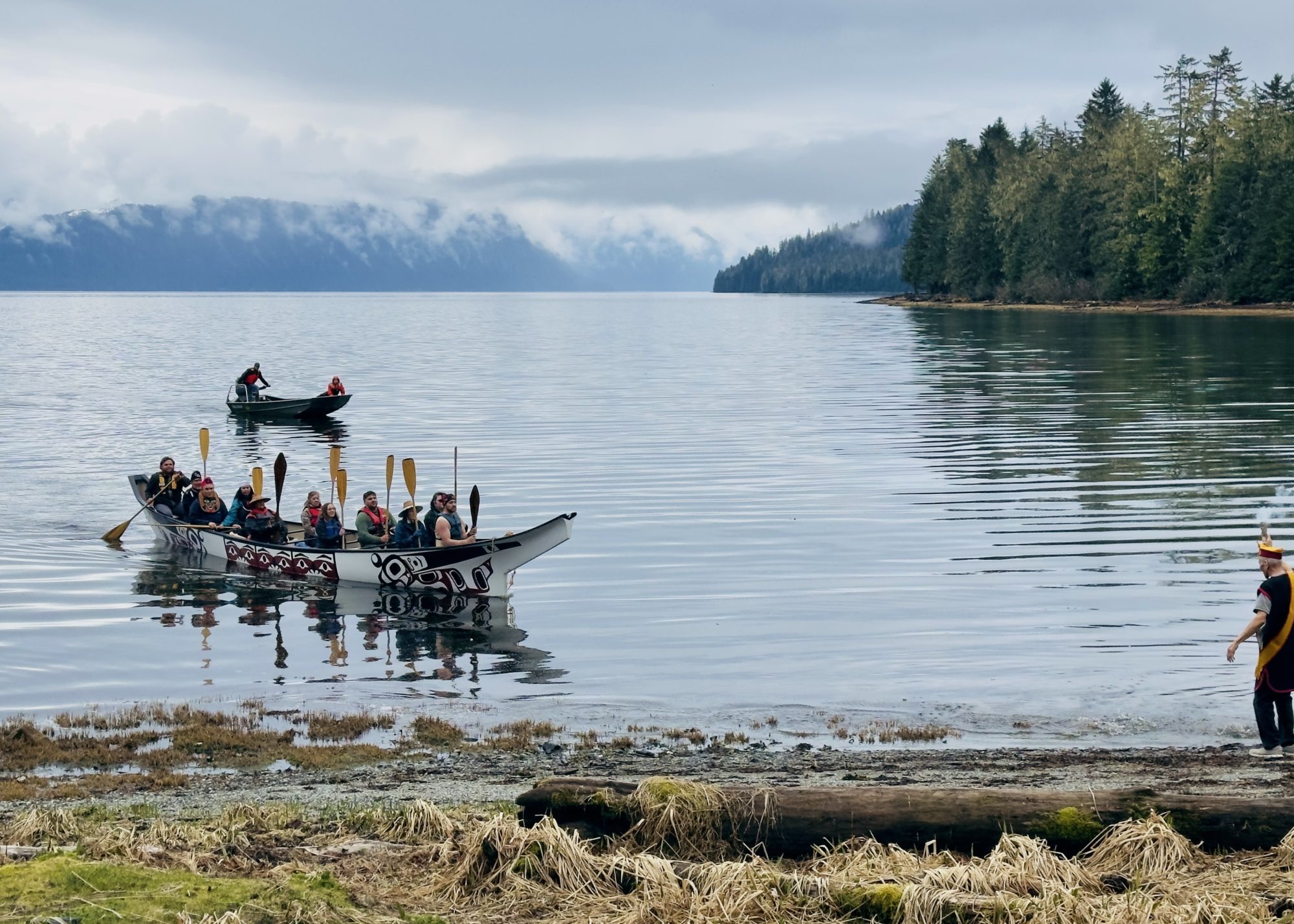
Ságooch Billy Ware was a puller at the front of the canoe. He said it gave him goosebumps, turning the corner from Frederick Sound and seeing the large gathering waiting on the beach.
“As soon as you came around that corner, you could see there’s been a village here for who knows how long, maybe thousands of years,” he said. “It really felt like we were bringing the culture back alive in Petersburg, so it was a very heartfelt moment for me, my brothers, everybody in the canoe.”
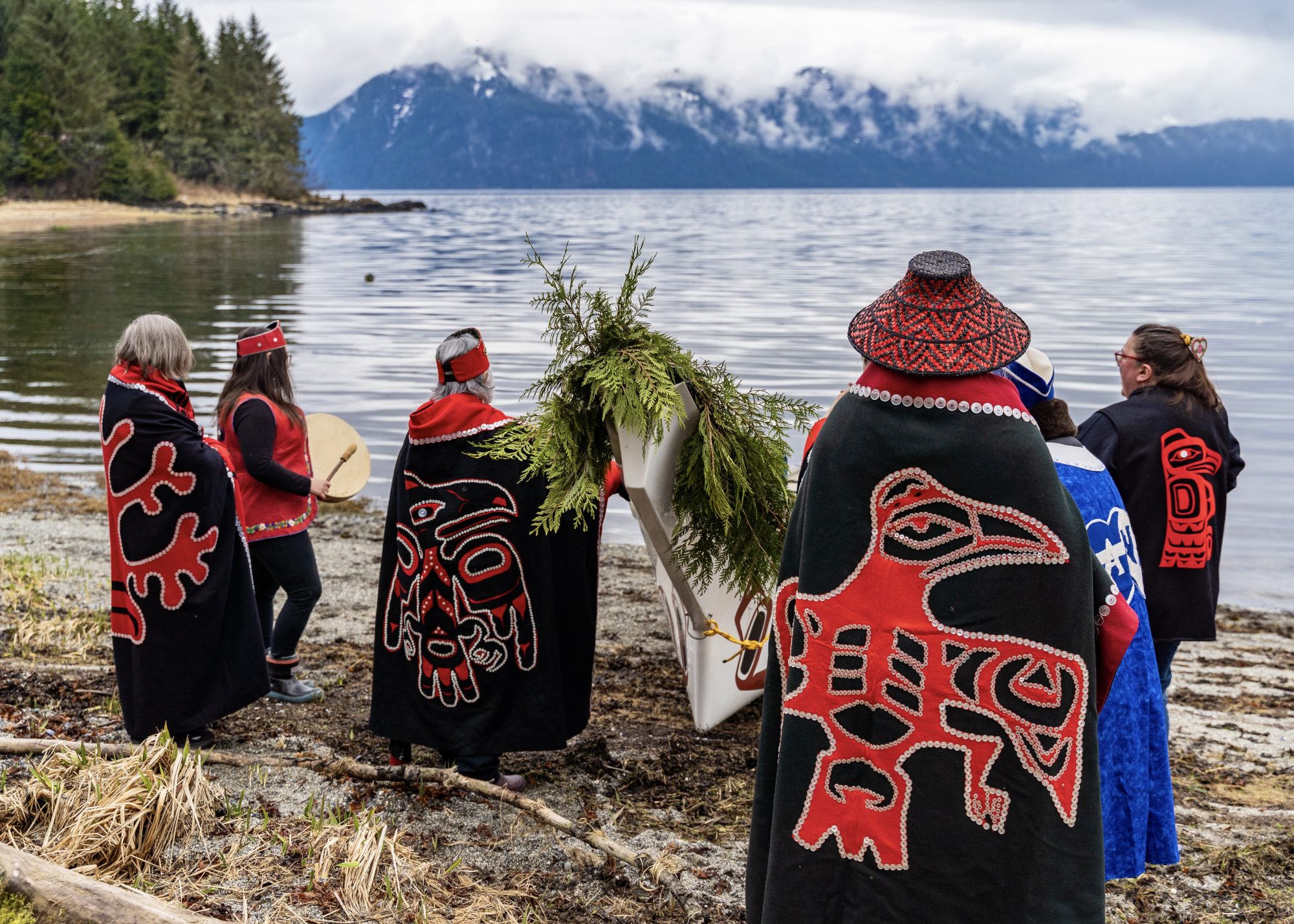
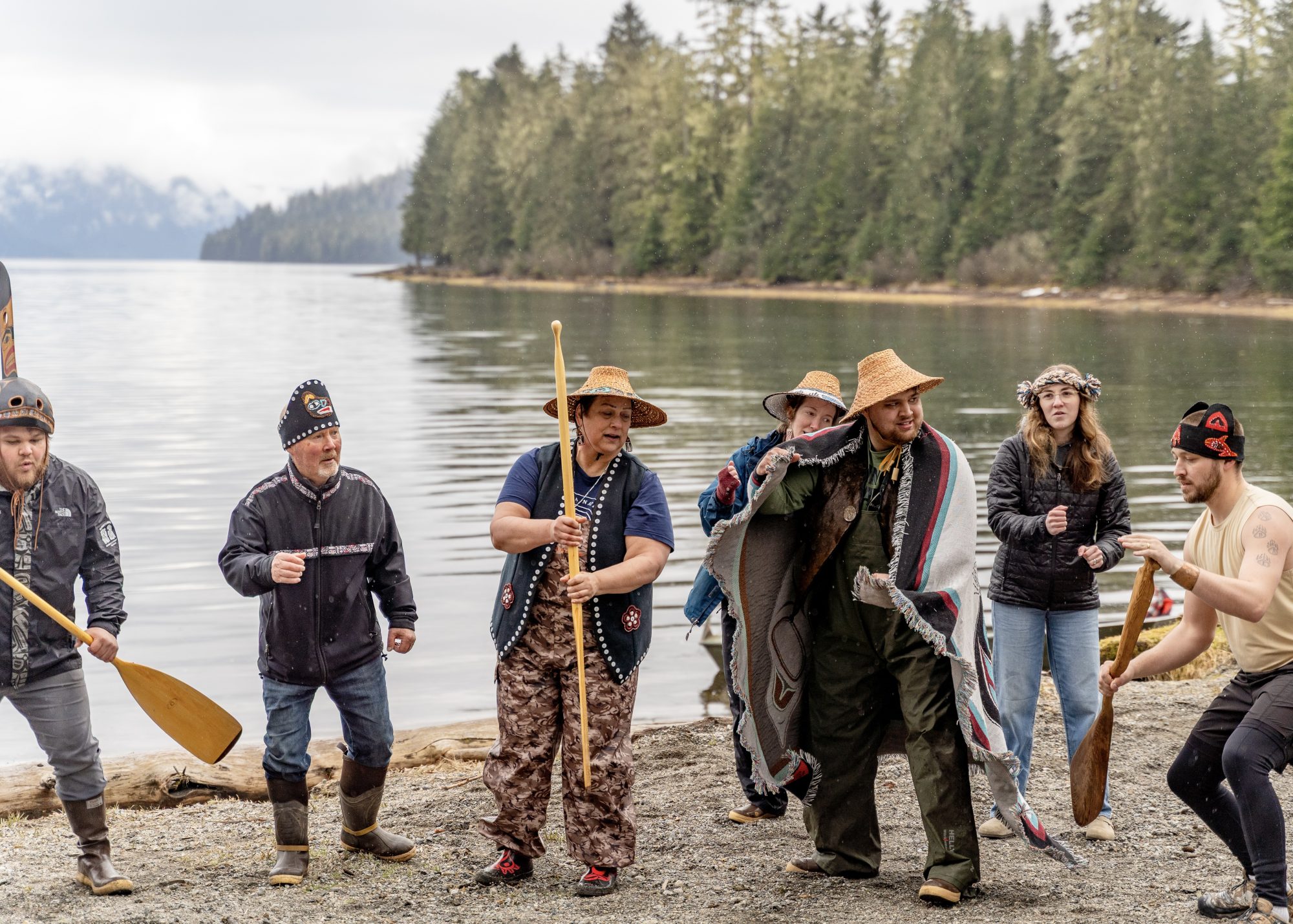
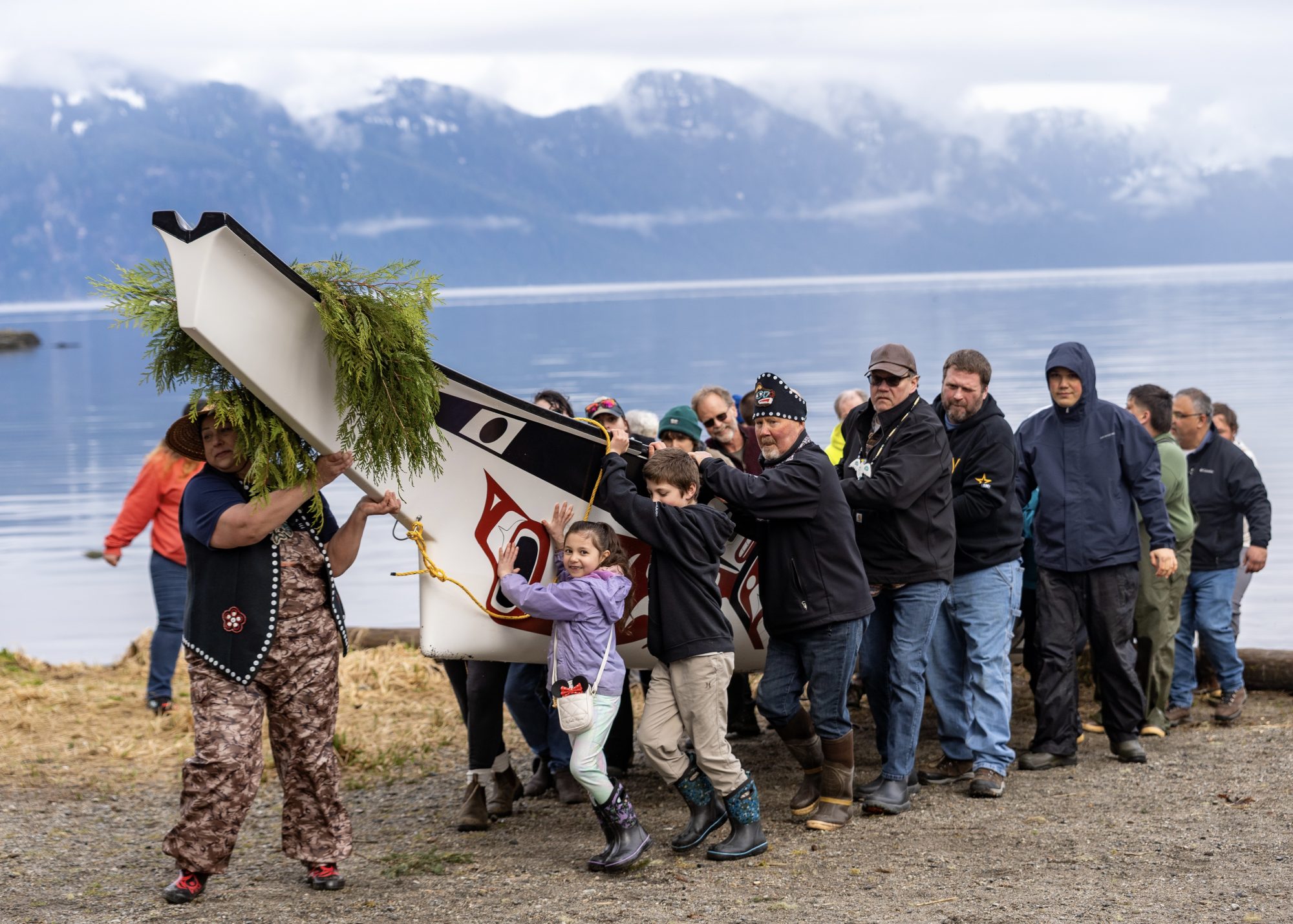
The canoe was blessed with sage and honored with cedar boughs as tribal citizens wearing regalia —the Séet Ká Kwáan dance group— drummed and sang to bring the killer whale canoe to life.
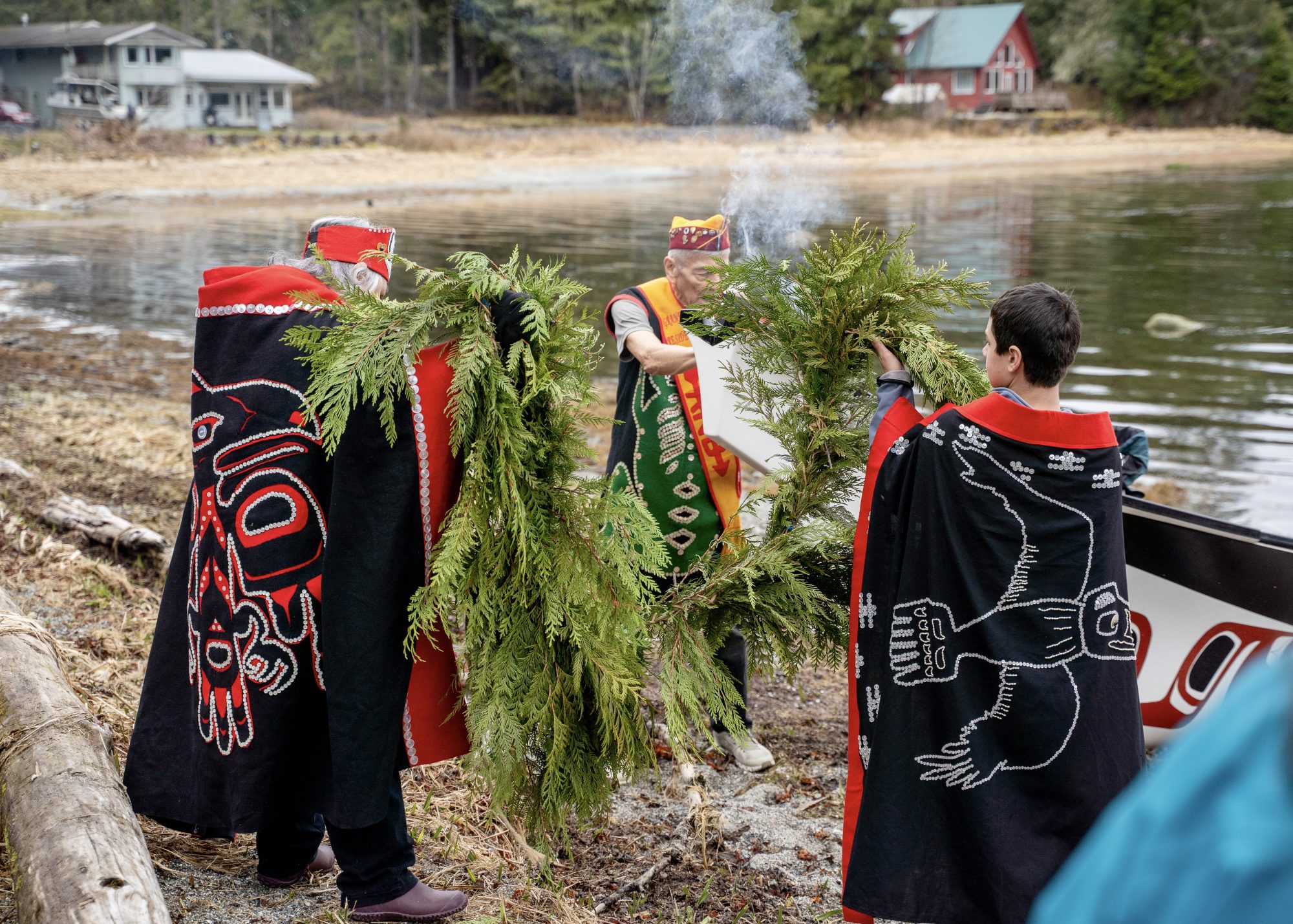
Lgeik’l Eesh Will Ware, the híts’aatí, or house master, for the Freshwater Mark Sockeye house of the T’akdeintaan clan, said it was a “momentous day” — the first time Petersburg Indian Association, the local tribe, has brought a canoe out of the community “in anybody’s kind of memory that we know of.”
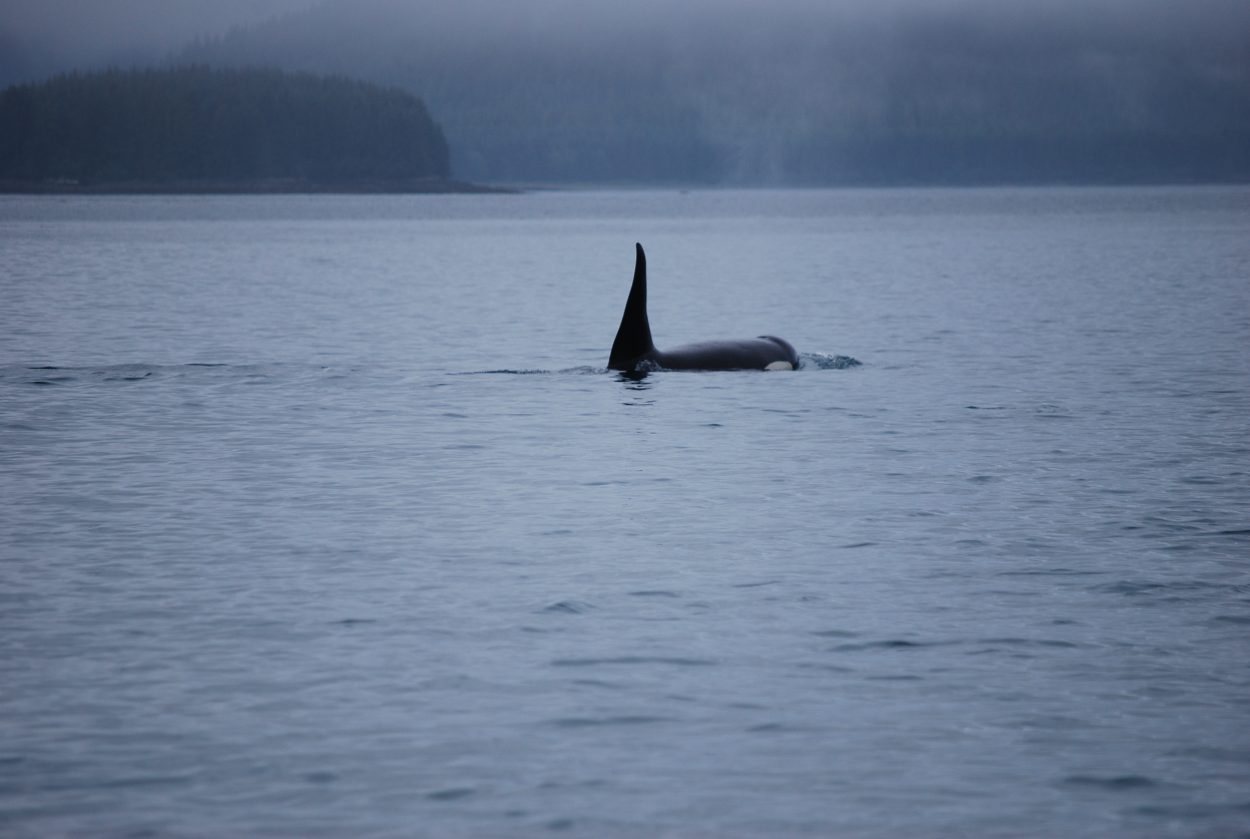
He announced the name of the canoe, “kéet yaakw,” kéet being the Lingít word for killer whale.
“Petersburg, we have our first Tlingit canoe in well over 100 years, and it is now and forever known as kéet yaakw — if you could say it out loud to help bring it to life: kéet yaakw, kéet yaakw, kéet yaakw,” Ware said, leading the gathering as it repeated the canoe’s name.
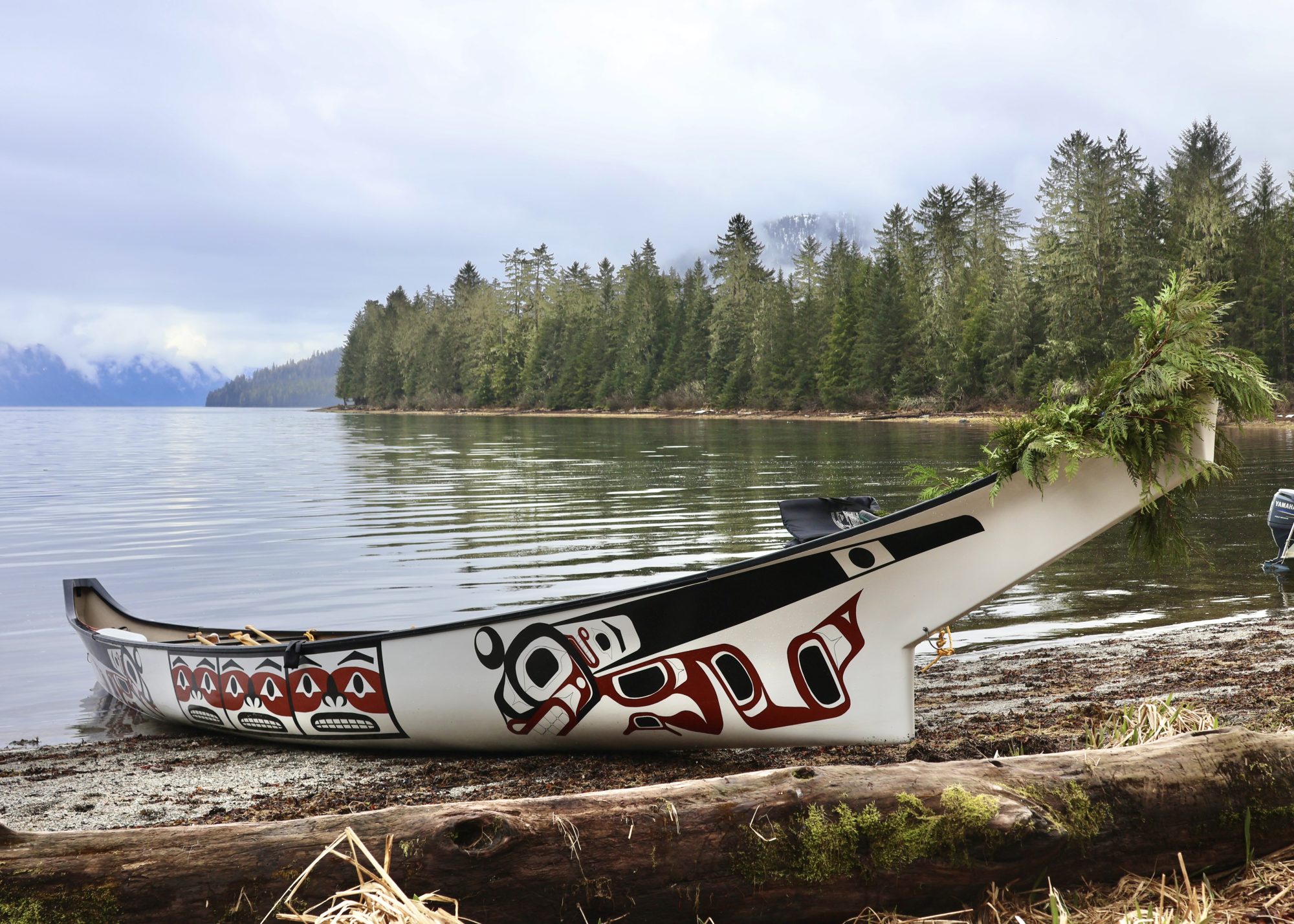
Traditional canoes like this one typically belong to a single clan. But Petersburg’s local tribe decided to have this canoe designed to include everyone.
“It has a crest that doesn’t belong to any one particular clan, but is relatively generic, yet unique to Séet Ká, to Petersburg,” Ware said. “And so for that, we’re very grateful.”
The white, Tlingit-style fiberglass canoe is nearly 40 feet long. It has red and black Chilkat faces painted in the shape of bentwood boxes down its center and a large formline killer whale design on both ends.
Xájoosa John Garcia III, a Tlingit tribal artist based in Juneau, spent many days in the local tribe’s warehouse painting the canoe.
“We honor him and thank him for the beautiful design that he created just for this canoe,” Ware said.
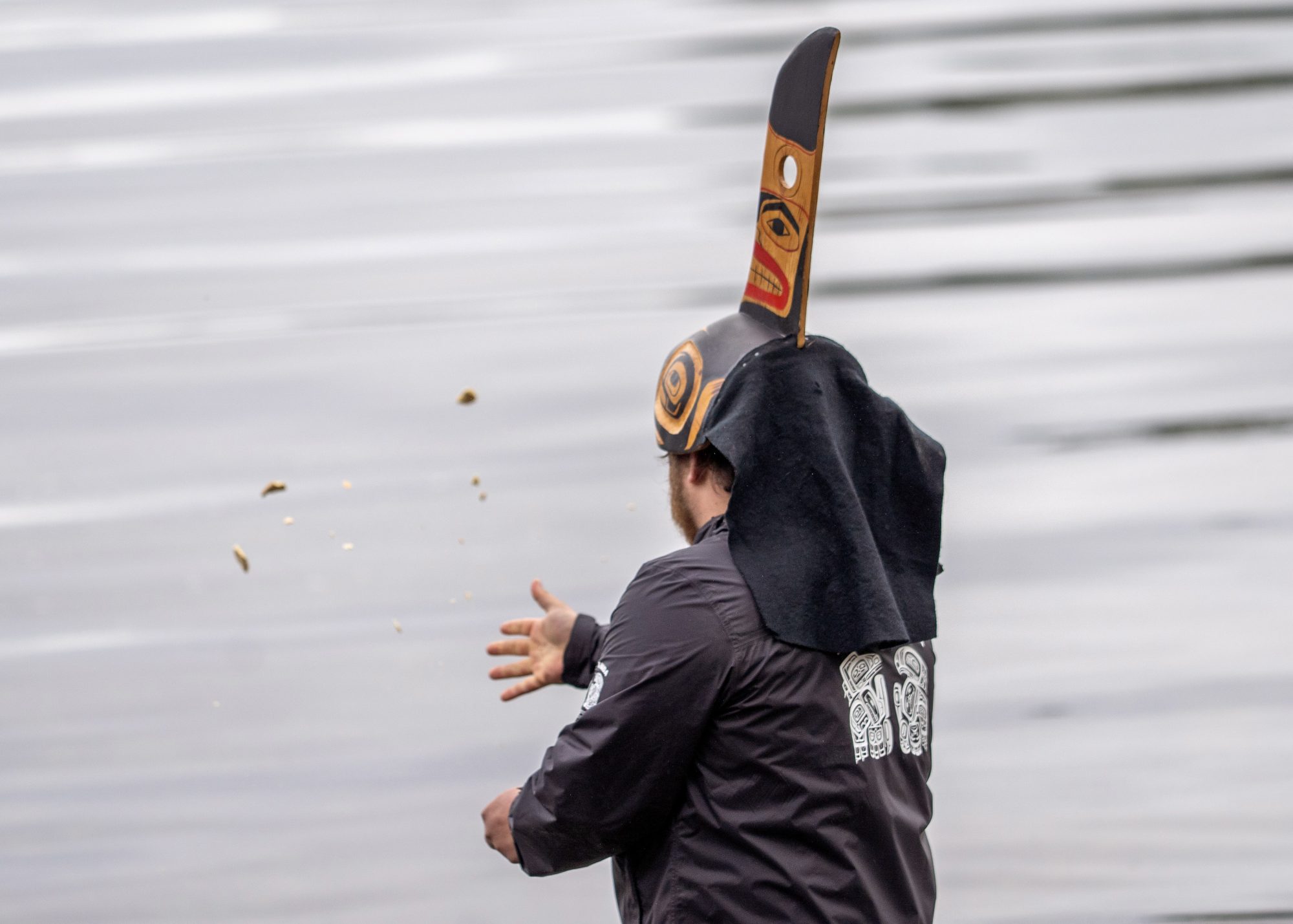
ShaaL’aanee Brandon Ware —Ware’s son and the vice president of the local tribal council— scattered pilot bread in the sea water as a symbolic gesture while Ware thanked the killer whales.
“Gunalchéesh, kéet,” he said.
He asked the killer whales, as guardians, to keep the canoe and its pullers safe when they paddle it to Juneau for the Celebration festival this summer.
Ware invited everyone to sing a couple songs of the Dekl’aweidee, a Tlingit clan in Southeast Alaska with a killer whale crest.
Several of the canoe’s pullers lined up in front of the shore and danced for one of the songs — knees bent, arms moving as if paddling.
After a number of songs, dances and speeches, people mingled over cups of boiled fish soup.
At the end of May, a group of several canoes from around Southeast Alaska will meet in Petersburg to paddle together to Juneau, camping and visiting villages along the way. It’s a tradition known as Journey. And the local tribe says that launching the canoe Journey from Petersburg is another significant milestone for the community.
The killer whale canoe needs about a dozen pullers to paddle it to Juneau.
Gooch tláa Victoria Moore and her son Alex are two of just several pullers who have signed up so far. She said it was fun to be out on the water, building camaraderie and sharing stories with the group. She described her participation as a personal journey.
“It’s exciting to be a part of it,” she said. “To be a part of something that my ancestors did for thousands of years. So to bring this back, and to be able to make this Journey that’s going to come up and go into Celebration and be a part of that, it’s going to be incredible.”
Celebration starts June 3.
Petersburg Indian Association is accepting donations and applications for people interested in joining the multi-day canoe Journey as pullers. More information can be found on PIA’s website, online at piatribal.org