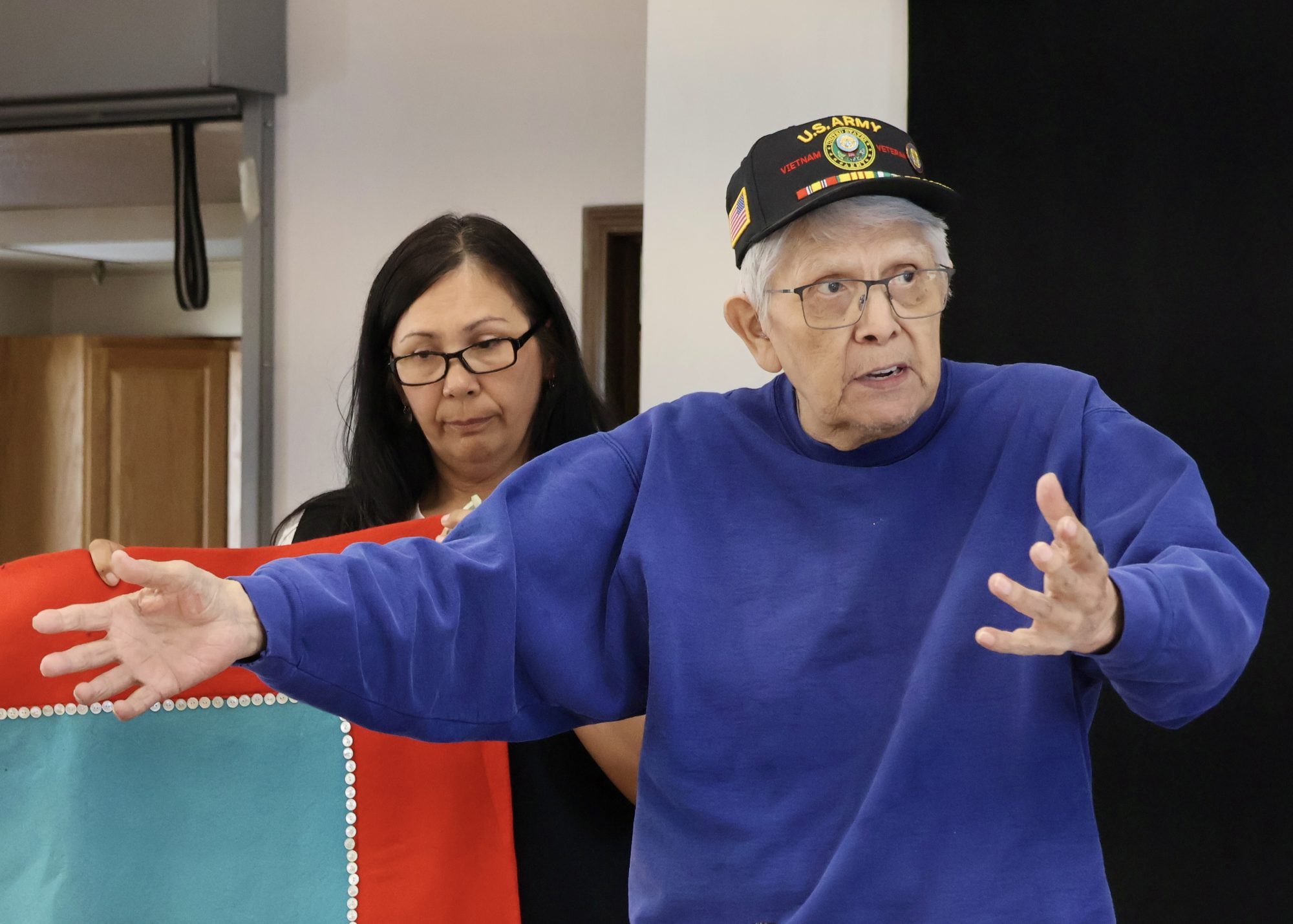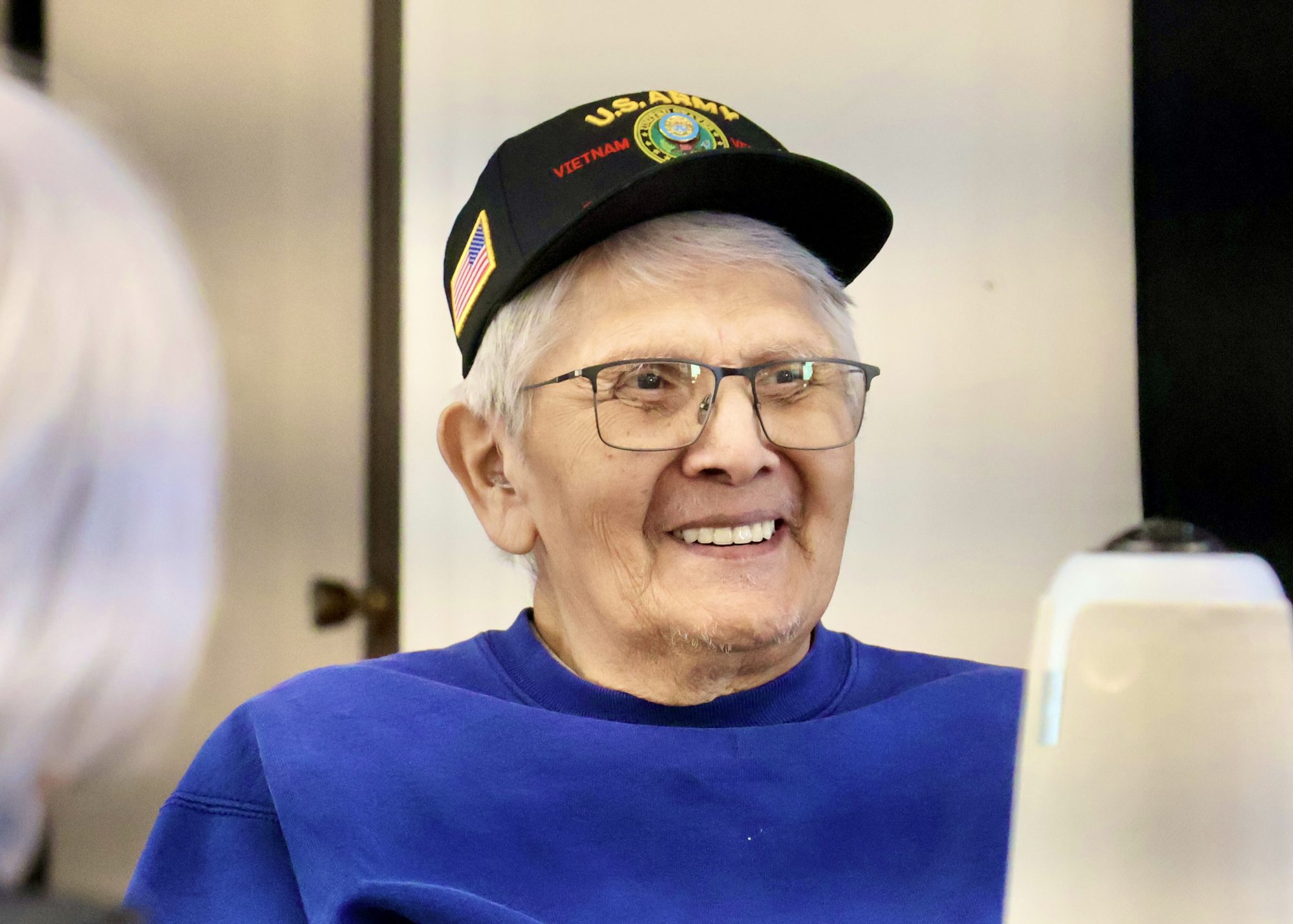
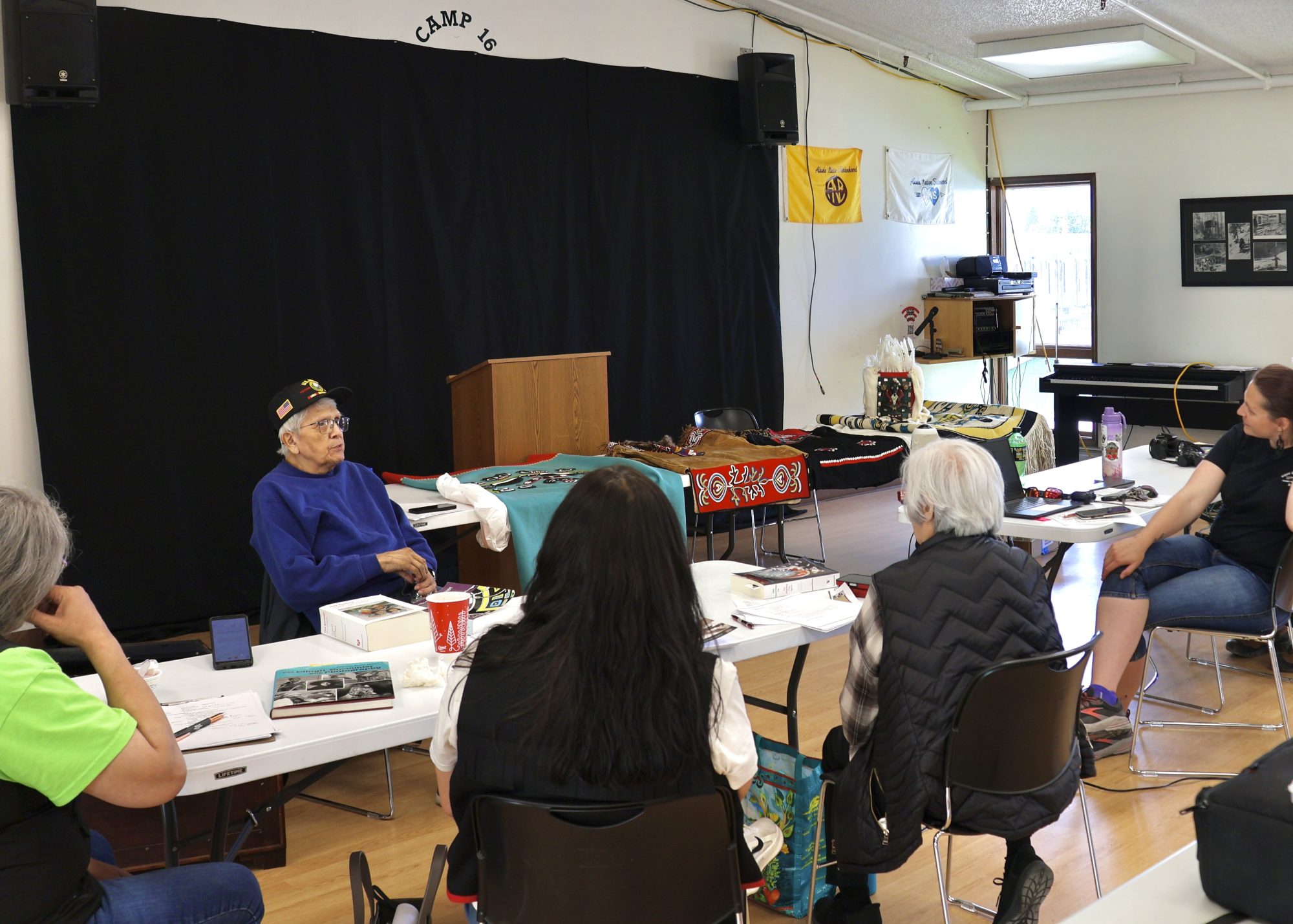
A small group of people sat in a circle of chairs in the John Hanson Sr. Community Hall in Petersburg. They listened intently as a Sha Wha Guwaakaa George Bennett Sr. told them the proper protocol on how to honor a Tlingit clan member who has passed away.
Bennett is a Tlingit elder from Sitka and a member of the T’akdeintaan clan, part of the Raven moiety. He was invited by the Petersburg Indian Association, the local tribe, to teach a four-day long workshop on Tlingit protocol and history.
“I’m a full-force Tlingit,” he said. “I speak my language very fluently.”
The main purpose of the workshop was to educate attendees on ceremonial protocol in Tlingit culture, with a focus on a ceremony called the koo.éex’ — a post-funeral ceremony to honor clan members ideally a year after their death.
During the workshop, his students hung on every word as Bennett expounded centuries of wisdom, leaving space for questions and peppering in jokes.
Tlingit culture is matrilineal, and people are born into one of two moieties —Eagle or Raven— determined by their mother’s lineage. Tlingit clan members from the same moiety as the deceased are responsible for hosting the koo.éex’, not direct family members.
“We are the ones that’s gonna be in grief,” Bennett said. “We’re the grieving clan.”
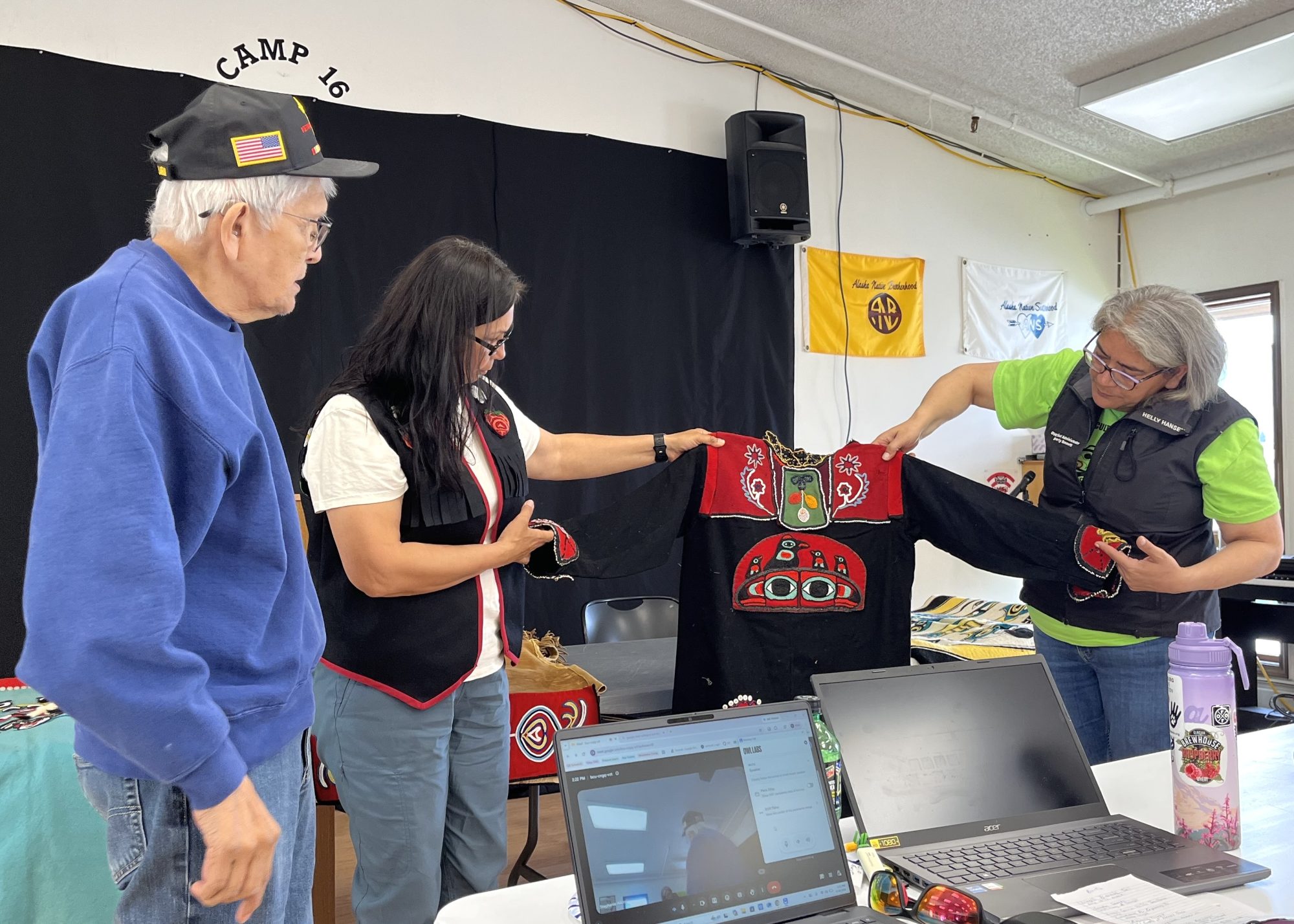
Bennett also showed the class sacred objects, or At.óow, that are brought out during ceremonies. One of the objects, a Raven moiety tunic, was over a hundred years old.
As part of the course, Bennett highlighted the differences between the Lingít language and English.
“ When I think about the Lingít language,” he said, “the speakers are very methodical. They think before they speak.”
He said that’s very different from how people speak today.
“People don’t think before they speak,” he said. “They just speak to be heard and think that they got something important to say.”
To Bennett, these teachings are crucial for a place like Petersburg.
“Petersburg is sort of like a little melting pot,” he said. “There’s a lot of different clans here. They come from several different communities, and they got a lot of relatives in the more distant communities.”
Bennett’s niece, Beverly, came to Petersburg from Prince of Wales Island to attend the workshop. She said she wasn’t connected to her Tlingit heritage growing up, so she wanted to learn more.
“I recognized that there was something missing from my life,” she said. “I understand now that it was my culture.”
Petersburg resident Gooch tláa Victoria Moore was also attending the workshop. Learning Lingít was important to her for many reasons.
“This is probably the most important thing to me right now,” she said. “Learning about the ancestral land, about my own tribe, my own clan, our houses and the significance of the Lingít names in these ancestral lands because I’ve never learned our language.”
Moore said she also wants to learn more about protocol so she can pass the knowledge on to future generations.
Stephanie Aikins is the administrative assistant for Petersburg Indian Association. She is not Alaska Native, but she said she wants to learn about Tlingit protocol so she can help with organizing programs in the future.
“For me, it comes from a place of, let’s do this accurately, let’s do this respectfully,” Aikins said. “Let’s do this right.”
Bennett said that it’s a gift to share his knowledge of Tlingit culture to anyone who wants to learn.
“There’s nothing to hide in our culture,” he said. “There’s a lot to share. And for me to do that, it means that I have a way of trying to continue this life of our people.”
Bennett said that if Petersburg starts to host ceremonies, it doesn’t matter to him if people speak the language fluently or not, so long as the Tlingit culture lives on.