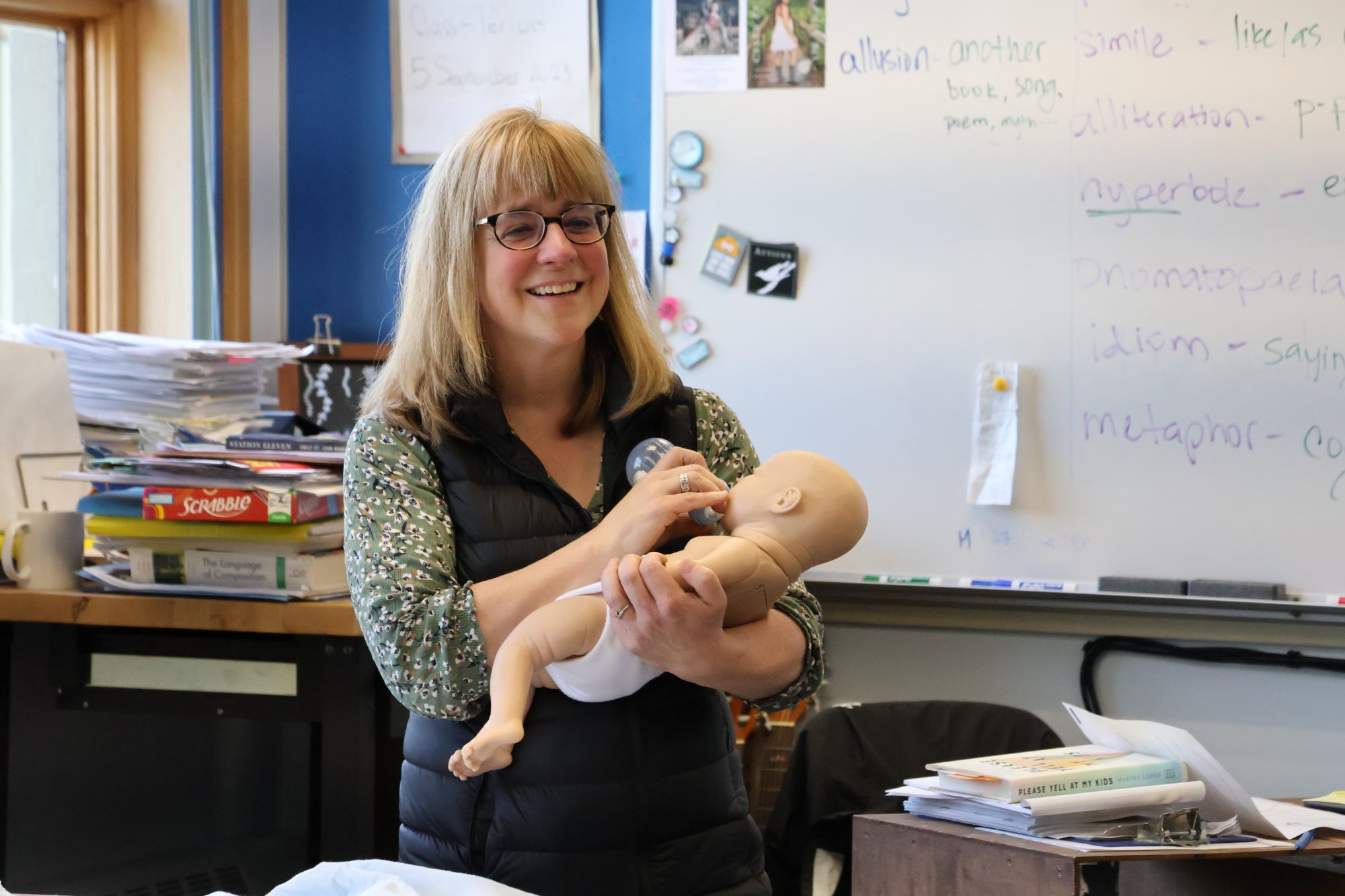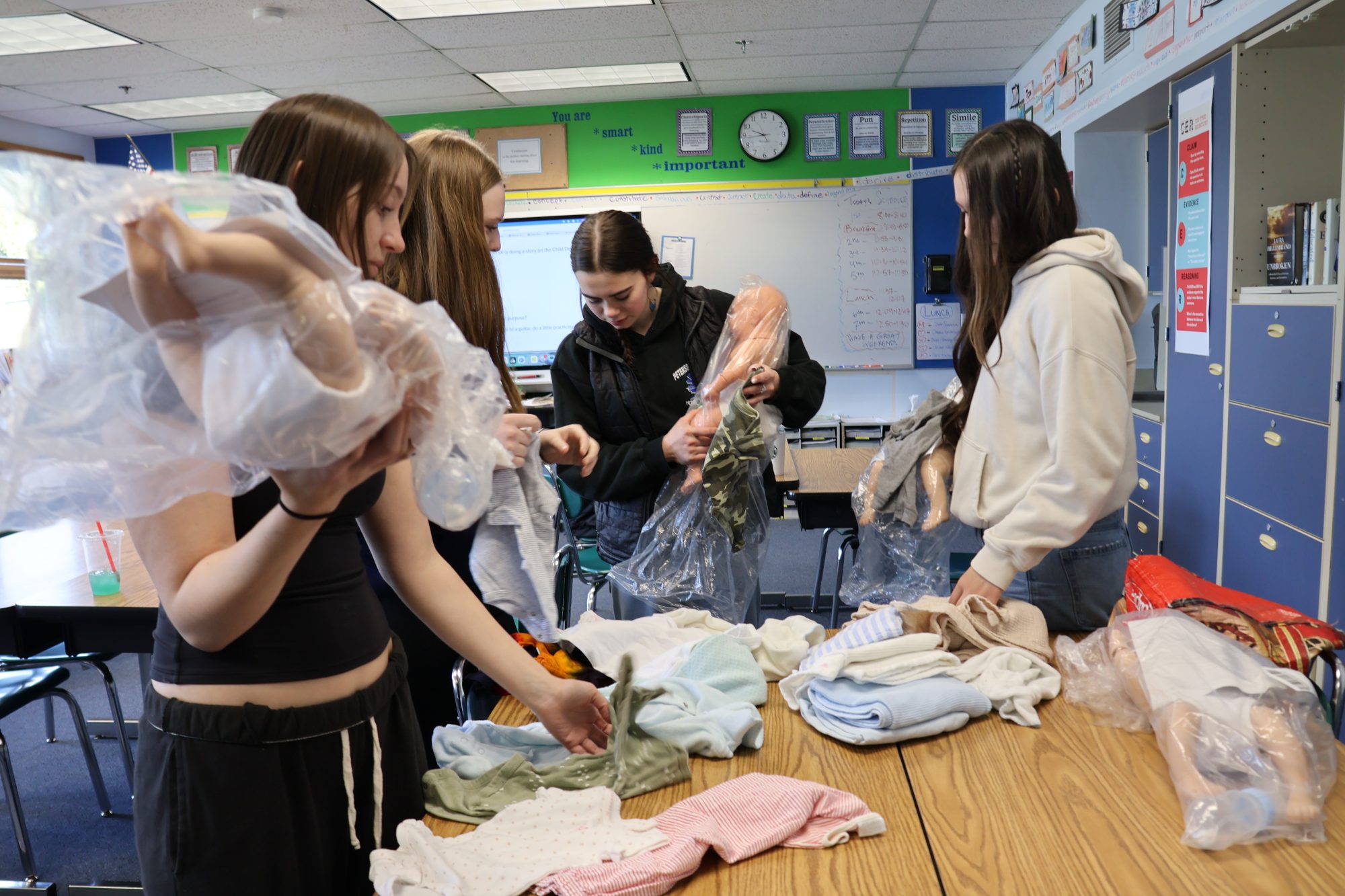
On a Friday afternoon in Jill Lenhard’s class, the sound of crying babies filled the room – crying robot babies, that is. The babies were new, and the class, including Lenhard, was still figuring out how to use them.
“I took one baby home to see how it all worked, and I took it home in a grocery sack because I didn’t want to walk down the street carrying a baby,” Lenhard told the class. “But then when I got home and I laid it on the counter my husband was like, ‘What is this?!’”
These robot babies are a part of a dual-enrollment child development class Lenhard is teaching this semester. Students can choose to receive college credit at the University of Alaska Fairbanks for taking any of her four classes. Plus, they learn valuable skills they can take into the workforce.
This semester’s class covers kids up to age four. Lenhard does a lot of hands-on activities. Each Wednesday, the high schoolers spend about half an hour observing classrooms at the elementary school and the nearby Good Beginnings Preschool.
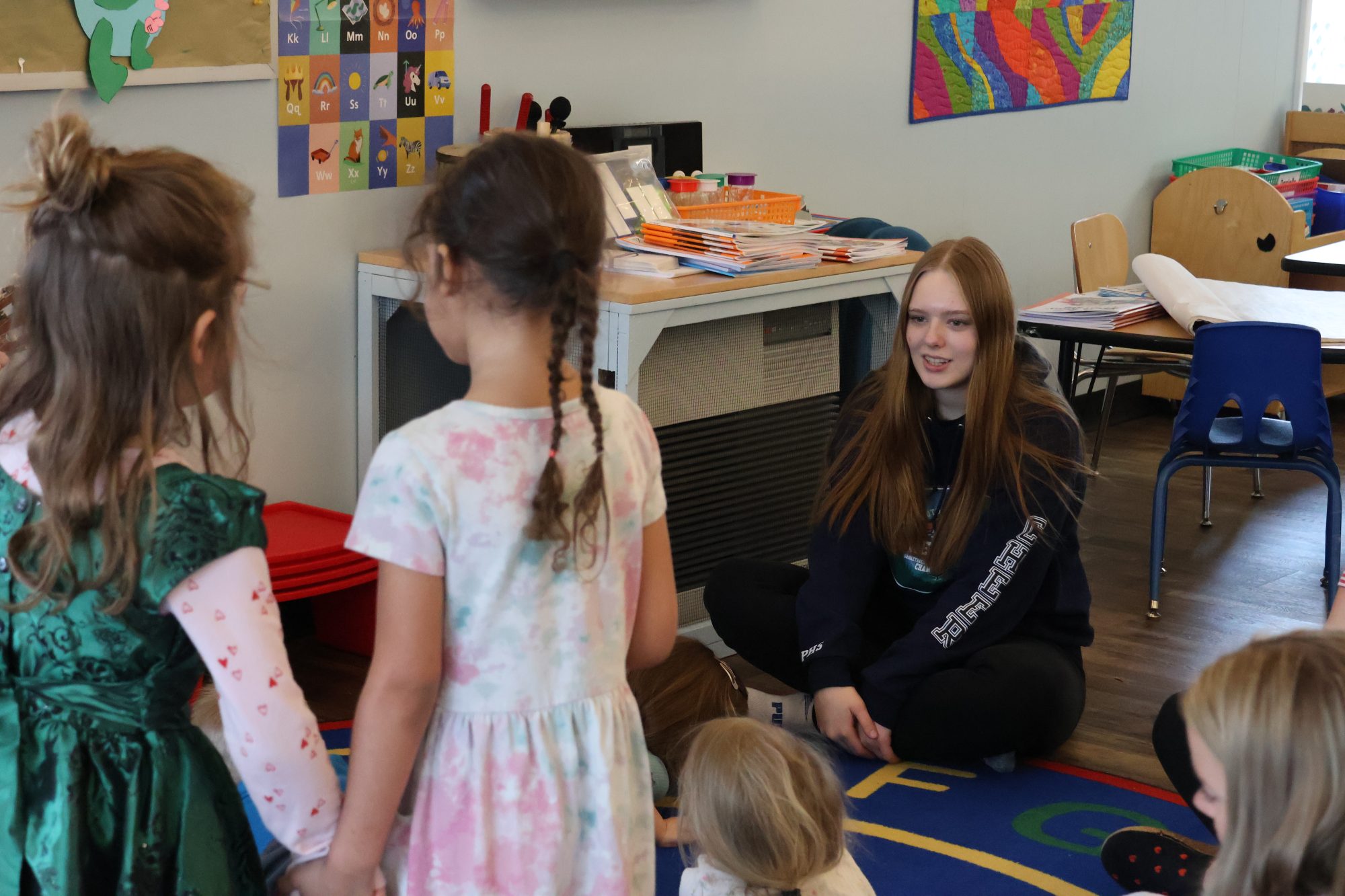
At this point in the semester, the students know exactly what to expect. Walking up to the preschool, sophomore Brody Whitethorn already knew the agenda.
“Today’s usually the music day, and so we’ll have our music lady there, and they will, like, come sit in your lap sometimes, and like, be really cuddly.” she said.
Brody, along with junior Alicia Smith, sat down in a circle with the preschoolers and their teachers. One kid immediately crawled into Brody’s lap as the high schoolers joined in on music time, then arts and crafts.
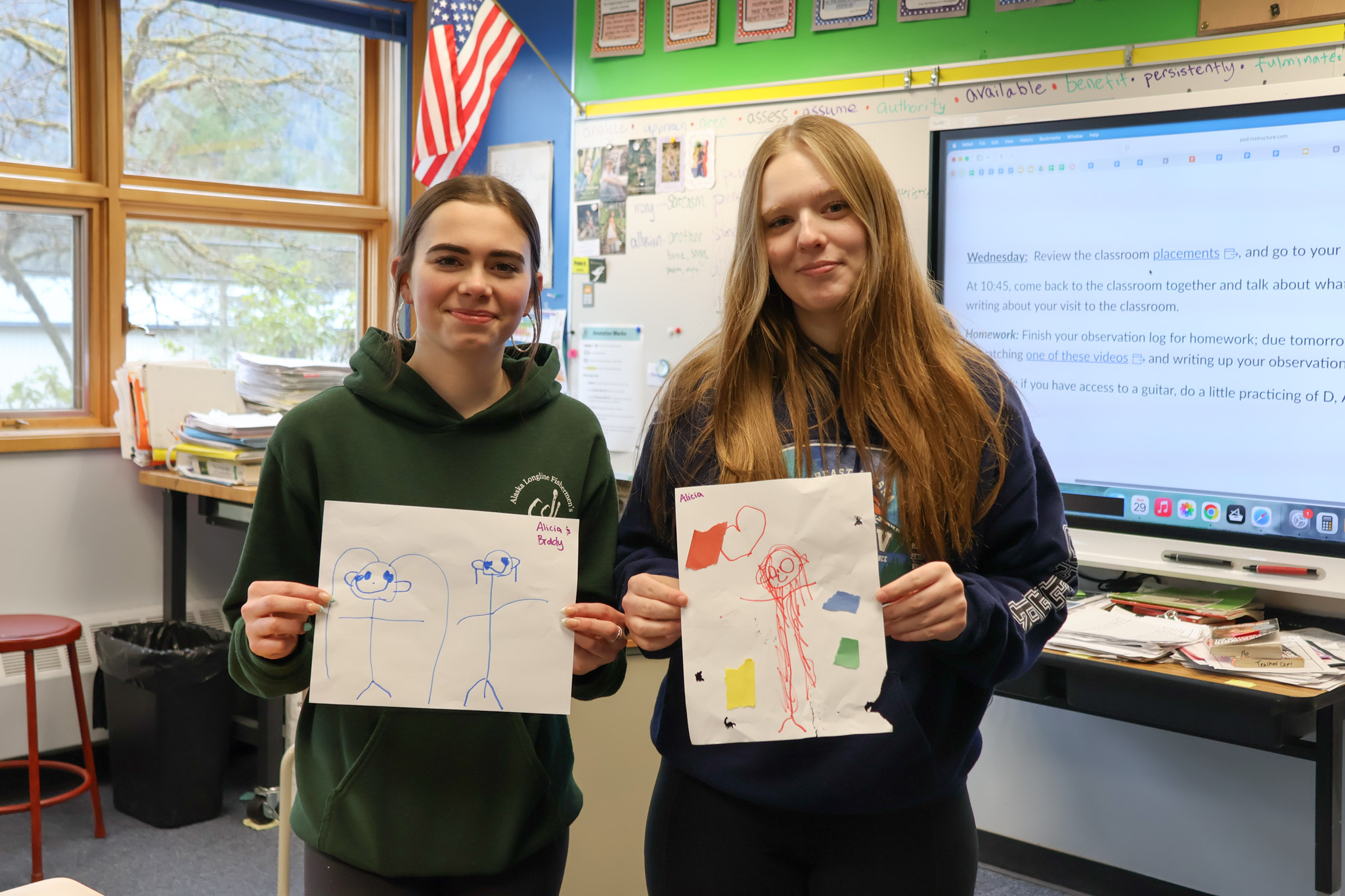
By the end of their observations, the preschoolers had made drawings of Brody and Alicia. The pictures now hang in the window of their high school classroom.
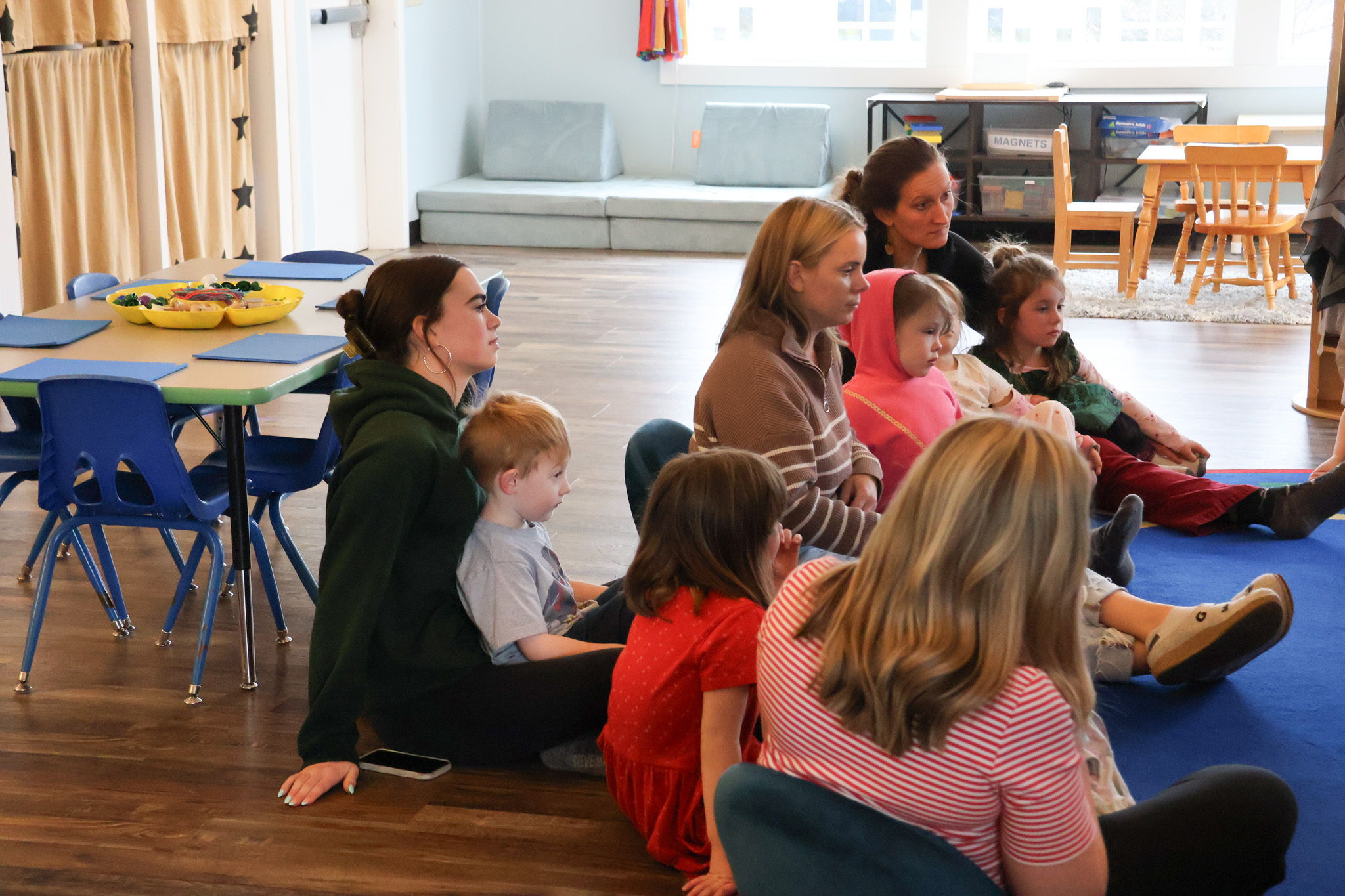
At the end of class, the high schoolers reflect on what they’ve seen. Brody said she’s noticed how preschoolers start to work through emotions.
“Like, a kid wants something and asks, ‘Hey, can you hand me that?’ And the kid ignores them or doesn’t hand it to them, and then they get upset,” Brody said. “But that’s just another thing that they’re learning.”
She said the preschool is exactly the kind of place she wants to work one day.
“I feel like working with kids is one of my favorite things, because I have, soon-to-have, six siblings,” she said. “And it’s just amazing.”
Lenhard, their teacher, said many of the students in her class are like Brody, and want to work with children in some way when they get older. She said that’s what this course is all about.
“Districts want to grow their own teachers, people who understand these sort of more isolated rural communities in Alaska, because they’ve grown up here, and they really care about them,” Lenhard said. “If we grow our own teachers, students who want to go off and get a teaching degree and then come back and teach here, that’s a really successful way to keep the population of teachers high.”
The students may have a chance to work in schools before they graduate. The district is developing a program that may allow students who have completed two of Lenhard’s classes to work as paraprofessionals. They’d be earning high school credit and money at the same time.
Petersburg isn’t the only community with a program like this; Lenhard modeled hers after one in Ketchikan. She said she’s been in meetings with the University of Alaska Fairbanks to see if there’s a way to expand the program beyond the two communities.
Editor’s Note: The headline has been updated, changing the word “childcare” to “child education” to better reflect the scope of the class.