A developer is considering using a part of his property in Petersburg for a small-scale data center. The proposed private project is between the Silicon Valley-based company Greensparc, and the developer who owns the defunct Ocean Beauty Seafoods property on the downtown waterfront.
Petersburg Borough power department officials support the idea, saying it could benefit local customers for years to come by stabilizing utility rates.
“It’s a private project. The Borough isn’t really involved, other than to provide power to a customer requesting it,” outgoing Borough Utility Director Karl Hagerman told KFSK. “It is not a large data center. It’s a very small data center in the data center world. And the rightly deserved stigma of large data centers don’t really apply to this project.”
Andrew Mazzella, of Mazzella Alaska LLC, grew up in Petersburg and said he wants to give his hometown a competitive edge.
“I want to put Petersburg, keep Petersburg on the map,” he told KFSK.
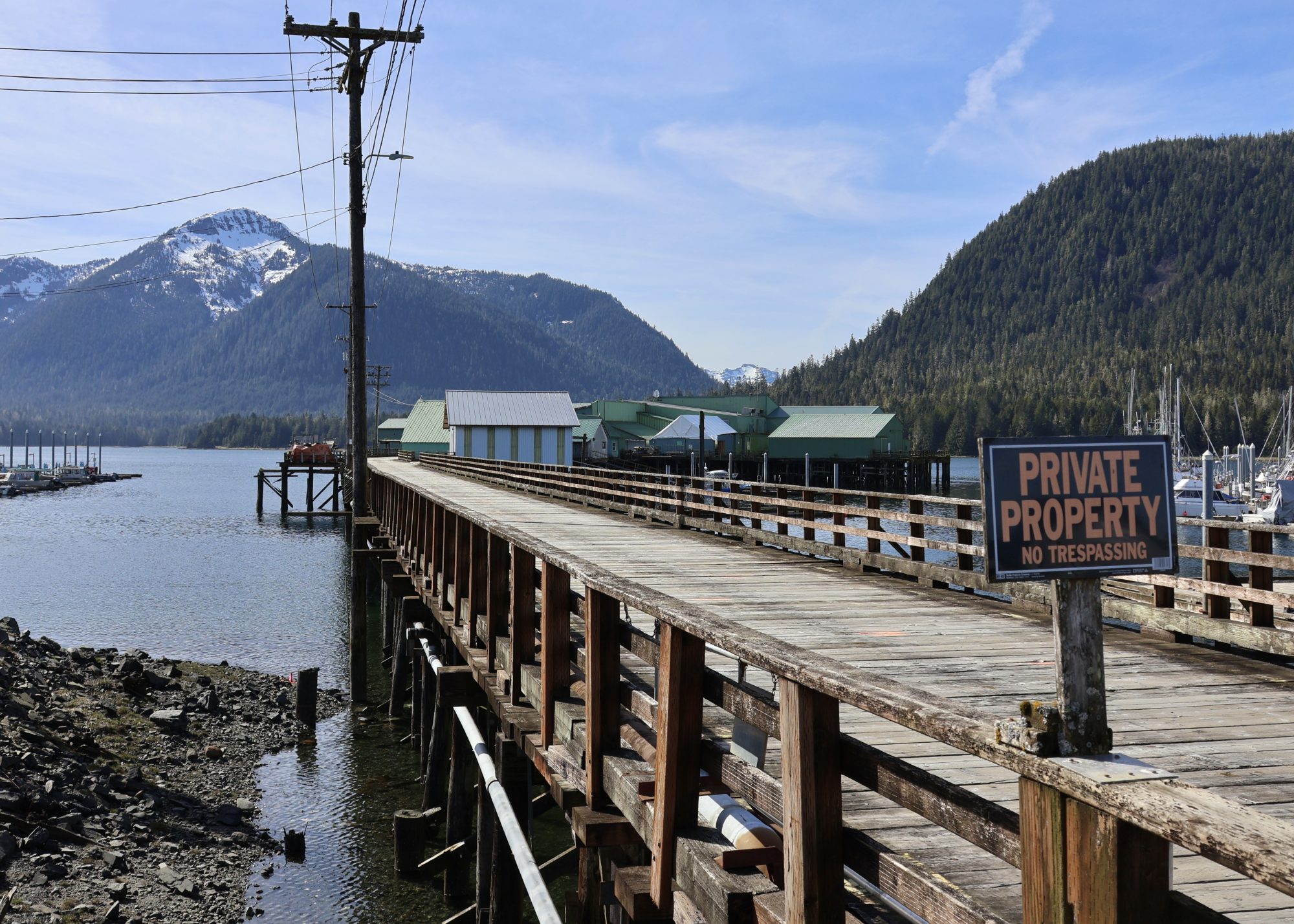
Mazzella bought the former Ocean Beauty properties on Petersburg’s downtown waterfront in 2024. In addition to the loading dock, pier, waterfront cannery and plant buildings, Mazzella also owns the 2-megawatt transformer that powered the cannery before the plant ceased operations in 2016.
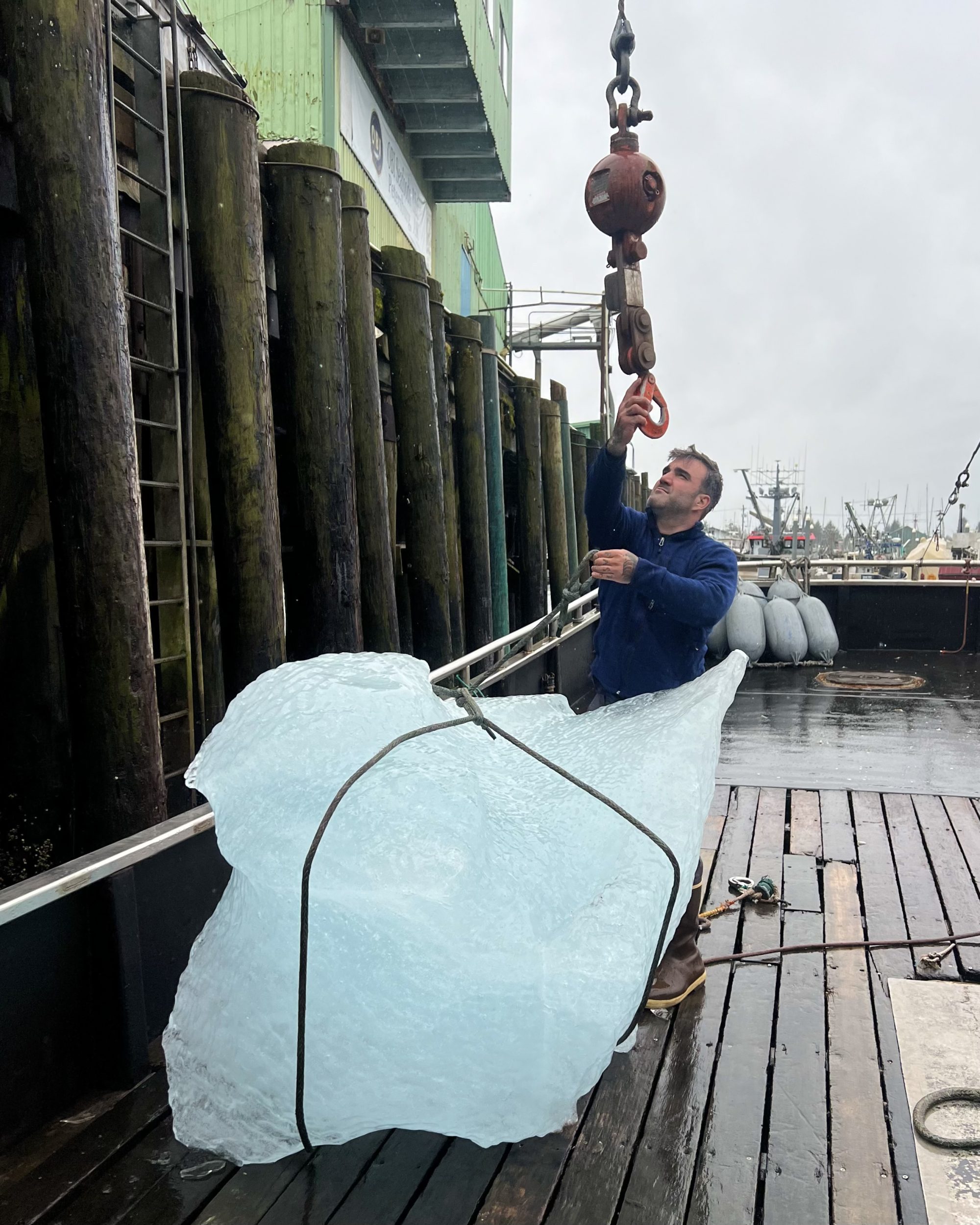
Since buying the private, largely industrial-zoned property, Mazzella has been working through options for developing it — and figuring out what to do with the transformer. He has a 10-year “no-compete” clause in the sales contract with Ocean Beauty that he says bars him from using the property as a cannery.
Mazzella is penalized thousands of dollars by the local Borough’s utility department each month for not using the transformer, which is an industrial-sized amount of power.
“Having that large service with the transformer,” he said, “we’re just bleeding money if we don’t use the power.”
So he’s been looking for a tenant who can use that much power. Mazzella learned of a data center proposed in Wrangell as part of a greater port development partly funded by the city, and Mazzella reached out to the company to see if a private project could work in Petersburg.
Greensparc data centers
Greensparc is a company that’s trying to tackle the data center sector’s intense resource demand issues by building its small-scale facilities in communities with things like unutilized, stranded power and renewable energy. Although the company is based in the Lower 48, its founder and CEO, Sam Enoka, is from Alaska’s interior.
Enoka said he wants to benefit his home state by bringing in this kind of technology and economy.
“I’ve known, because I grew up in Alaska, that if we could accomplish what we want to do in the harshest environment that I know, and the most difficult energy environment that I’m aware of, that this would be the most excellent proving ground for our business model,” Enoka told KFSK. “Almost anywhere in the world is going to be easier than Alaska.”
While the exact spot hasn’t been decided on, Greensparc is considering renting space from Mazzella somewhere on the property to use the former cannery’s existing power infrastructure — the transformer — that’s been going unused for the past several years.
“We’re designed to plug-in and be an economic benefit for the utility and the rate payers in the community,” Enoka said. “If stakeholders are happy with that, we’re happy. If stakeholders are not happy with that and don’t want us, you know, then I think that we really, realistically, have to consider moving on and looking at the next community.”
This data center that Greensparc looks to build is different from the large-scale ones built by big companies in the Lower 48 — the noisy, industrial facilities that use up hundreds of thousands of gallons of water to keep their operations cool, fossil fuels, and can significantly strain local utilities.
“By design, we’ve chosen to try to minimize any kind of impact like that,” Enoka said.
Greensparc’s data center, they say, would be a room full of computers inside a building the size of a small retail shop. It uses a closed-loop cooling system that works like a car radiator — the cooling loop is filled up once, the water takes in heat, circulates out of the building where Alaska’s colder climate cools it down before the water is recycled back inside to take the heat again — so it doesn’t consume a bunch of water or dump waste.
“We’re not drawing any water, and we’re not putting any emissions out, and we’re not putting any water out anywhere,” Enoka said. “So, you know, from that perspective it’s pretty benign.”
Backers expect the data center to be quieter than the cannery. And, according to research by the Borough utility, this would not tank the power supply available in Petersburg.
Borough staff presented information about the proposed small-scale data center, for transparency, during a Petersburg Borough Assembly meeting last month. A few residents testified, too, voicing skepticism.
“I am not going to come out and say this is going to be a bad thing for this community. But I have some skepticism,” said resident Greg Browning. “It’s from my opinion, due diligence up front on something like this is way easier than if we get made some promises that don’t pan out the way the promises were made. It’s a lot harder to go back on something like this.”
Borough officials with the power department told KFSK that they were also skeptical at first.
“We were like everybody else in town when they first hear,” said incoming Utility Director Steve Harbour. “It’s like, oh heck no, what you’re talking about.”
But then they did the math.
“It isn’t us just trying to shoot from the hip, come up with a number. It’s mathematic and scientific, and it’s just what we need,” Harbour said.
Thinking of power like pizza
Power costs are spread out among all the Borough’s utility customers. And in general, selling more power lessens the burden for everyone.
Harbour said he likes to explain this with a pizza analogy: You can only buy a whole pizza, but you only want a slice. Leftovers aren’t an option, so the unwanted slices would go to waste, but the pizza costs $20.
“But if me and you say, hey, let’s go in together and get a pizza, now our cost is $10 each. And then you keep amplifying that, you get four people, it’s $5,” Harbour added.
Retiring Utility Director Karl Hagerman explained that the imaginary pizza slices represent portions of Petersburg’s power supply.
“The more slices of pizza we can sell, the cheaper we could sell it for, you know, to cover our cost to make that pizza in the first place,” said Hagerman.
He said there’s a limited number of new customers in Petersburg to sell power to.
“So when you have a customer, such as a data center, that comes in and requests to purchase a large amount of power, it really helps spread out those costs,” he said. “Because that one customer is taking up quite a few pieces of that pizza and making it easier on everybody else.”
Utility Director, power department support
Hagerman said when he first ran calculations for the revenue this data center would generate for the local utility, he refigured it multiple times because it was so much.
“I’ve been doing this for a long time. I’ve never had a customer walk through the door that was going to benefit all my other customers, you know, never! And this one did,” Hagerman said. “And after we looked at it was like, wow, this will make a huge difference for the utility, for every customer that we have.”
The Borough’s power department supports Greensparc’s small-scale data center project because they estimate it’d generate $1–2 million in revenue each year by operating that privately owned transformer. Hagerman compared it to adding hundreds of residential customers with just one small facility, using an existing service — in other words, more revenue at no more expense.
The department assures that there is enough surplus power to support the data center operation, also accounting for housing developments slated to come online in the next couple of years.
The department is confident that selling power to Greensparc would also lessen, but not eliminate, future utility rate increases. And any necessary rate increases would not be due to data center operations.
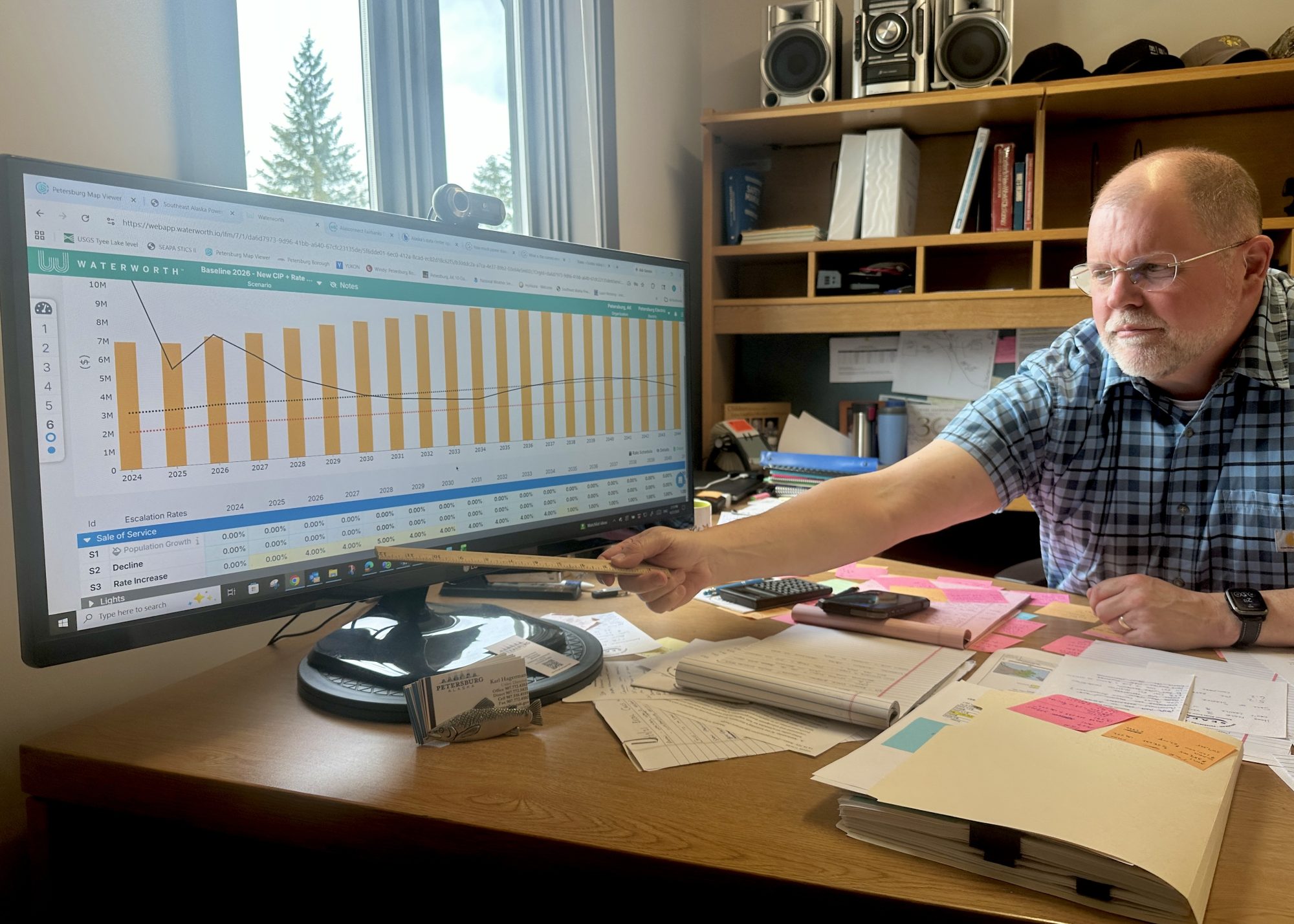
Utility rates in Petersburg, which are some of the cheapest in the state, are projected to increase annually by about 4% for the next several years.
However, according to the department, the data center would lower that figure to about 2%.
“That’s what we’re looking at. And why we’re supporting this so much,” Hagerman said. “We can see, visually, what kind of a difference is going to make for customers, our ratepayers.”
Petersburg runs on hydropower. It has its own plant south of town, but buys most of it from Southeast Alaska Power Agency, a regional supplier that sends power to Petersburg, Wrangell and Ketchikan.
Petersburg has diesel generators as backups when energy use is high, the power goes out, or during the regional hydropower supplier’s annual maintenance shutdown. The community sometimes has to pay a diesel surcharge to offset the cost of using the generators in a given year. So customers are asked to conserve energy use during those times to avoid paying more.
Hagerman said “yes,” a data center would require the utility to run generators more during those times, but the Borough can make a written agreement with Greensparc with the shared goal for that usage not to fall on the backs of all ratepayers.
“The agreement with them is the important part,” he said, “to make sure that they either don’t have an effect on the loads by shutting themselves off, or if they do have an effect on the loads and the amount of time that the diesel generators are on, that they kick in for their portion of the diesel so that, again, all other customers would not be affected.”
An agreement hasn’t been formed yet because the developer and Greensparc are still working out the details of their private deal, so the Borough hasn’t gotten any formal service requests for the potential data center.
But Hagerman said the power sale agreement gives the department confidence.
“We’re only seeing positive impacts and no negatives,” he said. “So I hope people can take that away from this process and then, you know, reap the benefits of their rates not climbing as high as they would have otherwise.”
Petersburg Municipal Power and Light compiled a list of frequently asked questions regarding the data center, from health to zoning to fire safety. Find the document attached here. More information about Petersburg’s power system from the Borough is available on its website.