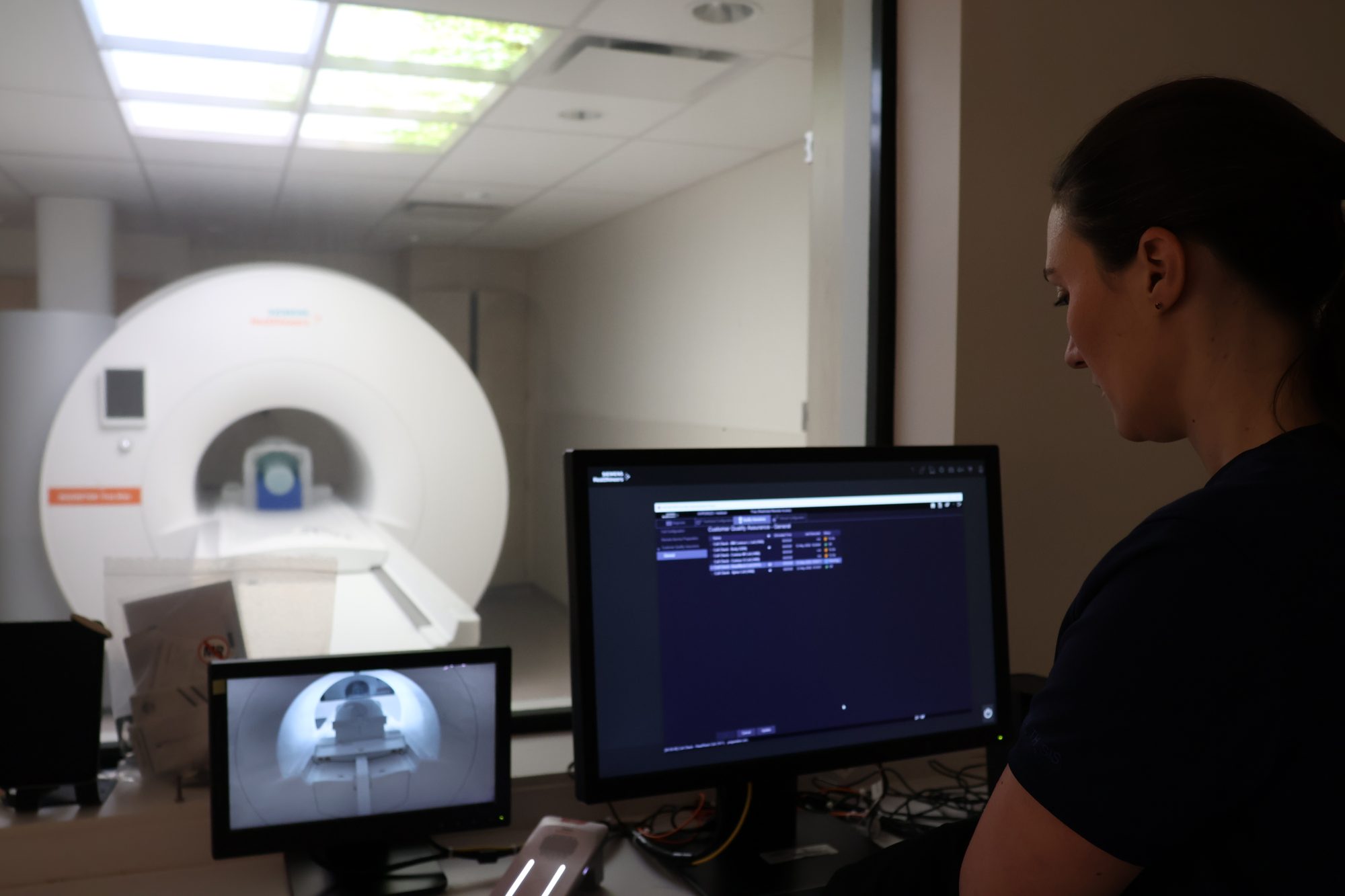
Inside a small booth with a large glass window, Petersburg Medical Center Radiology Manager Sonja Paul was running Petersburg’s new MRI machine through a quality control test.
“These machines can get pretty loud,” she explained, turning up the volume on a nearby speaker. “It sounds like a lot of knocking, hammers, ticks, things like that.”
An MRI is a medical device that takes images of soft tissues in your body – like your tendons or your brain – using powerful magnetic fields. Those images can help diagnose joint and back injuries, tumors, and strokes. The loud knocking sounds were coming from a piece of equipment that keeps the MRI’s magnets cool.
The fact that this device, loud knocking and all, is now in Petersburg is a big deal in the small community.
Residents regularly have to travel to larger cities by boat or plane to receive specialized healthcare. And Paul said an MRI can be a common requirement before other specialized procedures.
According to the hospital’s 2025 Community Health Needs Assessment, nearly half of the 270 people surveyed said they had to travel outside Petersburg to get an MRI, while 7% said they or someone they knew had to delay or skip their appointments because of travel.
“So we’re hoping that with these services here, it will just reduce one more trip that a patient has to take,” Paul said. “They’ll be able to complete this exam here before meeting with a specialized provider.”
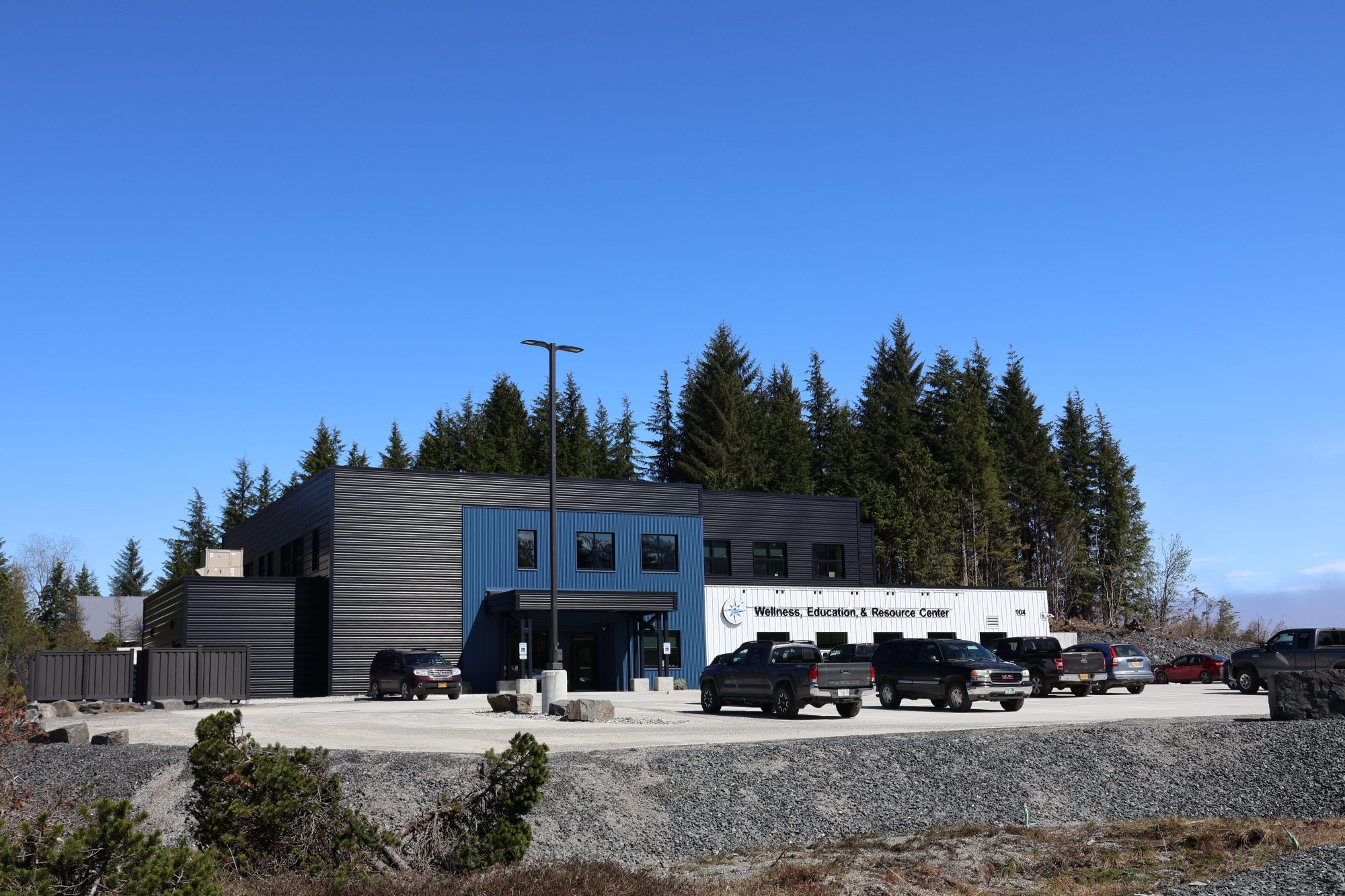
It’s been a long process to get the MRI ready and online. The equipment has been installed in the hospital’s Wellness Education & Resource Center, or WERC building, since late last year. But the hospital has been waiting on a state regulatory process called a certificate of need before radiology staff could start seeing patients.
Community members submitted more than 100 letters to the state supporting the MRI during the certificate of need process.
While it’s been a long wait, Petersburg Medical Center CEO Phil Hofstetter said it’s given the hospital some time to work out some kinks.
“We had some brownouts that affected the equipment,” he said. “We had to get other equipment in place, like a big UPS [Uninterrupted Power Supply] system, which keeps it steady and not affected by some of the electrical brownouts locally.”
The hospital finally got its certificate of need from the state at the end of April, and Hofstetter said it will take the hospital roughly a month to get the MRI ready for patients.
He said many people in the community are ready to put their names down for an appointment.