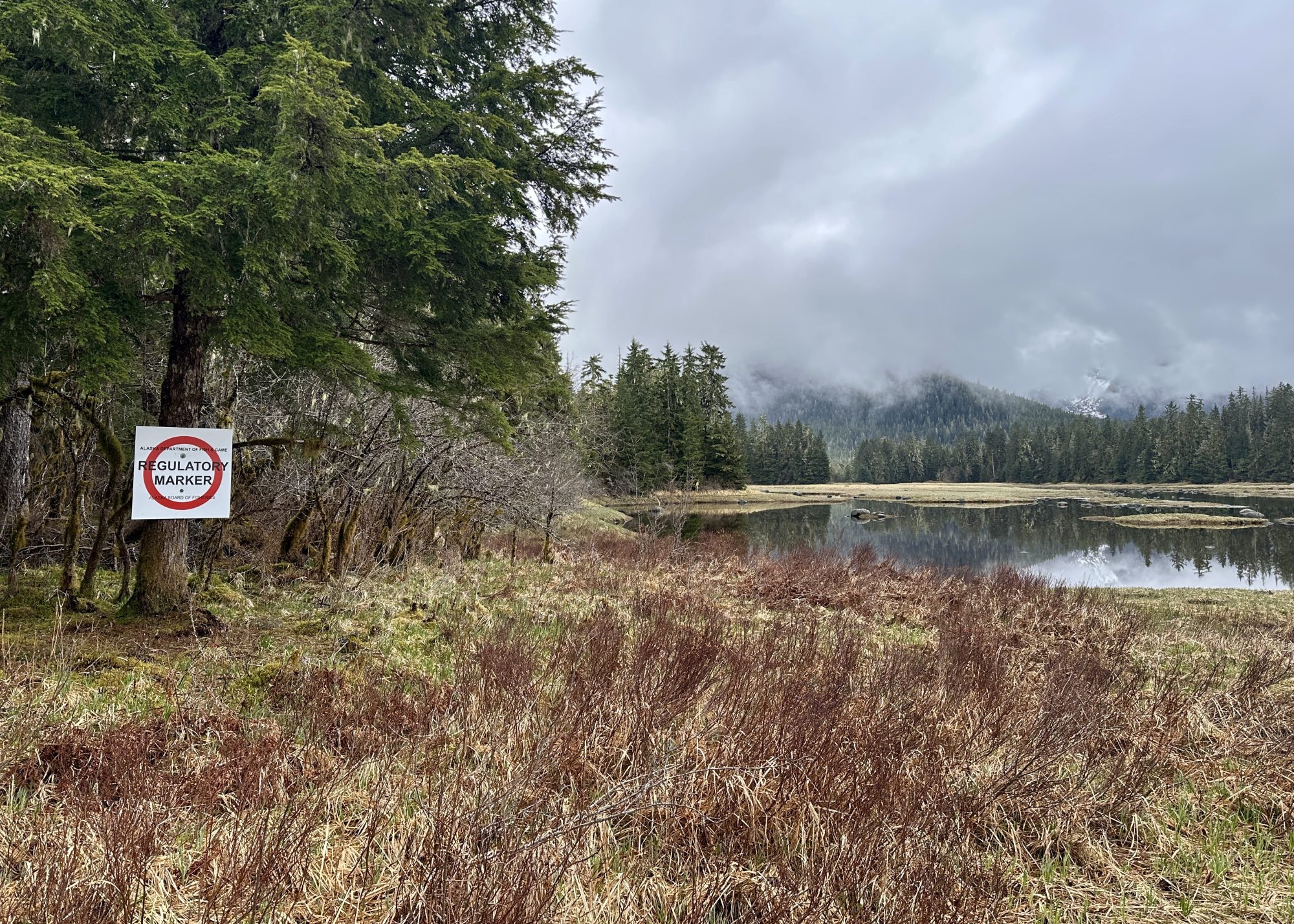
Sport fishing on a popular slough south of Petersburg is open to all anglers this summer.
Recreational anglers can harvest hatchery-produced king salmon in the Wrangell Narrows-Blind Slough Terminal Harvest Area from May 15 to Aug. 15.
The area includes a stretch of the Wrangell Narrows saltwater and the Blind Slough freshwater that the salmon travel through when instinctually returning to the Crystal Lake Hatchery upstream.
Resident anglers can harvest up to two king salmon a day of any size. Nonresidents can harvest up to one per day, and two a year in the terminal harvest area.
It’s the first time in a few years that both residents and nonresidents can fish for king salmon in the slough’s freshwater, which was closed to nonresidents last year and all anglers the year prior.
That opportunity depends on the number of king salmon expected to return to the hatchery. Managers with the Alaska Department of Fish and Game call those fish broodstock.
“The hatchery needs the returning kings in order to produce the next generation,” said Jeff Rice, a state biologist for the Petersburg-Wrangell management area.
Managers forecast about 2,300 king salmon will return this year. That’s up from the past two years, which forecasted 1,300 and 1,700 fish, respectively.
Rice said there’s one thing that’s different about sport fishing king salmon, also called Chinook, on the slough this summer: Anglers could be interviewed by Fish and Game staff doing research on the fishing effort and environment there.
“We got money for a micro creel survey to be performed out at Blind Slough over potentially the next three years, and this will be the first year of it,” Rice said, noting the 2026 budget for the operation is estimated at $20,000. “So we will have a technician out there, creeling people’s catch and taking some biological samples from their king salmon, to give us a better idea of the user group that’s out there and how much is being harvested.”
Rice said the short-term survey program is specifically for the Blind Slough freshwater area — one technician seeing what’s happening on the slough, gathering as much information as possible from anglers about fishing effort and observing wildlife interactions. He said they plan to publish a preliminary report on the data each year, and that getting more information through the survey, “will help inform management decisions on the slough moving forward.”
There’s another difference that anglers fishing hatchery kings near Petersburg should know, Rice said: The City Creek release site north of town is permanently discontinued as of this year.
Anglers fished hatchery salmon released at City Creek for about a decade. However, the state stopped releasing salmon at the site in 2022, citing challenges with funding, limited broodstock, and proximity to the Stikine River between Petersburg and Wrangell. Sport fishing remained open at City Creek through last year to allow anglers to harvest the fish returning there. The remaining hatchery king salmon returns “are negligible” according to the state.
Now those waters are just part of the larger fishing district, which is closed to retention until mid-July.
Two other hatchery areas near Petersburg and Wrangell open next month: Anita Bay at Etolin Island near Wrangell, and Gunnuk Creek by Kake.
“The area they’re in wouldn’t be open until June 15, but we allow people to start on June 1 there because of the hatchery fish,” said Rice.
The sport fishing harvest rules for both the Anita Bay and Gunnuk Creek hatchery areas are the same as the rest of the region. Residents can harvest two king salmon a day that are longer than 28 inches; nonresident anglers can take one, but the fish do count toward a nonresident angler’s annual harvest limit. That’s different from the Wrangell Narrows-Blind Slough Terminal Harvest Area, where those fish do not count toward the regional nonresident annual limit. The nonresident annual harvest limit is no more than three king salmon, and that window of opportunity drops to a single fish after June 30.
Sport fishing is managed in-season, announced by the state.