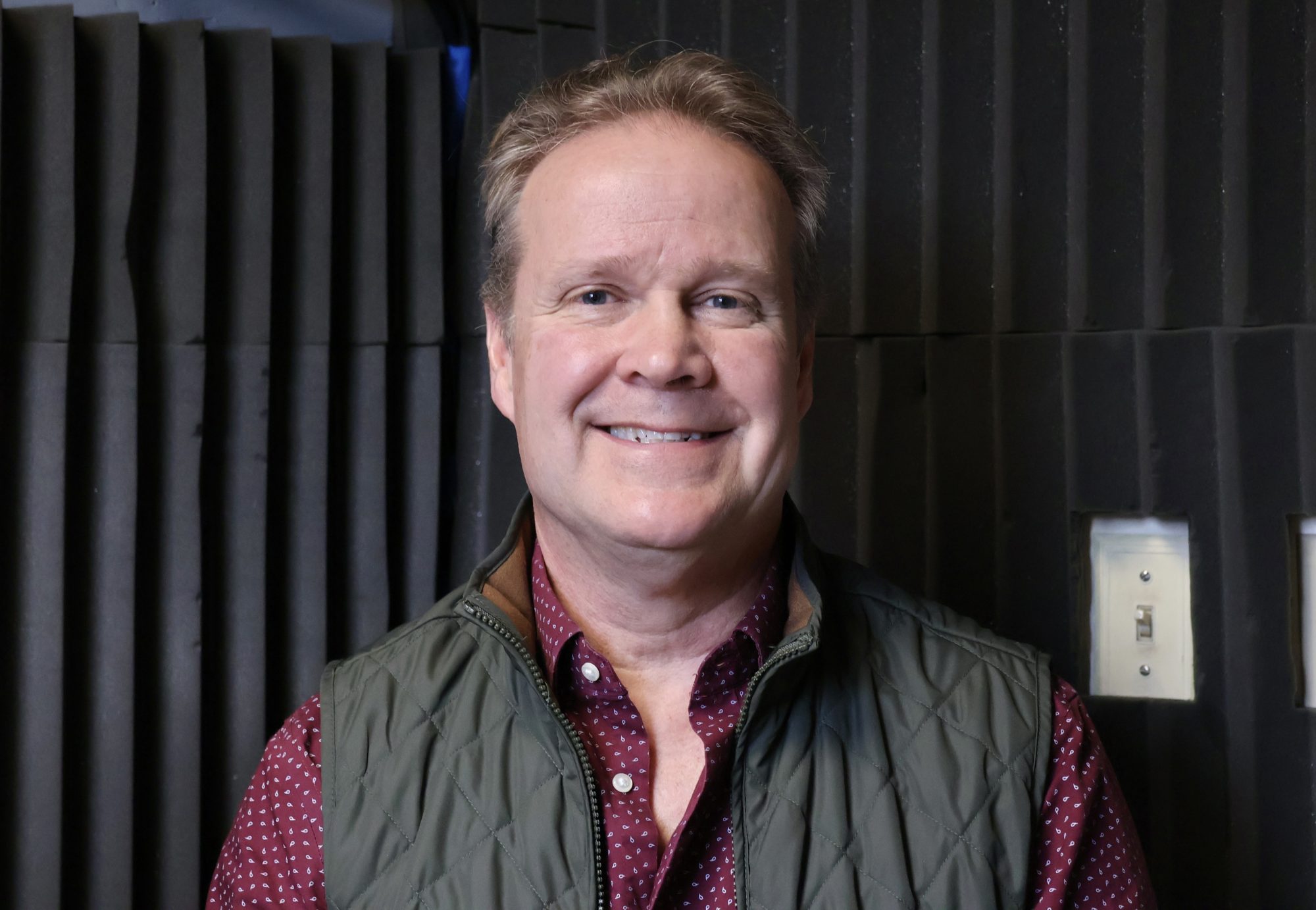
Retired podiatrist and Republican gubernatorial candidate Matt Heilala visited Petersburg on May 15 as part of his campaign for governor. Heilala hasn’t held elected office, but said the skills he’s learned in the private sector would be a strength in the governor’s seat.
He sat down with KFSK’s Taylor Heckart to talk about what it would take to balance the state’s budget.
Listen to the short version here:
Listen to the long version here:
TRANSCRIPT:
Matt Heilala: Well, there’s two aspects to a budget, right? You want to have a number at the bottom of your cash flow sheet that is a black number, not a red number. And we’ve not done that in a very long time.
So the number one thing we have to do is have a vision for prosperity — and prosperity is what we all want for young people so they don’t leave the state — and that’s to start saying yes to projects. We’ve been saying no to projects, whether it be oil and gas, mining, timber. But we’ve gotten in this habit of being kind of fat and sassy from the last boom, and getting complacent with our obligation to keep a vital economy. And so getting from a culture of no to a culture of yes, that’s the number one thing.
The other aspect of a budget, or a cash flow balance, is that you have to look at spending. Spending is an issue that’s the hardest thing to reduce, because legislators have constituencies that rightfully have very loud voices, “you’re not going to cut from our budget.” But we need a money flow visibility effort.
People get a little tired and their eyes glaze over when I say transparency, because we all hear that all the time, right? But we have a strong understanding that monies that should be allocated to that clinic in [say] Dillingham is being diverted a bit and not being properly allocated. Not necessarily overt fraud, which we will find. And I’m not specifying a particular [project], I’m just giving an example.
And so people say “If you’re going to make cuts, not from our important services!” Well, the point is to make sure that the monies that are allocated for important things are truly being utilized correctly for those services. Across the board, the estimate on the low end is 10-15% of your spending is waste, fraud, and abuse. No one wants to believe that, but it’s real, and we’ve really never had really hardcore accounting of where money goes.
So it’s twofold to improve our budgetary thing. Start saying yes to projects. We have all these new oil fields that are about to contribute to our pipeline flow, but we don’t have access to them because we have no roads. So there’s a transportation infrastructure part of this formula, along with understanding the priority of getting projects underway and starting to say yes.
Taylor Heckart: And to make sure I’m understanding you right, it sounds like when you’re saying yes to those projects, a lot of those are resource extraction and development projects?
Matt Heilala: Yes. Those are our assets.
Now, diversifying the economy, critically important. Tourism is wonderful, it just overtook the commercial fishery as the number one employer in the state. I was a commercial fisherman from the time I was nine until I was about 25, and I was a skipper of a boat in Bristol Bay at 18. So it’s very important.
We spent time in Wrangell just yesterday with a family that has a shrimp boat. They do a lot of other fisheries out of that boat, it is such a beautiful family operation, and it’s a real challenge for them to profit. If you’re not profiting in any business, you’re going out of business. So, the fisheries are very important.
You know, we have products here in Alaska that Alaska needs, our country needs, and our allies need. I think more than ever, being reliant on adversarial nations for critical things like critical minerals, for energy in particular, places us in a very vulnerable spot.
Taylor Heckart: I’d love to move on to education in Petersburg. Like many other communities, we really care about our school district. Like many districts in the state, when I talk to our school administrators, they tell me that if we don’t get an increase in state funding we’re gonna have to make really tough decisions in the coming years. So, if you were to be governor, how would you propose the state is able to fund schools while also giving districts stability and certainty?
Matt Heilala: When you’re out of money, when you go broke from being in that culture of “no” for 30 years, there’s no limit to what we can encounter as a problem, and no limit to what we fight over: school funding, PFDs, roads, all these things. So keeping focused on that vision of prosperity, and saying yes.
Stacy and I, my wife and I, we’ve been married 36 years. We graduated from Soldotna High School in 1988, got married at 19 and 20, and so we are products of public education K-12.
But it was a very different world back in the 1970s and 80s, and not all public schools are serving students and families the way that they wish them to be. Rightfully, families are choosing for their child whether they stay there or make a choice to go elsewhere. So, there is a disruptive thing happening in our educational system.
Public education needs adequate funding. Period. It’s an obligation. It’s constitutional. There are many things that public education offers and serves better than private schools, special needs populations, etc. That’s critical. That is all set up. The infrastructure is there.
We have something very unusual, we have over 200 individual school districts across the state, and we have very, very expensive fixed infrastructure. $20-50 million campuses serving a decreasing number of students. So, we need to consolidate some of these in rural Alaska, in particular. Or better yet, see if we can partner with tribal and native corporations to find a solution, because many of these schools are needing significant maintenance and repair, and that’s going to bankrupt the system additionally.
So, maybe we could partner with some of these corporations and villages, because it’s their town center, the gymnasium and all this. Maybe they could own it. Maybe they own it at zero cost, but then they can take more or all of the responsibility of the maintenance. So that’s an option. We could cross-purpose these facilities that are very expensive to the public education system for training in vocational skills that are relevant to the industries that are burgeoning out in rural Alaska, in mining, in fisheries, maybe timber, etc.
So I think we have to look at all of these opportunities again. It’s solved with a booming economy again, and then we have the money.
Taylor Heckart: Again, to make sure I’m understanding you right: ideally the state would have more money then through these projects to be able to fund schools, but then additionally you’re looking at partnerships with other entities who may be able to pay?
Matt Heilala: Yes absolutely. I’m very optimistic about technology. We’re facing this supersonic tsunami of technology that’s upon us, and education is changing rapidly.
Now, even rural households are connected through Starlink like never before. We thought it was fiber to every home — $100,000 per home across rural Alaska — now it’s $300 a Starlink dish. We didn’t even know about that three years ago, but look how easy that and quickly that happened.
And the same thing is happening with teaching platforms that are free, a lot of different tech companies that give a one-on-one teaching opportunity with students. We don’t want an entire day being screen time with our young kids, certainly. But Alpha School in Austin, Texas, is showing that a two hour teaching module per day is giving the results that we want. They’re testing in the top 3% of standardized testing with that kind of an AI-based teaching module.
So, there’s a lot of technology we can lean into while at the same time meeting our obligations with the public school system.
Taylor Heckart: Well, I’d also like to touch on the Marine Highway system, also a very, very vital part of our life here in Southeastern Alaska. But we know that the system has this aging fleet, we have a shortage of certified staff. We know the public isn’t happy because of surveys that we’ve seen that are state funded. So, if you were to be governor, what is the path forward for the Alaska Marine Highway System?
Matt Heilala: I think first of all, the entire state needs to recognize that transportation infrastructure is not just roads and rail, it’s not just bridges, tunnels, and pipelines. If you have these things that can move people, cargo, goods, items around, that’s a part of a path to prosperity. And for Southeast Alaska, your highway and your vehicle is the ocean and the ferry system, in large part. Now, of course, we have great air travel and some air freight, but it’s incredibly expensive, and in Southeast Alaska we rely on the ferry system.
I rode the Columbia and the Malaspina when I was a little kid, when we visited Juneau through Haines and all that stuff. Where we can’t build roads and tunnels, we must maintain access with the ferry system, so that’s got to be recognized as a priority equivalent to roads.
Again, it’s one of those things that when you run out of money, we rely on efficient management. And it’s my understanding that a lot of the scheduling and inefficiencies that have occurred is from top-down decision making, and not listening to the people that have a better understanding of how it should be. So, crowdsourcing ideas from the public down here in Southeast would be very important.
I was speaking to a naval commander within the joint command here in Alaska about how they’re using AI to better plan where to refuel some of these cutters and ships. He said it is saving 32,000 gallons of fuel a day, in many instances just having a better plan of how to manage what you do have. So I think that that would be something else to lean into.
Better management, finding efficiencies, but again, getting our economy rolling and recognizing the priority of the Alaska Marine Highway System.
Taylor Heckart: Matt, I’ve heard you talk about AI a few times in this conversation. If you’d be governor, do you think AI would be an important part of how the state runs?
Matt Heilala: It’s so critical.
My wife was like, “Matt, stop talking about AI. People’s eyes glaze over.” But you know what? We were in a forum with eight other candidates. One of the older ones said, “I don’t know what it is, but I guess we have to deal with it.” Another one said, “if I find anyone in my campaign using AI, they’re fired.” This was one of the younger ones. I said, “I’ve got news for you. AI is here, and if you’re not leaning into it, you’re going to be left in the dust.”
Because it’s a human productivity enhancement tool, right? And we’re finding it’s not necessarily a job replacement tool, it’s making people more productive in their domain of expertise, that’s with education, that’s in medicine, that’s across the board. It’s really foundational. It’s not something to be fearful of, but it needs to be managed and supervised.
And I do know for a fact the governor’s office, our current legislative delegation, are leaning into AI with helping them do research on bills that apply to Alaska. It’s also helping draft bills to some extent.
One of my obligations, being not too old, not too young, kind of in the middle, is I have to keep current with what’s going on, to not know just where the puck is, but where it’s going. And that’s a part of why I got an MBA at 50, just to immerse myself with 35-year-olds to just know what’s going on, whether it be crypto or blockchain or AI. This wasn’t even a thing six years ago, AI. So it’s very interesting.
Who do we want as leaders? We want leaders with attributes of unifying people, not being risk averse, looking at all options right when decision making and problem solving, humility, good at communicating, and being present with people. You do have to love people to be effective as a leader. So, AI, it’s an increasing part of things, it really is.