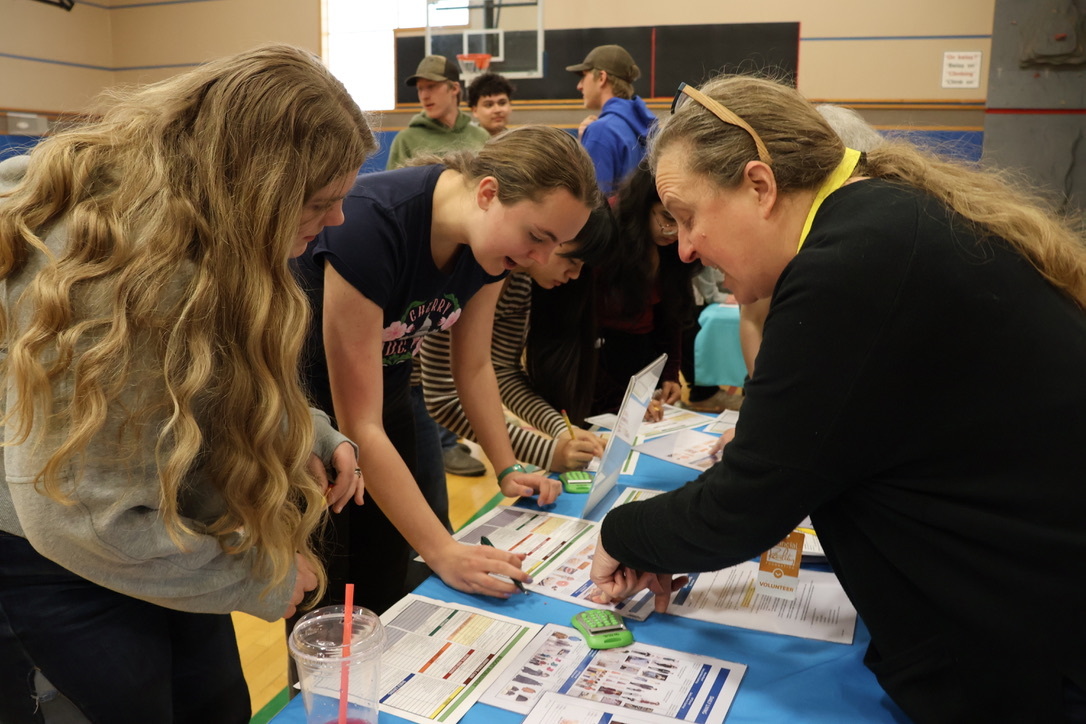
High school senior Ethan Bertagnoli was trying to find a place to live, but his credit score was becoming a problem.
“It’s 640,” he explained. “It just keeps going down.”
Ethan was a mechanic with a wife and two kids under 6 months old. His credit score was too low to buy a house.
“What’s the cheapest rent I can do?” he asked his realtor. “I’m broke!”
Ethan was one of 60 high school juniors and seniors taking part in the “Get Real Finance Fair” on May 8. Armed with fake jobs, families, and credit scores, the students navigated a simulation of some of the expensive pitfalls of living as adults.
“It’s all about the game of life,” said Anna Sherman, the Director of Financial Education and Community Development for Tongass Federal Credit Union, which sponsored the event. Similar fairs are hosted by credit unions across the state.
She said the students use the simulation to learn how to budget while, “trying to learn about their wants and their needs.”
Students picked from over 100 jobs, then used a worksheet to track their spending. They moved between 10 different stations, simulating the kinds of costs they could encounter after high school. But, Sherman said, the event’s volunteers don’t make it easy.
“The volunteers go and they try to upsell,” she said. “So they might be buying a cheap car, and they try to give them a minivan or the most expensive car out there.”
There were tables for everything from healthcare to cars and houses. Students could even get a second job if life gets too expensive.
There were also elements of chance. Students started out with a 700 credit score, which is considered good, and rolled at various stations to see how it changed over the course of the game. Random cards at the healthcare table also added more babies – and more costs – to growing families.
High school Spanish teacher Dustin Crump was selling everything related to family life, including groceries, baby supplies, childcare, pets, and charitable donations.
“I think childcare is a big shock to them,” he said. “They’re saying $800 per month per child is a big, big shock.”
While the teens were facing sticker shock, Crump said what he’s selling is a pretty good deal. The healthiest meal plan he sold was just over $1,000 a month for a family of four.
“I’m telling them, guys, this is a good deal if you guys aren’t living in Petersburg!” he said.
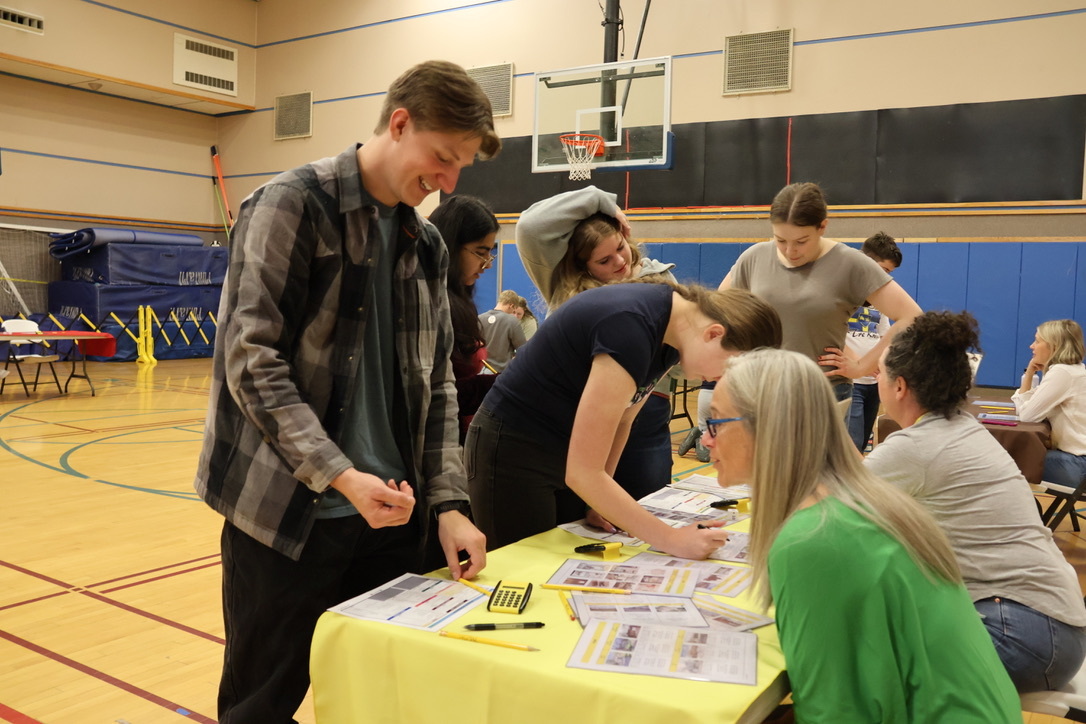
Sarah Holmgrain is one of Petersburg’s local realtors, and helped run the housing booth. She had everything from homes to condos and rentals.
“It’s pretty fun, because they’re realizing all the other extra expenses, like taxes and insurance, that they don’t even really know about,” she said.
When the event ended, the students met with financial advisors to debrief and talk about the choices they made.
Senior Logan Tow said he learned some big lessons about real-life costs. He played an accountant, and had a wife and two kids under three.
“At first, I was $2,200 in debt after everything, and then I realized I had to go make some changes,” he said. “So we had to go back, and rethink our process.”
That meant going back and downgrading his house and furniture. There were also some things he wasn’t willing to sacrifice, like good health insurance.
He said the simulation gave him lessons he’ll take with him later in life.