Commercial fishing is a huge contributor to Alaska’s economy, and every summer, commercial fishermen are often looking for new deckhands to join their crew.
Last week in Petersburg, Gabe Dunham and Sunny Rice organized a three-day Commercial Fishing Boot Camp program for middle and high schoolers at the John Hanson Sr. Community Hall.
Dunham and Rice work for Alaska SeaGrant, an organization that, in partnership with the National Oceanic and Atmospheric Administration and the University of Alaska Fairbanks, provides education, research, and outreach to coastal communities across Alaska.
The course was designed to give students an introduction to the basic skills and safety precautions they’ll need to know if they get a job in the seafood industry.
Rice is a SeaGrant extension agent based in Petersburg. This was the second year she’s run the boot camp, and said the course was based on feedback from commercial fishermen.
“We had a lot of conversations about what fishermen see as needs for the commercial fishing industry,” she said. “One of those was ‘we need crews, and we need the crew to have certain skills.’”
Throughout the course of the program, students learned how to tie knots, de-escalate conflict between crewmates, and even how it felt to be taxed after a fishing season.
One of the key things that Rice and Dunham wanted to highlight was how many different jobs there are in the seafood industry — roles like fishery manager, harbor staff, and lobbyist.
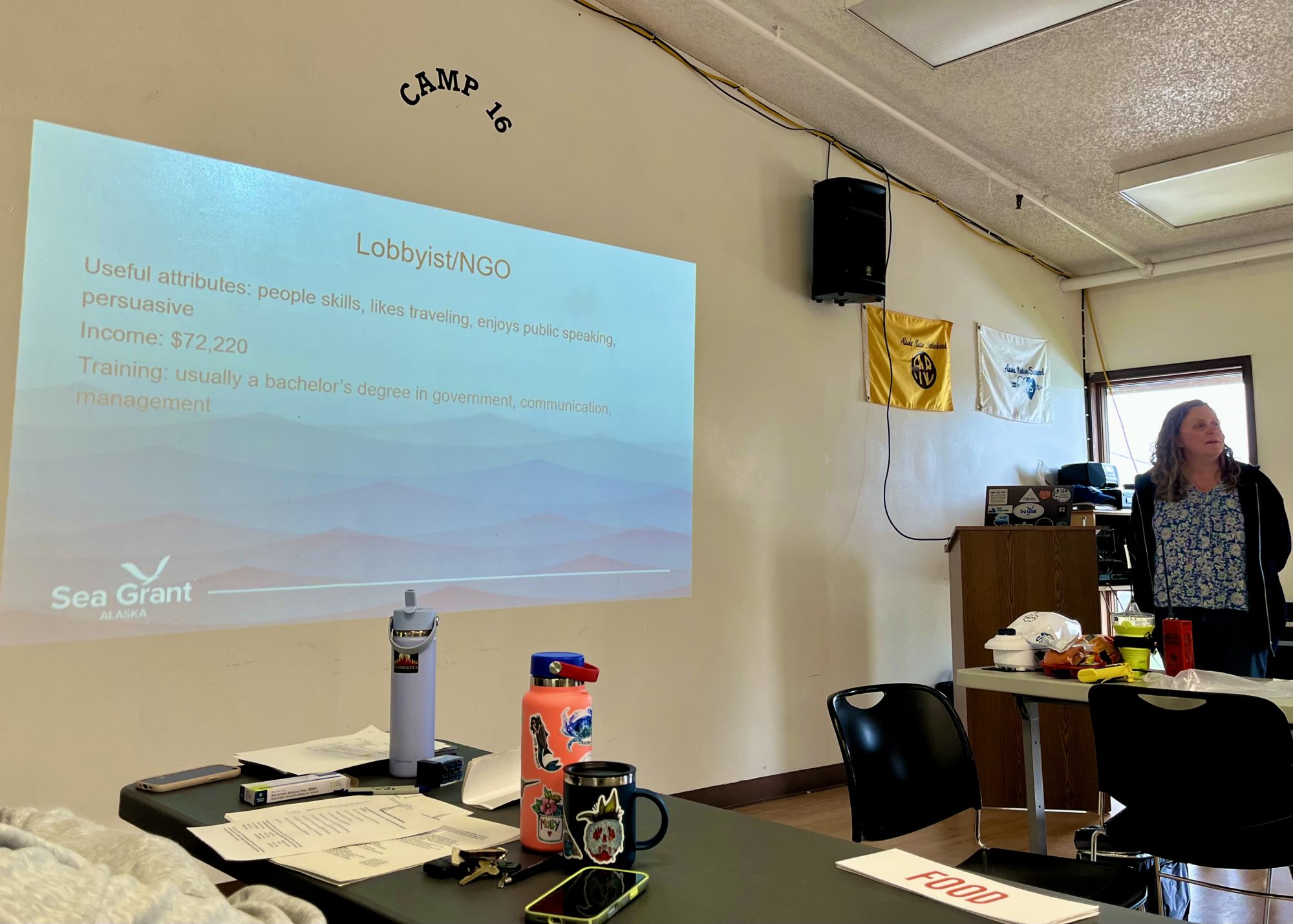
“ The commercial seafood industry requires a lot of different kinds of jobs,” Dunham said. “So even if a lot of these kids that we taught today may not go forward to be commercial fishing business owners, that doesn’t mean they might not be involved in the industry in some way or another.”
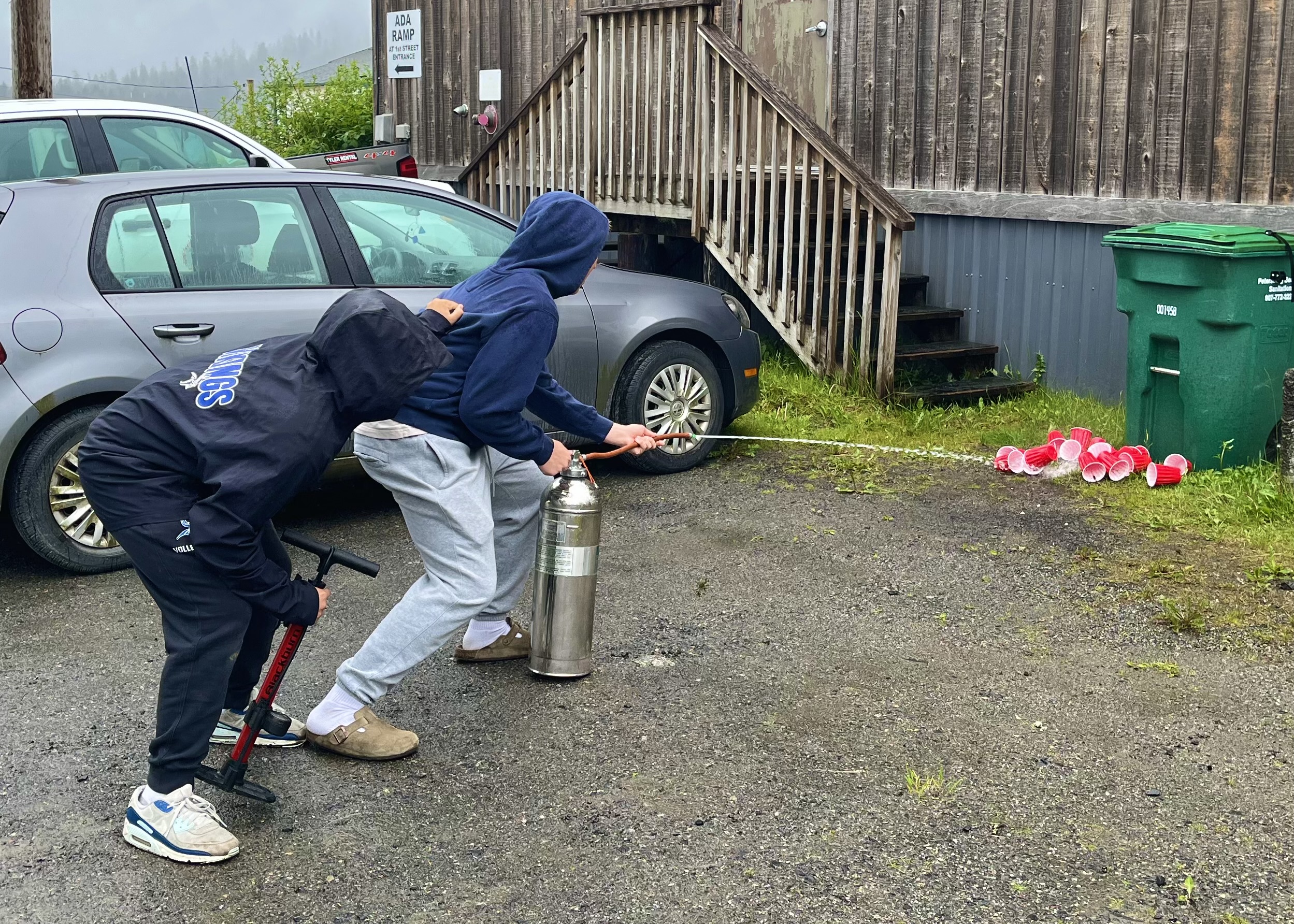
Dunham and Rice also led the students through a number of survival drills, like using a fire extinguisher to put out a fire, and a timed drill where students attempted to put on an immersion suit as fast as possible.
The most anticipated drill of the week was the “person overboard retrieval drill,” where students simulated rescuing someone who had fallen in the water.
On the last day of the boot camp, Dunham and Rice brought the group of students down to Petersburg’s South Harbor, where Dunham took one for the team as the person overboard.
“I’m not really interested in getting all that wet today,” Dunham said as he put on an immersion suit.
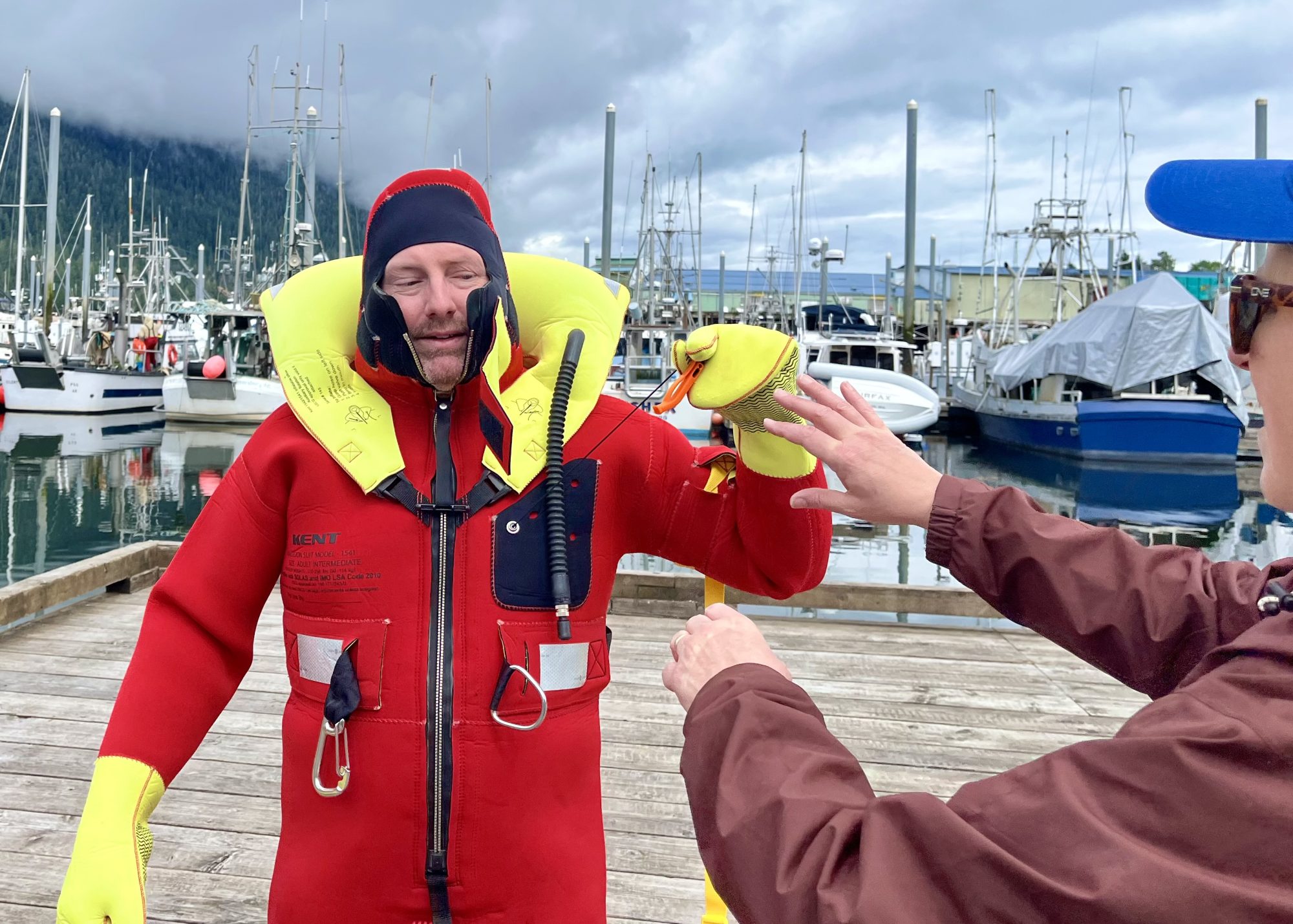
From the water, Dunham reminded the students of the steps for rescuing someone overboard: alert, point, throw, and maneuver.
Yell and alert people that someone has fallen overboard; point to the person in the water; throw them a flotation device; and maneuver the vessel, preventing it from drifting onto the person. Approach and recover them from the water.
Dunham told the students to narrate their actions as they went through the steps. Finally, they pulled him out of the water, and Dunham was saved.
The drill was a success, even for hard-to-please young people, like 10-year-old Nora Smith, who said the exercise was “better than I thought.”