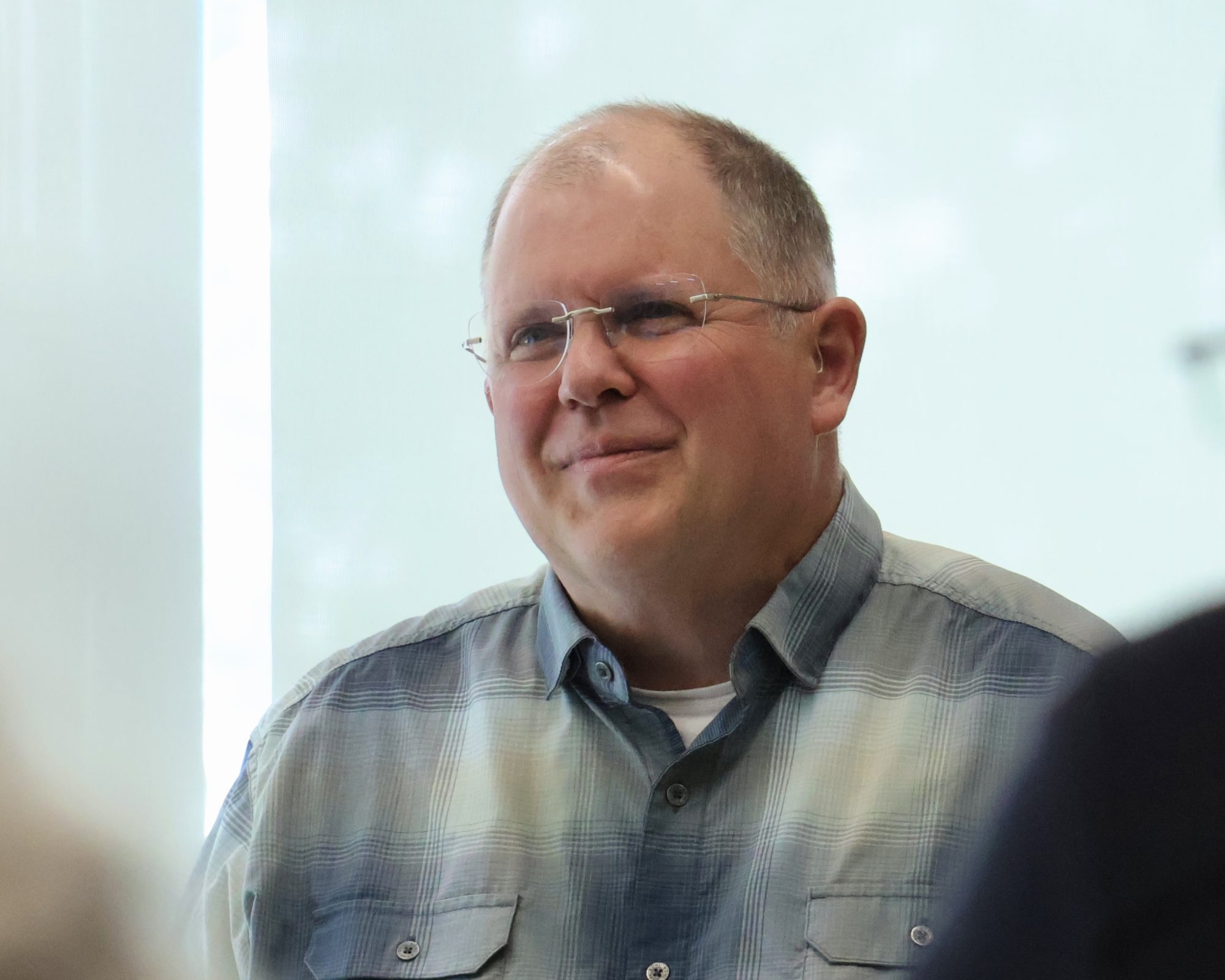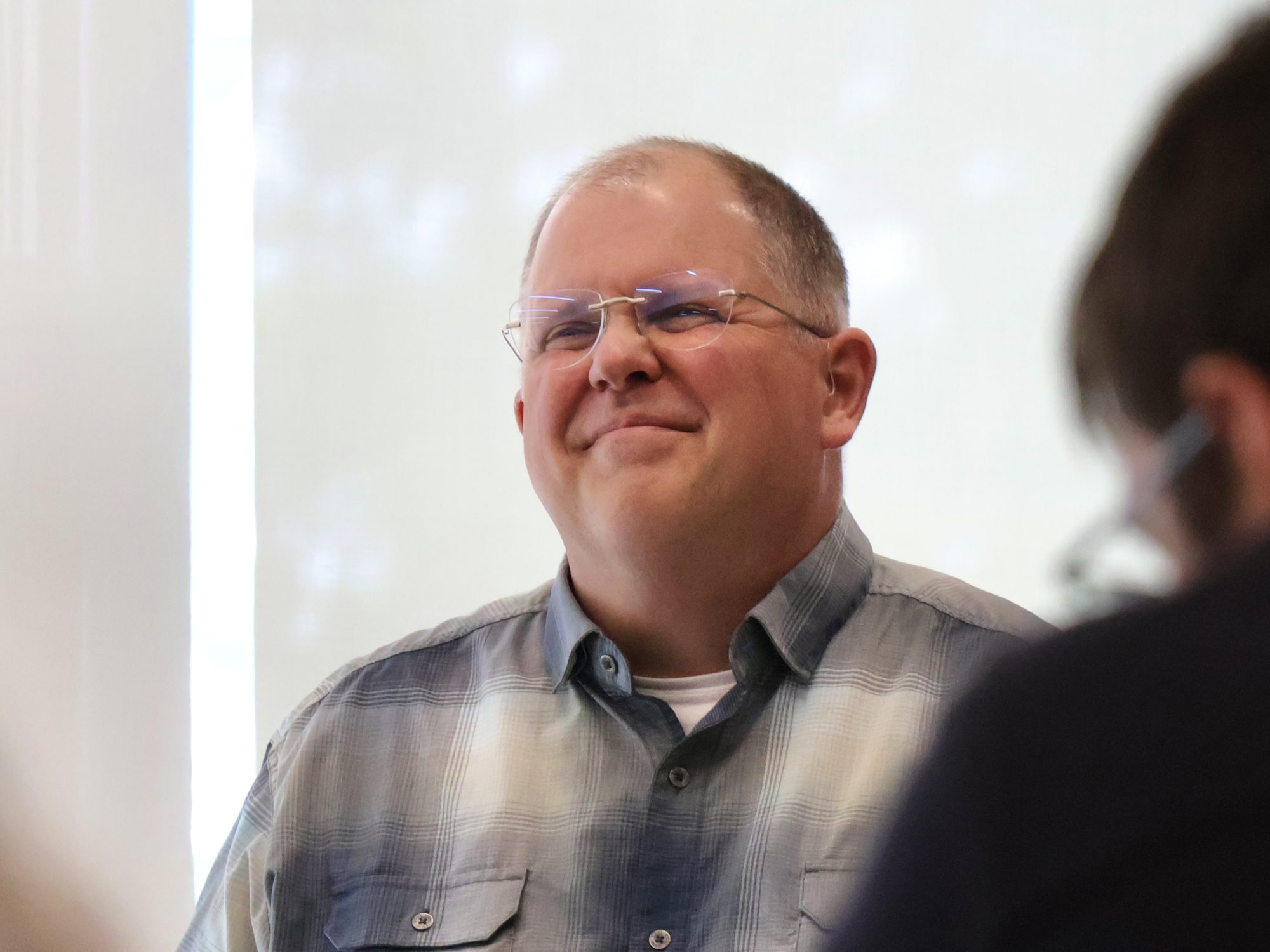
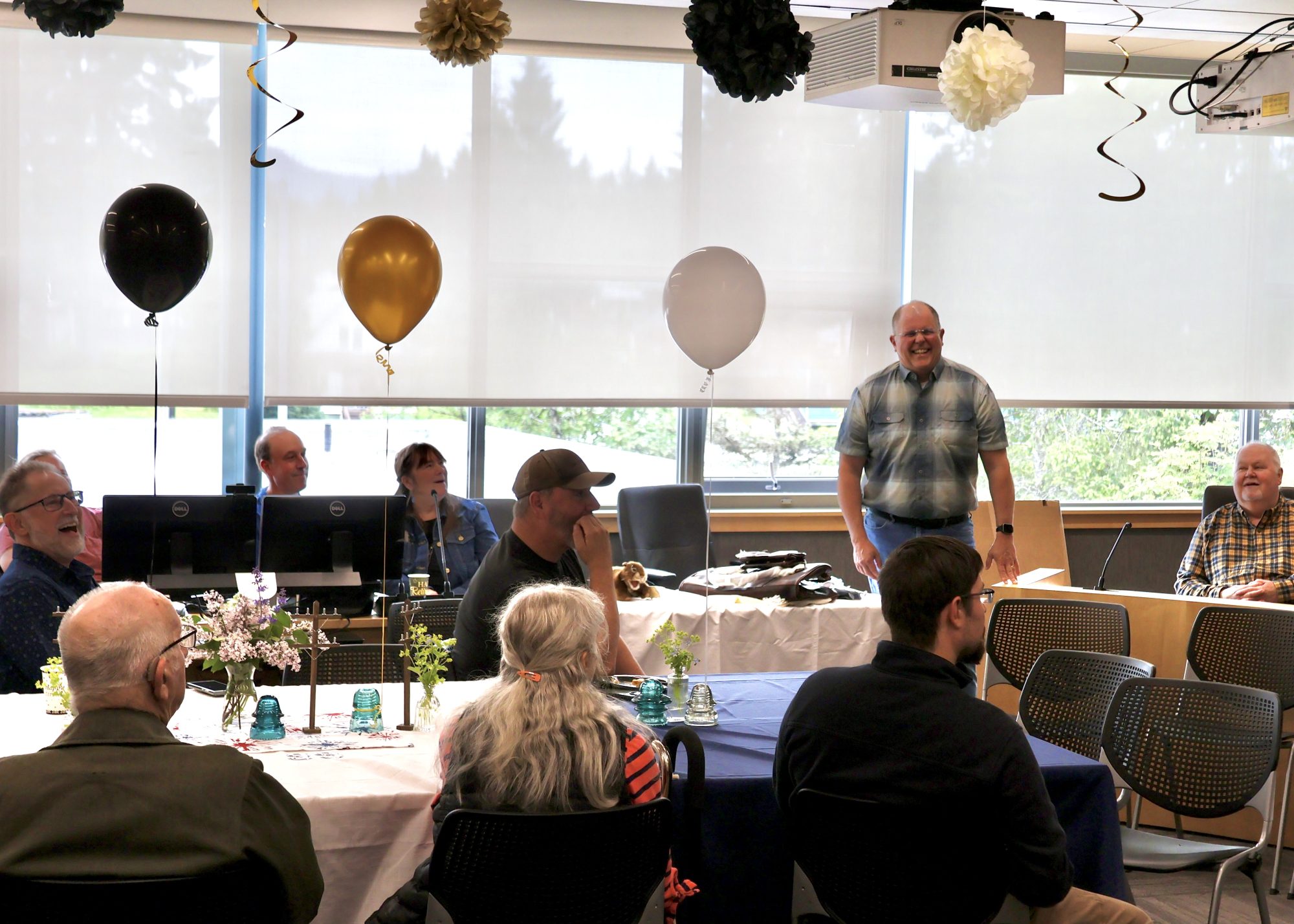
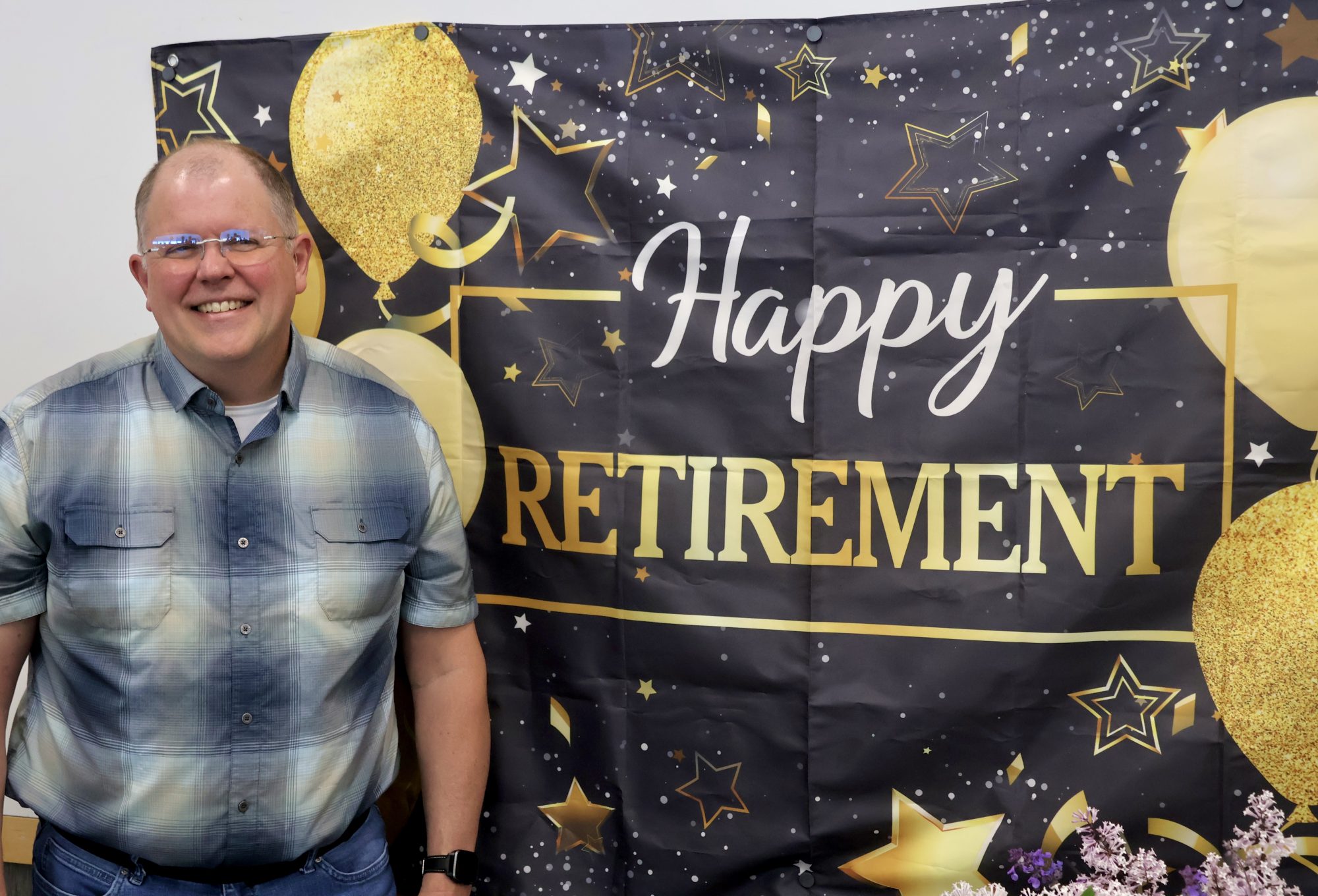
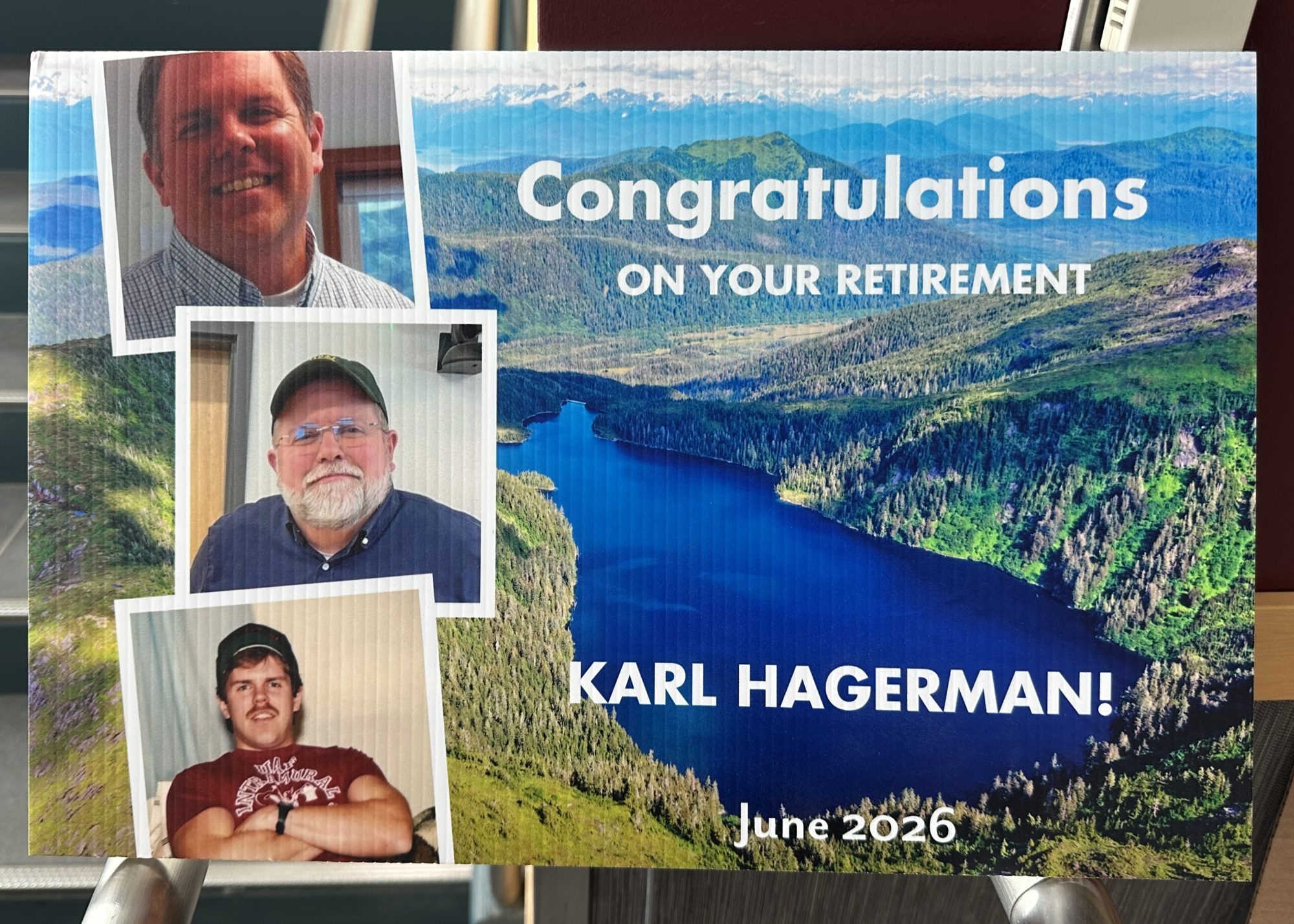
Karl Hagerman has officially retired from the Petersburg Borough after 33 years of service. His last day of work was June 30, 2026.
Hagerman held various roles over the course of his career, spanning departments from water & wastewater, to public works, to power & light — overseeing it all.
Born and raised in Petersburg, Hagerman’s deep connection to the town was at the heart of his decades-long public service.
“ Thanks for the opportunity to serve you for over 30 years. I hope that I made a difference in your lives,” Hagerman said.
He said he has no plans for retirement beyond relaxing this summer and maybe heading somewhere warm during Petersburg’s chillier months.
In an interview with KFSK’s Olivia Rose during his final week of work, Hagerman reflected on his experience working for the Borough, starting back when Petersburg was still a city.
He shared how satisfying it was to have dedicated so much of his life to working for his hometown.
Listen here — abbreviated version:
Three decades of service is a lot to cover.
Hear the full version of Hagerman’s interview below.
TRANSCRIPT:
This interview transcript has been edited for clarity and brevity.
HAGERMAN: It’s very satisfying to put in that amount of time and do beneficial things for your hometown. That’s kind of the baseline of my retirement reflection.
Growing up here, I always thought I wanted to get away from Petersburg, but I realized it’s one of the best places in the world to raise a family and live.
It was a strange realization for me, when I first started with the city, because you grow up hearing, the city this, the city that, why doesn’t the city do this? And then when I was working for the city, I had this epiphany that, hey, I’m the city! I’m the guy that’s supposed to do that!
ROSE: Let’s delve into that a little bit. So you said that you started with the then-City of Petersburg.
HAGERMAN: Yes, back in 1992, I was able to get a job working for the water and wastewater department, and it led to some really good opportunities for me.
ROSE: How did that propel your career into utility director?
HAGERMAN: The water and wastewater superintendent at that time had an opportunity to become the public works director, and they needed operations supervisors at the treatment plants.
A very good friend of mine, Stephen Smith, was the operations supervisor. Unfortunately, he passed away in an automobile accident in the winter time, here on the island.
That tragedy — I really didn’t know what I was going to do. But when somebody is going to be relying on you to get something done, you don’t walk away from that. You ask questions and get up speed, and then you move forward.
I wouldn’t say I was entirely ready to do all that when we lost Steve, but it helped me to grow and to realize a role for my community that I’d never really thought of for myself.
ROSE: It sounds like a story of growth, through loss as well.
HAGERMAN: Yeah. So I was able to step up into that position, and from that point forward, I just started learning, you know, more and more about what you do when you work for a municipality.
In 2001 I was able to get a promotion to be the public works director.
ROSE: What was it like to step into that role?
HAGERMAN: It was definitely a challenge. Being 34 years old, and a lot of the guys that were going to be under me were quite a few years older than I was. So they knew that I had a lot to learn stepping into the position. I just tried to learn as much as I could from them, and at the same time, trying to guide the department in a direction that made sense for the community.
I believe that I was successful because of the combination of getting good advice and my willingness to learn and grow in the position. I think it really helped me be somebody that could be relied on, you know, to take on tasks and projects and take them to completion.
I did that job for 17, 18 years, and then in 2018 I became the Utility Director.
I was still managing the water and waste water departments while also overseeing the electric division, and that was quite a challenge. But at that point in my career, it was somewhat refreshing as well, and I was able to take care of some large projects for the electric department.
ROSE: How about the advice side of it all. Any pieces of advice that have just stuck with you?
HAGERMAN: We had a great trainer come to town, and she said that when times get tough or you’re faced with a difficult situation or question, you can look at it the same way as if you’re downhill skiing. You have a choice. You can sit down and take a break, or you can lean into your skis and take control of the situation.
And I have told myself that so many times since that training, when there’s a tough situation that has come up, if I address it, if I jump on it, if I do the research that I need to do, I talk to the people that I need to talk to, the answer becomes clearer quicker.
The work is still going to be there whether you do it now or later. So let’s do it now. Let’s come in every day, and crack your knuckles. And okay, let’s knock it out. There’s never a problem with being bored in municipal work. There’s always something to do, and if you’re proactive in planning out what you need to do and when you need to do it, you can be as efficient as possible — within the limits of the speed of government.
ROSE: So what I’m hearing from you and your career is that it’s been very efficiency-driven, getting stuff done, and that is something that you liked to do. So let’s talk about the things that you’ve done.
HAGERMAN: Sure.
ROSE: You’ve had a hand in many many projects during your career…
HAGERMAN: Yeah, I think it’s been about 75 projects over my career that I’ve been involved in, one way or another.
ROSE: Which ones stand out to you?
HAGERMAN: Early on in my career, it was more about water and wastewater projects. The outcome of all the water treatment plant projects was to achieve a treatment plant that could treat surface water from a muskeg pond and produce clean, safe, potable water in the quantities that we need in the summertime. You know, when the processors are running.
That plant can produce 4 million gallons per day of pristine water, and that has a huge impact on the community. So I’m pretty happy and proud about that.
The local recycling program: When I took over, we had a recycling program, but it was pretty limited. There were drop-off sites around town, and it was a pretty small volume because it was just harder for customers to participate. We decided it was worthwhile to try making it easier. So working with PIA, the local tribe, we came up with the blue bag program, and customers would put it out at the curb, and the tribe would come by and and pick it up. That morphed into the carts that we have now, and the side-loading trucks to make it even more efficient. So just to know where the program was, to where it is now and continuing to be an important aspect of Petersburg’s solid waste and recycling program, that feels great to see that happen. It’s diverted a lot of waste that would have gone into the landfill in Washington state. I’m a little concerned as I think the economics of the whole program have changed drastically from when I started it. It’s just so much more costly now.
ROSE: Hundreds of thousands of dollars a year for the Borough to ship its garbage off-island.
HAGERMAN: Right.
ROSE: Interesting.
HAGERMAN: I think the larger projects in the later stages of my career probably stand out just because of the significance of the Blind Slough Hydro project. Refurbishing that facility that’s been in operation for over 100 years, and the last time it was updated was in the 1950s. Being able to update that and know that those improvements will be in place for decades, and knowing how much that project has benefited the community since its inception, you know, the continued benefit of that is very satisfying and will continue to be a fantastic project for Petersburg.
ROSE: Is there anything you’ve wanted to wrap up before retirement that maybe you haven’t quite got the chance to?
HAGERMAN: Yeah, I really thought I was going to be able to get the Scow Bay Generation Project completed before my retirement date.
ROSE: Which is installing a new diesel generator at Scow Bay.
HAGERMAN: Yeah, adding to our diesel generation fleet.
ROSE: That we rely on when we don’t have hydropower from places like SEAPA, Southeast Alaska Power Agency, or even the Blind Slough Hydro Plant that we were just talking about.
HAGERMAN: Yes. We have to have a standby fleet.
The one thing about power is that it’s never 100%. Things happen, you know, birds fly into the line, trees come down, landslides happen, equipment failures happen, and so to have a standby diesel fleet is pretty much imperative for communities in our situation. And having enough is also imperative.
The times that you need that backup power the most is when the community needs it the most in the middle of the winter time, when heating loads are really high and every minute that the power is out, people are getting colder. And we need a lot of power to get the system back up after a failure. So having that capacity that we need is super important.
Getting to the point where we almost have this generator on board and me not being able to get it across the finish line is a little frustrating, but construction costs have gone up dramatically in the last few years, and it looks like we’re going to be close to $8 million for the project. So, not quite double [the initial $4.5 million estimate]. It’s a significant jump.
So, thought I was going to get to the end of the generation project, but it just wasn’t in the cards. There are too many delays and other issues that came up. But I’ve got the project started and I’ve been able to hand it off in pretty good shape to get the work done.
ROSE: What would you say was the most impactful chapter of your career?
HAGERMAN: Well, by far the most impactful to me was acting as the local incident commander during the pandemic.
We had a unified command of our emergency operations center at the time, and it was just exhausting. You know, I was working seven days a week, 10 hours a day, just to try to keep up with all the new information that was coming out. And having grown up here and knowing so many people in town, it became fairly personal for me to try to protect as many people as I could. In Petersburg, an isolated community, if COVID had hit hard here and spread rapidly, we didn’t know what that would look like — and we didn’t want to know.
ROSE:
Sounds like a heavy load.
HAGERMAN: Yeah. But to get through the end of that effort, having put so much of myself into it, knowing the survivorship record that Petersburg had, it was very satisfying in that way. Even though there was a fair amount of controversy, we were just trying to protect people the best we could. You know, that was our role.
ROSE: What would you say made the difficult parts of your job worth it?
HAGERMAN: Well, I think the people in the community, they’re what make Petersburg such a great place to be. So why wouldn’t you want to do the best you can to either protect them or to carry a project to completion, and put out the effort for them. You know, that’s what municipal service is about, in my opinion. That’s who we work for. We work for these citizens. They pay their taxes, they pay the utility rates, and we provide vital services to them that make their lives easier.
I feel as though I’ve helped a lot of people in this community, and I’m proud of that. I feel good about it.
It’s just somebody else’s turn, you know, to step up and have that same commitment to serve and make sure things go in a positive direction for Petersburg.
ROSE: How’s the department looking now that you’re heading out?
HAGERMAN: I am so happy with the setup of the electric department right now.
Steve Harbour is the new Utility Director. He’s been with us for a couple years. He’s been great to work with, and I love the energy that he’s bringing into the position.
Staffing is fantastic. They all get along very well and are very productive. And looking back over my shoulder at the Public Works Department, I feel really good about that department.
The people that work for the Borough, they know their jobs. They’re all so important, you know. Fixing power outages, highly important. Making sure the water is safe to drink, extremely important. Making sure the wastewater flows from your house to the treatment plant and then out into the sound in the way that the regulators want it to be, very important. Picking up garbage every day and making sure that’s processed in the right way, very important. Plowing the streets in the winter time, removing that snow and ice, and grading and fixing potholes and addressing dust issues — all that stuff is so important.
These are the things that I’ve managed and dealt with in my career. And the staff and their commitment to those jobs, you know, can never be understated. Those people that do that work every day, they want to help. They do it for a paycheck, but they do it, you know, because it has to be done.
ROSE: Any plans for retirement, Karl?
HAGERMAN: No, no solid plans. I think the most immediate plan is just to enjoy the summer, and hopefully get out on the boat a little bit more without having to worry about getting back to see if I missed something and if somebody needs something. So that’s really our hope for this summer is just to relax. You know, I started my job shortly after getting married in the first place, and so she’s been there for every step of the way, supporting me this long in these positions that I had that could be extremely stressful and exhausting. But to have her there for me every day, every year, can never be understated. It just means the world. And she’s very excited for me to be done with public service because it’s been stressful for her as well. But no no definite long term plans at all.
ROSE: At the end of it all — several positions, several city administrative changes, and dozens of projects later — is there anything that you’d like to say to the people in the community who are listening?
HAGERMAN: I just thank you. Thanks for the opportunity to serve you for over 30 years. I hope that I made a difference in your lives. That was what I was shooting for.