Petersburg’s municipal election is Oct. 6. Several candidates are running for seats on the Petersburg Borough Assembly.
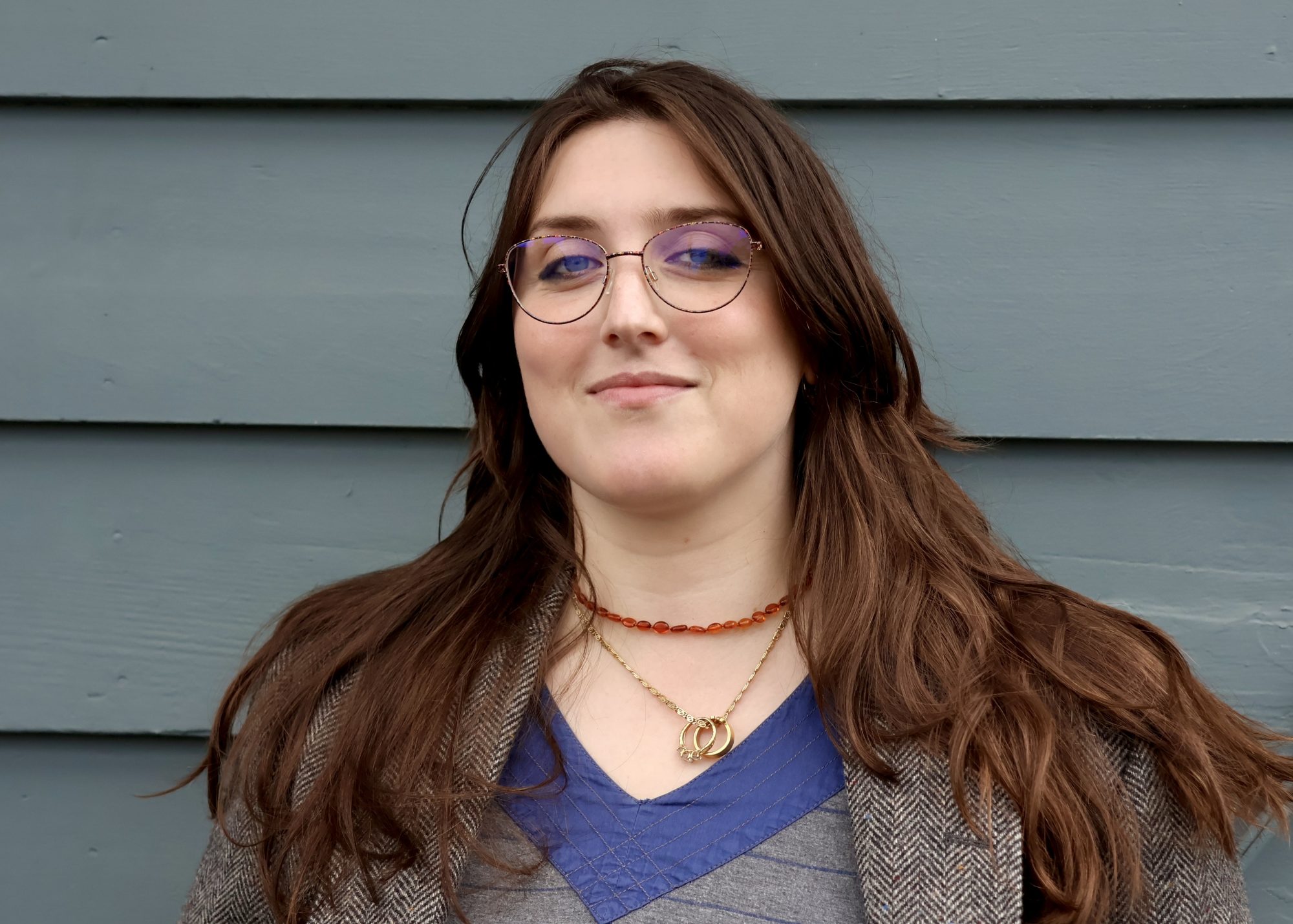
Sarah Fine-Walsh, age 36, is running for a 3-year term. She moved to Petersburg, her husband’s hometown, in 2020. Fine-Walsh is a stay-at-home mom, licensed attorney, and co-owns Fine & Walsh Law, a general practice law firm in town.
Fine-Walsh has served in local elected office for several years, spending time chairing the Parks and Recreation Advisory Board and is currently on Petersburg’s Planning Commission.
She sat down with KFSK’s Olivia Rose to talk about why she decided to run for Assembly.
Listen here:
The Assembly is the only contested race in Petersburg’s municipal election this fall. There are two 3-year positions, and a single 1-year term, up for election.
Of six candidates, four people, including Fine-Walsh, are running for a 3-year seat.
If Fine-Walsh is elected to the Assembly on Oct. 6, her seat on the Planning Commission would be vacated. Elected officials can’t hold two positions at once.
Find more election info on KFSK’s Voter Guide.
TRANSCRIPT:
This interview transcript has been lightly edited for clarity.
FINE WALSH: [Running for Petersburg Borough Assembly] It’s something I’ve thought about for a few years now. I enjoy being involved and I’m always reading the agendas and listening to the meetings anyway, but I wanted to wait until I had some experience on various boards.
So I had experience, and learned a lot about implementing Robert’s Rules, and learned a lot of code. Kind of got in the middle of some really interesting, complicated issues.
ROSE: What have you done in the past that makes you qualified for the role?
FINE WALSH: Well, I served on the Parks and Rec Advisory Board (2021-25).
I’ve been serving on the Planning Commission (2025-present). So I have experience listening to people in the community.
A lot of times I think of it as matchmaking. People in the community will come to a board with a problem, and it’s kind of, in my opinion, our duty as board members to find them a solution. A lot of times, solutions don’t require money. They just require knowledge and a little bit of organization, and you can really make a big impact on people’s day-to-day lives just by listening and doing small changes to implement what they suggest.
ROSE: What would your priorities be if you were elected to the Assembly?
FINE WALSH: There’s a lot of things that I want to use this position to pursue or try to accomplish. One of the things I did when I was deciding to run was sit down and write a list of my priorities.
Updating the zoning code I think is really important. And there also is more zoning to do. There needs to be, in my opinion, a data center regulation ordinance … common sense regulations.
And then also a priority of mine — we’re kind of hitting a wall budget-wise. And in order to not have endlessly rising costs, what we need to have is some cuts. And those are tough conversations to have.
Something that I think would be really helpful for facilitating those difficult conversations is if we take some of the existing assembly budget, perhaps some of the budget that’s allocated for travel, to conferences, and provide food at assembly meetings.
These assembly meetings are always at mealtimes. And in my experience, but particularly in my experience as a mother, having tough conversations when you’re hungry is always, always tough. It’s not necessarily productive. So maybe we can use that money to feed people and have tough conversations in a more collaborative way.
ROSE: Can you tell me about one time you think the Assembly got something right in the last year or so, something you agree with?
FINE WALSH: Something I think the Assembly got right was ultimately passing the Wireless Communication Facilities Ordinance, that the Planning Commission that I’ve been on for the last year worked a lot on. That was our big project.
That did pass, kind of barely, but you know, it needed to be because there was no protection for that process on the books because our code didn’t have any consideration for cell phone towers. So I’m glad that it passed and we have some protections in place now. I think that was really, really important.
ROSE: And what about a time in the last year or so when the Assembly got something wrong that you disagreed with?
FINE WALSH: So on the same topic, I think when the Assembly originally did not pass the Wireless Communications Facility Ordinance, I was extremely disappointed.
I felt like that was really, really counterproductive. I was pleased that it, got brought back on, but there were a number of changes made that I noticed from community feedback that people … it no longer felt like a win to them.
And it felt like if there had been slightly more collaboration between the Planning Commission and the Assembly, it would’ve been a less messy process.
ROSE: In a nutshell, what do you want for Petersburg?
FINE WALSH: What I want for Petersburg is for us to feel like we have a bespoke government, that we have tailored exactly to our specifications, and we are doing things exactly the way that we want to do it.
And, I think when people feel that they have a voice in their local government, satisfaction can go way up.
That’s why zone ordinance updates are really important to me. Because you can make huge changes to people’s day-to-day lives with small tweaks or big tweaks in the legal language.
I think it’s a lot about caring, listening, and just knowing that solutions are out there, if you just do a little research and talk to some people.
Just making the process a little bit more human, and remember that we are all on an island together, or two islands as the case may be, and that we really are ultimately all on the same side.