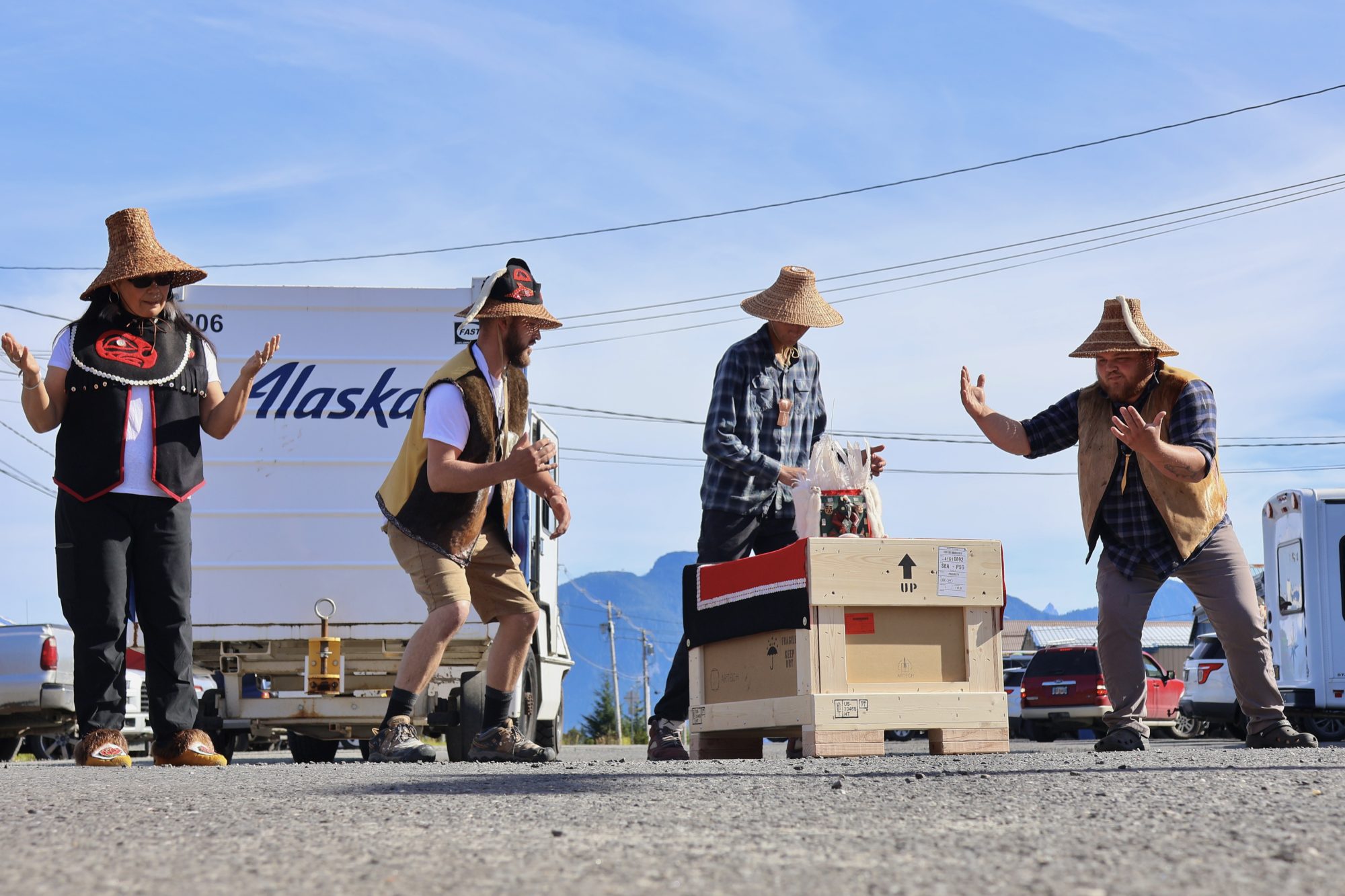
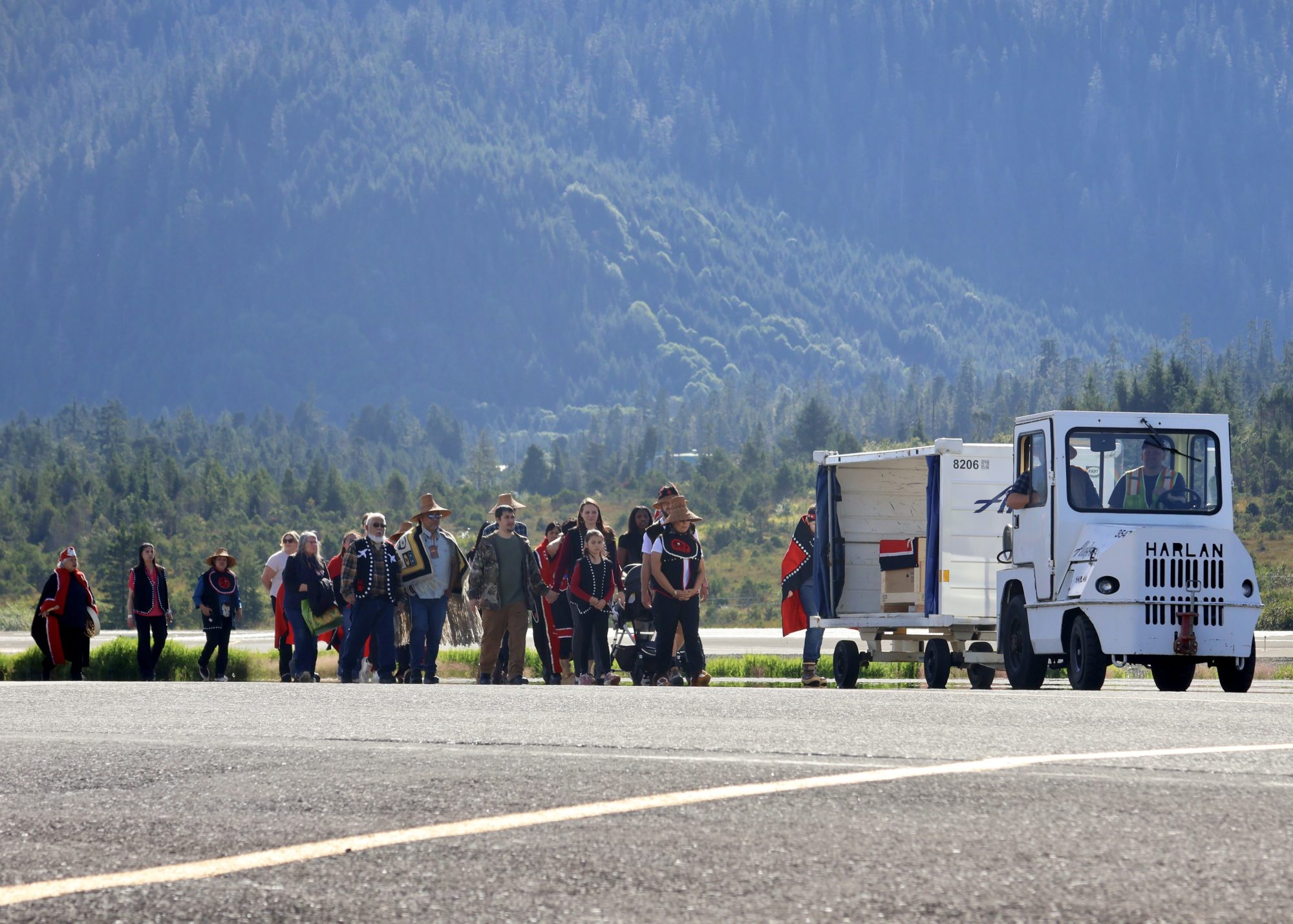
Over 50 people gathered outside the Petersburg airport’s chain-link fencing on a sunny Friday in early September, many wearing red Tlingit regalia.
They watched as members of the Petersburg Indian Association made their way across the tarmac with a large wooden crate wrapped in a red button blanket. It was carrying the remains of a 6-month-old Tlingit girl, who the tribe has called Baby Girl.
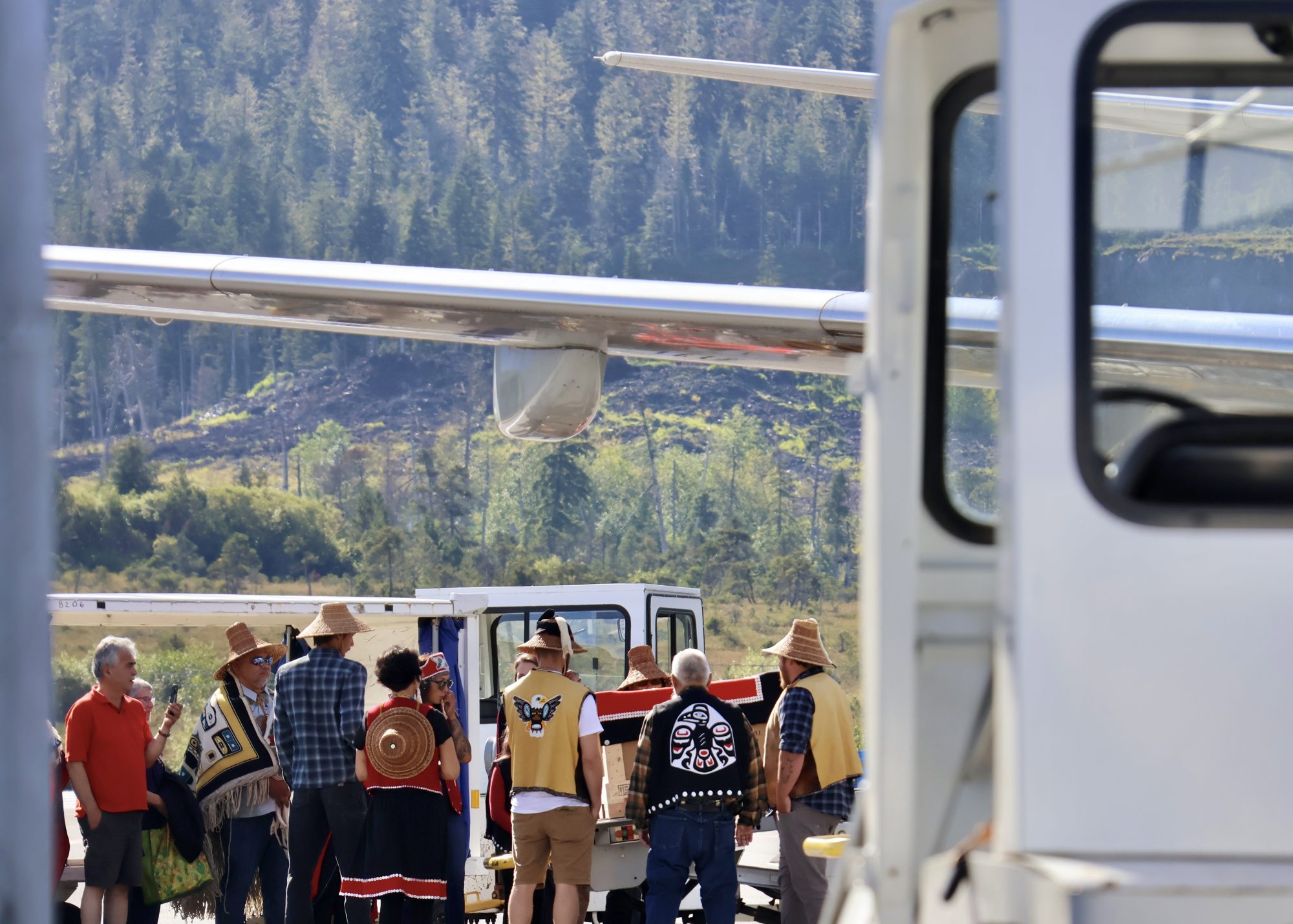
Baby Girl is an ancestor of Tlingit descent that PIA repatriated from the Burke Museum of Natural History and Culture in Seattle in early September. Her remains have been at the museum for almost 100 years.
Stephanie Aikins, the tribe’s administrative assistant, has been working on this project for over a year. At the airport, she addressed the crowd.
“This has been an incredibly long road,” she said, “and we are beyond happy that she is finally home on her lands, near her water, with her people.”
Aikins was part of a group that went to the museum to receive Baby Girl. Aikins first learned about this ancestor over a year ago, while looking through old newspaper archives at Petersburg’s library. She found an article from January 11, 1996, where the Burke Museum offered to return Baby Girl.
According to the 1996 newspaper article, Baby Girl was found by a Petersburg resident in 1928 near Thomas Bay, near Petersburg. Her body was in a cave, in a box “under a carefully made pile of rocks,” and was buried with funerary objects. She was given to the Museum in 1930. They don’t know exactly how old she is, but DNA tests show she was of Tlingit descent from the Petersburg area.
The tribe covered the costs of this project through a grant from NAGPRA, the Native American Graves Protection and Repatriation Act.
NAGPRA is a federal law enacted in 1990 that requires federal agencies and institutions that receive federal money to identify and return important remains and objects to lineal descendants, culturally-affiliated Indian Tribes, and Native Hawaiian organizations.
Justice McNeely is the repatriation manager at the Seattle museum and was the point person for the Petersburg team. McNeely said the process can be very taxing, especially on smaller tribes.
“Imagine one or two people in a tribe receiving reports from hundreds of institutions, piles of paperwork, and you’re supposed to go through that and respond to all of these and go through consultation,” she said. “ And the process of actually doing final repatriation can take sometimes decades.”
McNeely is Inupiaq, so this work is also personal for her.
“We’re talking about centuries of harm and healing to be done here,” she said. “And it’s extremely important to me that our ancestors continue to be cared for and know that they’re not forgotten.”
The Burke closed its doors to the public when Aikins and others arrived. Aikins said they asked Baby Girl for forgiveness, and thanked the museum for taking care of her.
“Tears started flowing for a lot of people,” she said. “It wasn’t necessarily tears of sadness. It was tears of joy because a lot of these people have worked on this for so long, and we made it. We’re here.”
And on the way home, Aikins said Baby Girl had welcoming committees from local tribes at every stop. First in Ketchikan, where tribal elder Willard Jackson Sr. greeted them on the tarmac and sang to Baby Girl. In Wrangell, people outside the airport gates also sang to her.
When they finally landed in Petersburg, Aikins said the emotions for Baby Girl were palpable.
“It’s kind of a mixture of sadness and hope, but it’s strongly love,” she said. “ I’m fairly certain she felt that.”
A glittering sun shone down on the group gathered at the airport for the welcoming ceremony.
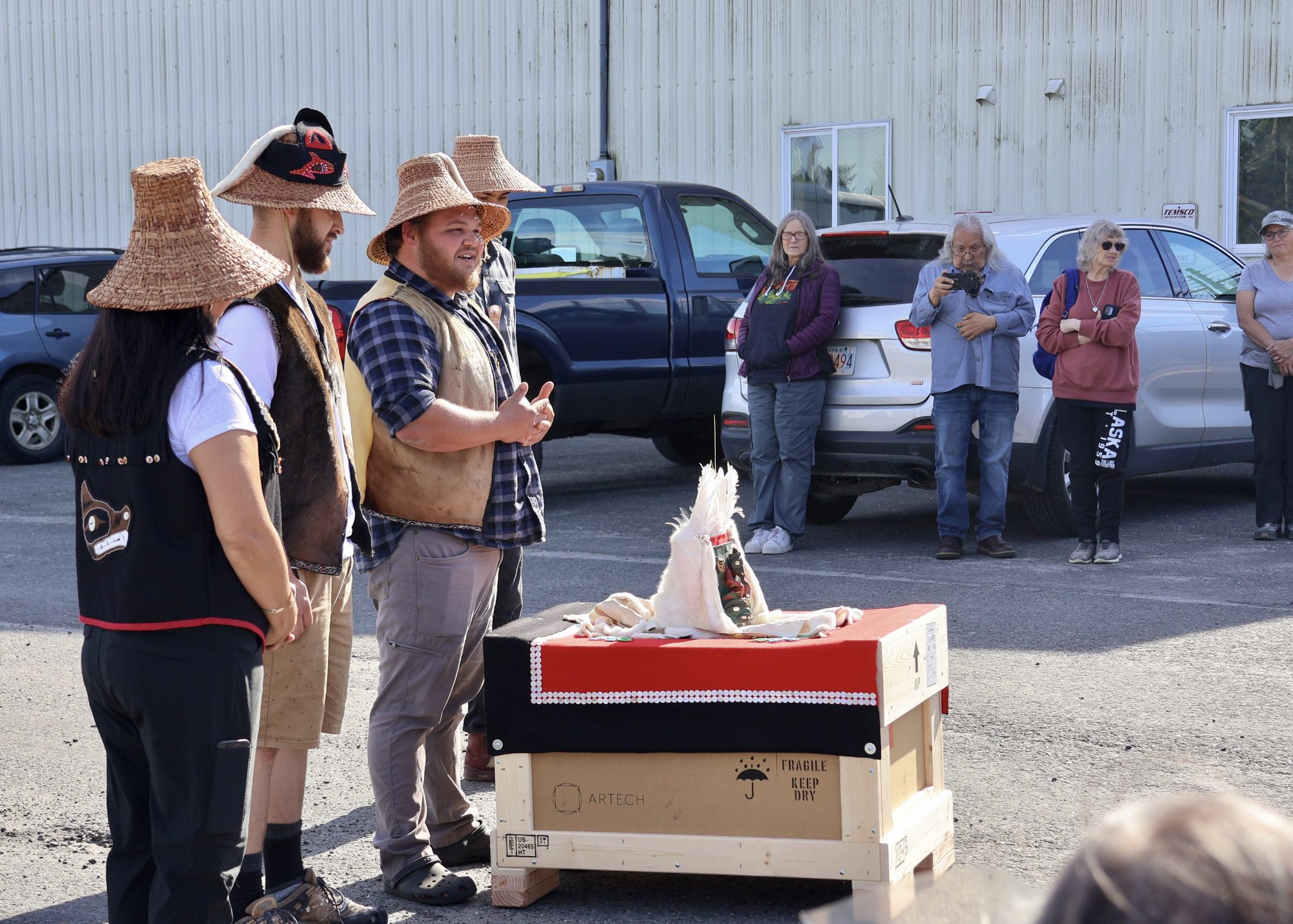
ShaaL’aanee Brandon Ware is the Vice President of the Tribal Council. He also went to Seattle to receive Baby Girl.
At the ceremony, he announced that they’d given her a Tlingit name.
“We’ve given her the name Gagaan. It means sunshine. Isn’t this perfect?” he said. “And we named her Sunshine so that the sun will always shine on her and warm her up. She has been gone for far too long and been lonesome for far too long. But this is a moment to celebrate because she is lonely no longer.”
Dasa’Ka’ee Carol Martinez is the tribal president. She said today is a unification for Petersburg.
“We are all one people,” she said. “Our tribe is just wanting to bring back our people that are still stuck in museums and should never have left our land.”
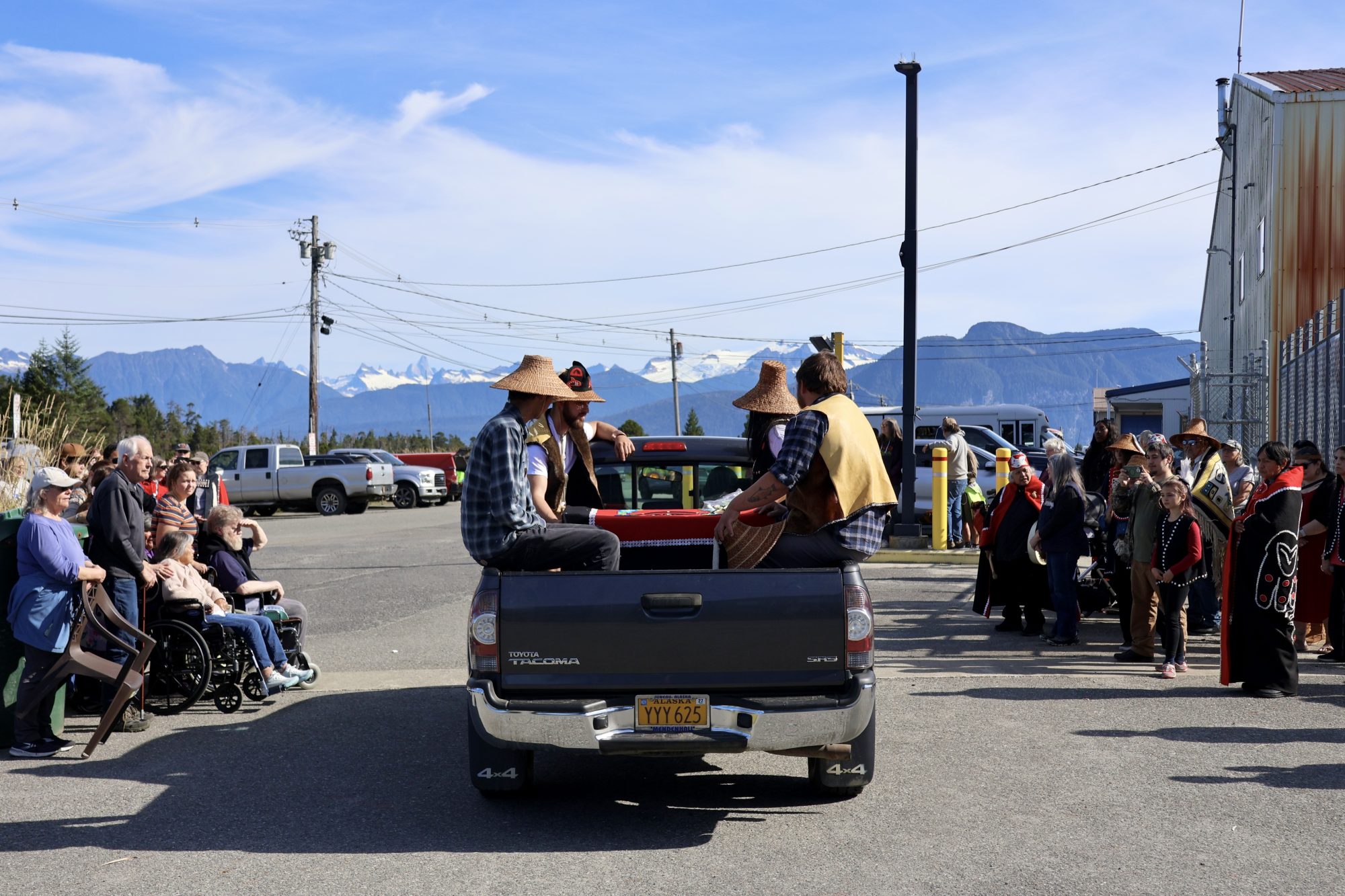
As the group loaded up Sunshine to take her to Aikins’ office for the time being, the Petersburg Song and Drum group accompanied her with the journey song.
Sunshine will be interred in the Petersburg cemetery, along with two other repatriated ancestors, the weekend of September 25.