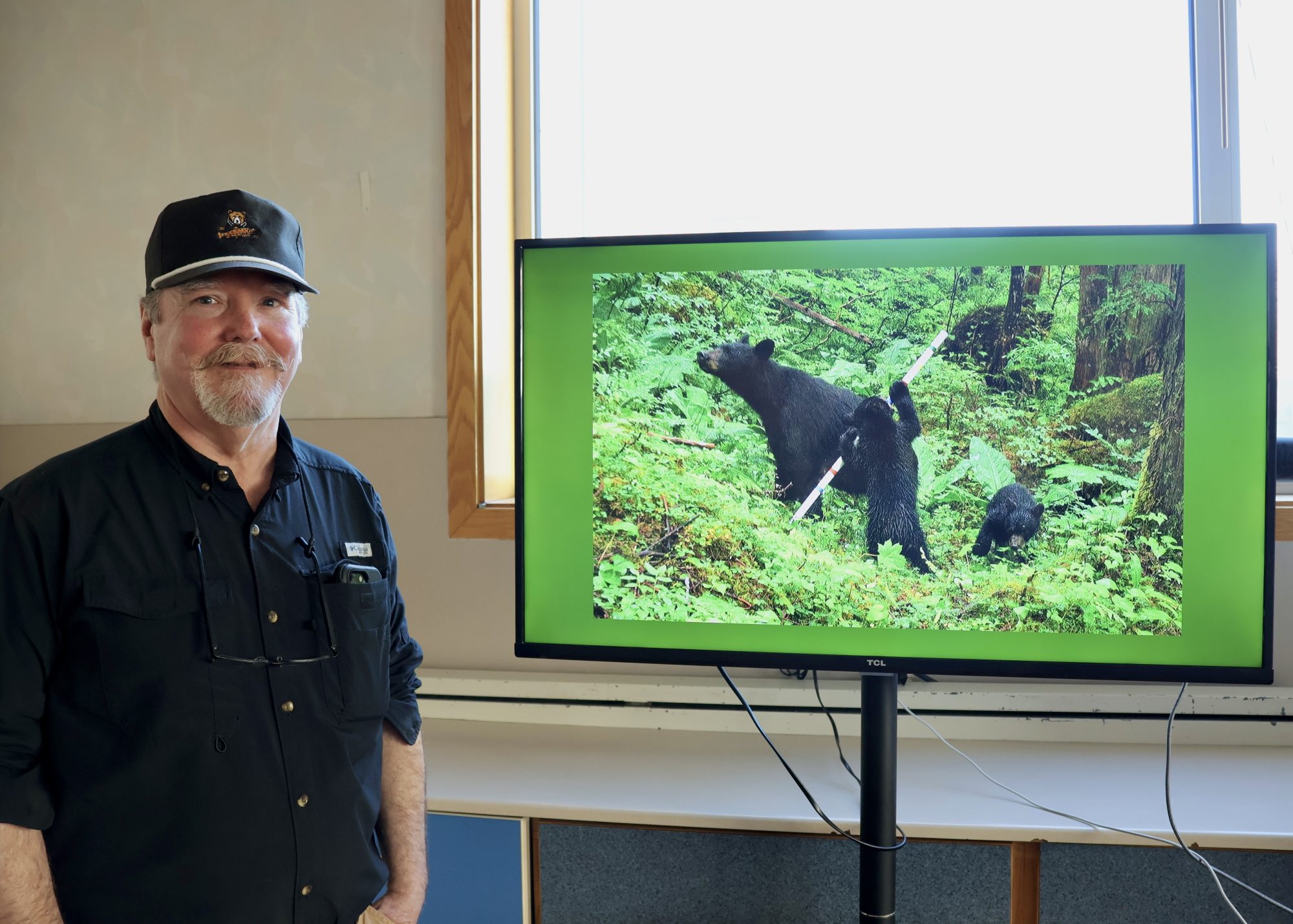
Frank Robbins clicked through slides of bear photos from wildlife cameras he put up around Mitkof Island.
Robbins is the state department of Fish and Game area wildlife biologist for central Southeast Alaska, based in Petersburg. He tested a crowd of attendees to see if they knew the difference between brown bears and black bears.
“It can be confusing,” he said. “You kind of look at everything collectively and not pick one thing.”
Robbins’ presentation was one of many activities at the Petersburg Mini Bear Fair on Sept. 12, during the town’s rainforest festival.
Bears cause a lot of trouble for Southeast Alaskan towns. They can smell trash from a mile away, and they can wreak havoc if trash cans aren’t secured properly. They can also be dangerous if they get aggressive.
Knowing the difference between black bears and brown bears could be helpful, since there are distinct ways to protect yourself from each kind of bear. Brown bears have big shoulder humps, smaller ears, and dished faces with narrower eyes; they evolved in treeless habitats and might stand their ground if they feel threatened. Black bears, on the other hand, evolved in forests, so they might retreat up a tree if they feel threatened.
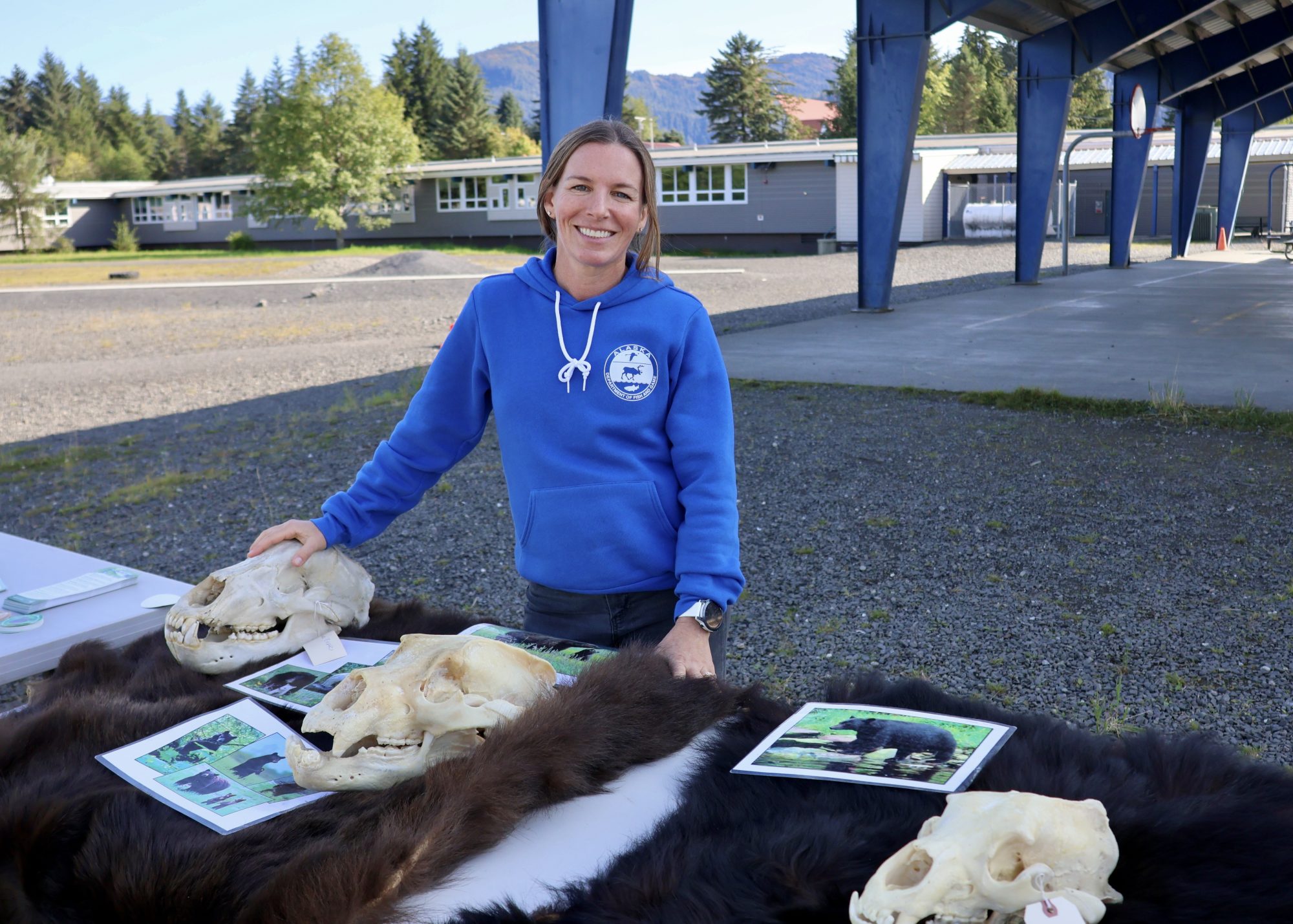
Abby McAllister is an education and outreach specialist with the state department of Fish and Game, based in Juneau. She was in Petersburg to help residents learn how to live with bears.
While brown bears have been documented on Mitkof Island, most encounters are with black bears. McAllister said bears are “opportunistic omnivores.”
“They really are driven by only two things when they’re not in the den,” she said. “They’re driven by reproduction, and they’re driven by food.”
And those two things are tied together. Female bears need to put on a lot of fat before they hibernate in the winter in order to have a successful pregnancy.
“So when you see a female bear emerge in spring and she has two or more cubs with her, it means she’s done a great job of getting fat all summer,” McCallister said.
Which means one man’s trash, is another bear’s treasure.
“When a bear comes into town and they are able to, say, get your leftover burger, get leftover pizza, and they can do it by virtually expending no energy whatsoever,” McAllister said. “They’re gonna do that over having to forage in a salmon stream.”
When bears find a good trash spot in town, they’re known to come back and check for more. This means that the bear can become habituated, which McAllister said is not good.
“Because then what ends up happening,” she explained, “is that the bear is not only not afraid of humans, but it also has learned to associate that garbage can with its food source.”
If a bear becomes habituated, and then aggressive, it may have to be euthanized. McAllister said the best way to protect yourself, and the bears, is by doing your part to secure your trash.
In Petersburg, residents are required by law to secure their trash. And the Borough can issue fines to people who make zero noticeable effort.
For general tips if you’re out in bear country, McAllister said to make noise, travel in groups and make sure you have a deterrent with you, like bear spray or a firearm.
“And if you can follow those tricks and tips,” McAllister said, “everyone can feel really confident recreating in Southeast Alaska.”
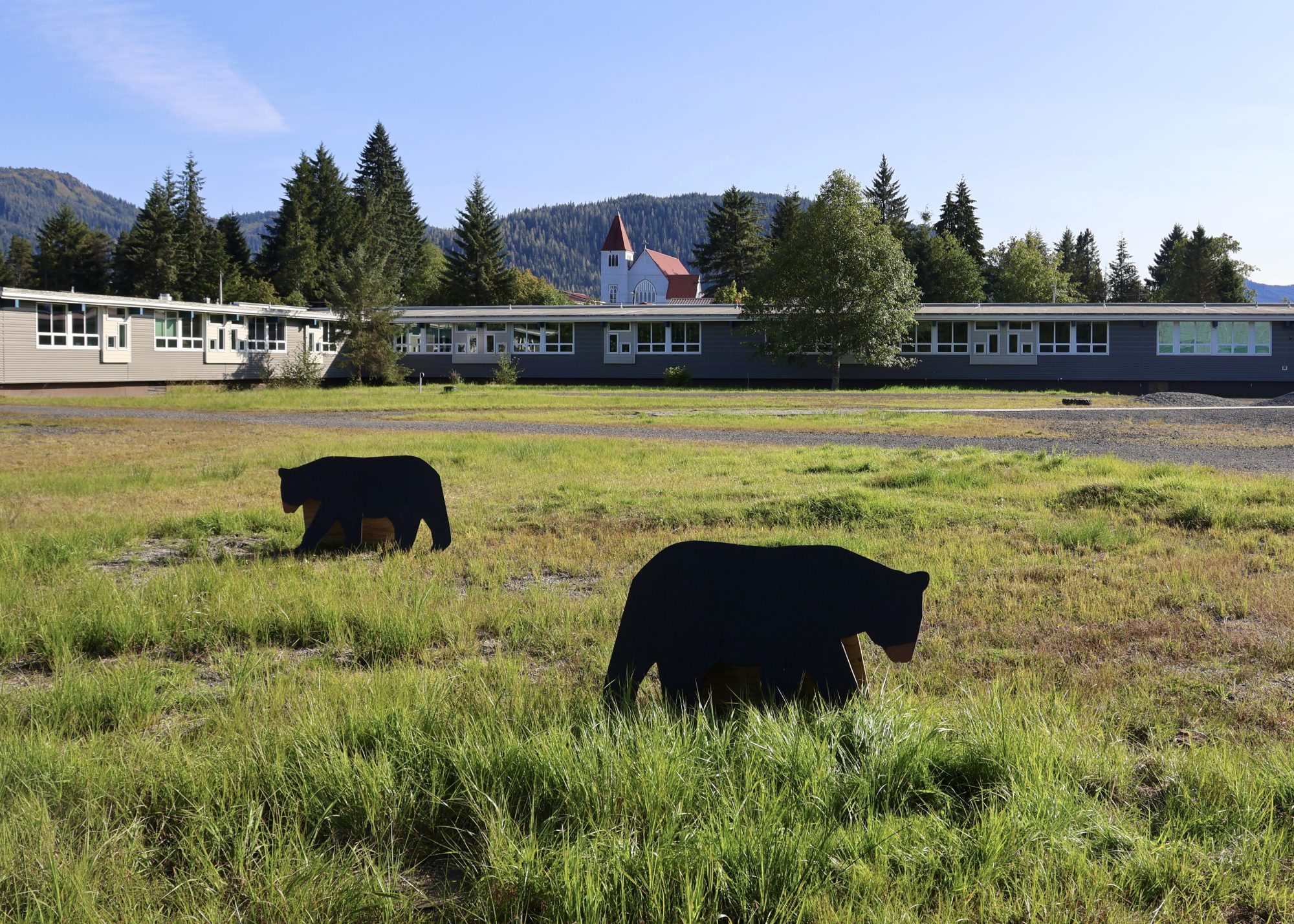
Hilary Wood, another Petersburg-based state Fish and Game employee, showed participants how to use bear spray correctly. She demonstrated how to take off the safety on a bear spray can with one hand, and to aim it at the bear’s feet. If you aim too high, the spray will float over the bear’s head by the time it gets to them.
For more resources on living with bears, visit the ADF&G website.