The Petersburg Borough Assembly on Oct. 5 unanimously agreed to send a letter to the Alaska Board of Fisheries in support of managing invasive European green crab.
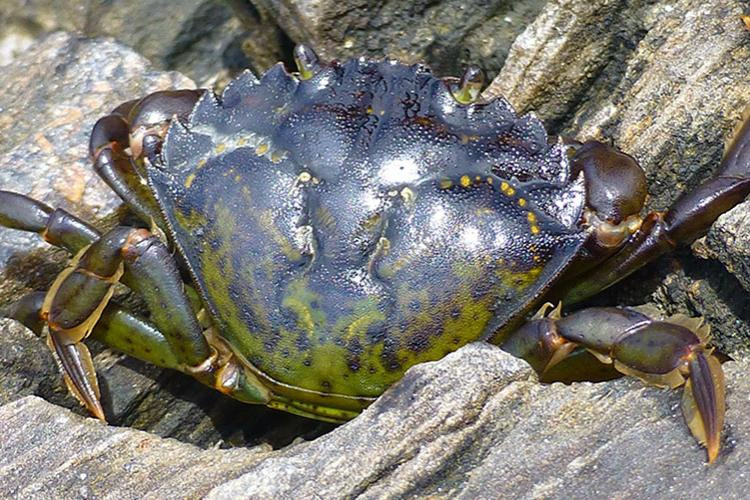
European green crab disrupt local habitats, and can outcompete native crabs. The invasive crab has been slowly creeping north along the Pacific coast for decades, and have made it as far as Etolin Island, south of Wrangell.
The letter was recommended by Vice Mayor Jeigh Stanton Gregor.
“I thought a letter of support was a good proactive move because, although it has not really impacted Mitkof Island yet, as we know, in Metlakatla, it’s been significant in other places south of us,” said Stanton Gregor. “So it is coming. And I think it’d be good to get the Board of Fisheries, you know, help them be proactive.”
The Board of Fish takes public feedback, regulates and manages the state’s fisheries. The board meets in different areas on a three-year cycle. The next time it’ll discuss regulations in Southeast Alaska is 2028.
The crabs are currently a class A banned invasive species, which means a permit is required to possess or move the crab. The letter asks the Board of Fisheries to reclassify the crabs as class B, which would let anyone transport dead crabs for harvest or consumption.
In March, the Ketchikan Indian Community petitioned the Board of Fisheries to reclassify the crabs to class B. The petition was denied.
The letter from Petersburg’s assembly emphasized the importance of timely action to address the European green crab. It supported “consideration of targeted trapping, monitoring, public education, and other removal strategies as the state’s response develops.”
The letter passed unanimously in a 6–0 vote, with Assembly Member Scott Newman excused from the meeting.