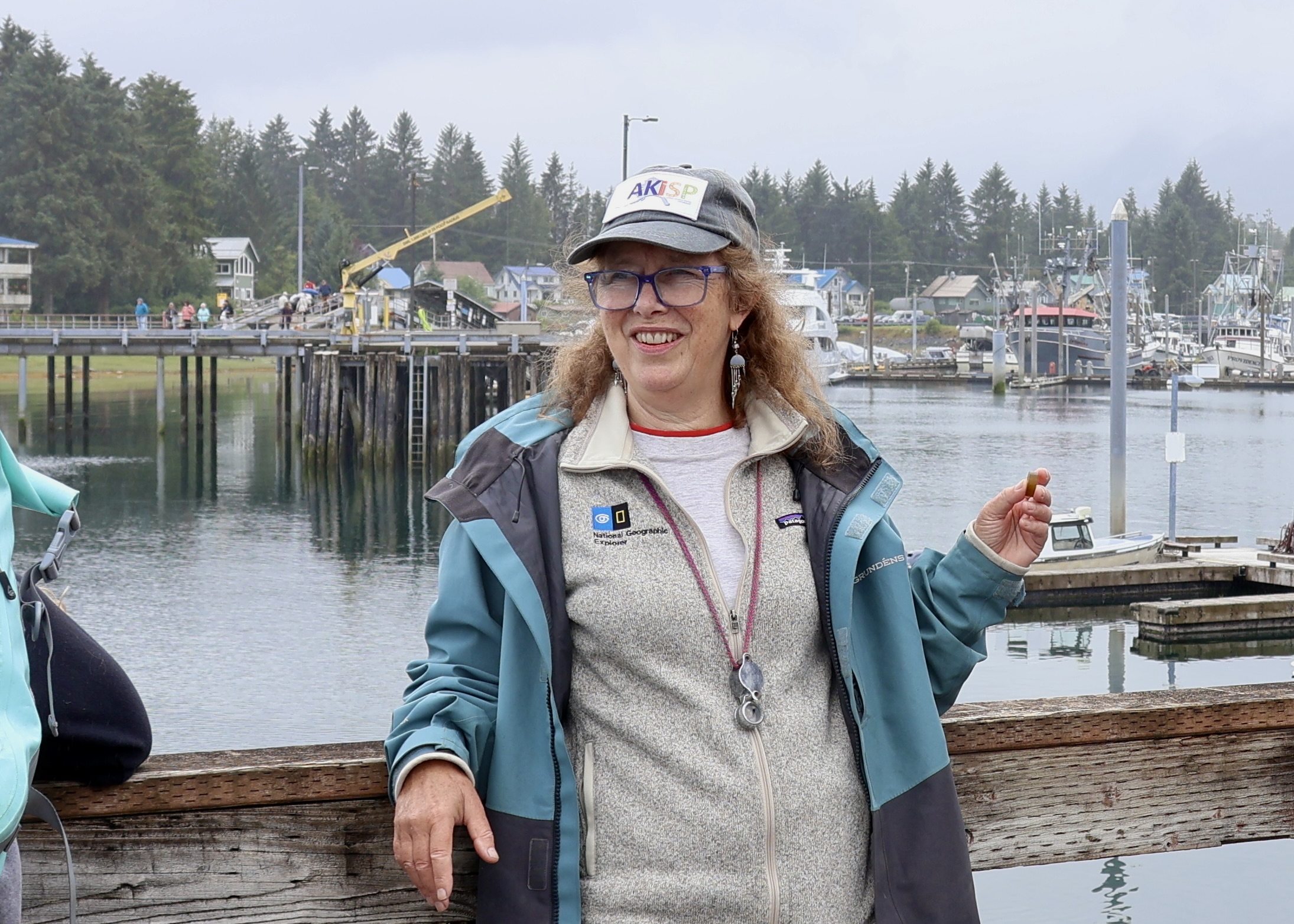
Linda McCann darted around the docks in Petersburg’s South Harbor, turning over buoys and pulling up long fronds of bull kelp. A marine ecologist for the Smithsonian Invasive Research Lab, she was in Petersburg to host the town’s first ever “bioblitz” — an event to find and identify as many species as possible in a short amount of time.
“ Can you help me find a big piece of kelp that’s kinda near the surface that we can pull up?” she asked the group of over a dozen locals, including students from Petersburg’s summer science camp.
For this bioblitz, McCann and her group were hunting for a very specific creature called a tunicate, also known as sea squirts. They’re squishy, exoskeletal, potato-shaped organisms that are typically several inches long.
But the ones McCann was looking for are not native to Southeast Alaska — and can cause problems.
“[They clog] water intakes, and it costs a lot of money to keep all this structure clear and unclogged,” she said. “And it also is ecologically damaging to the local fauna.”
The group followed McCann with buckets as they searched the harbor for signs of tunicates and other unwelcome visitors.
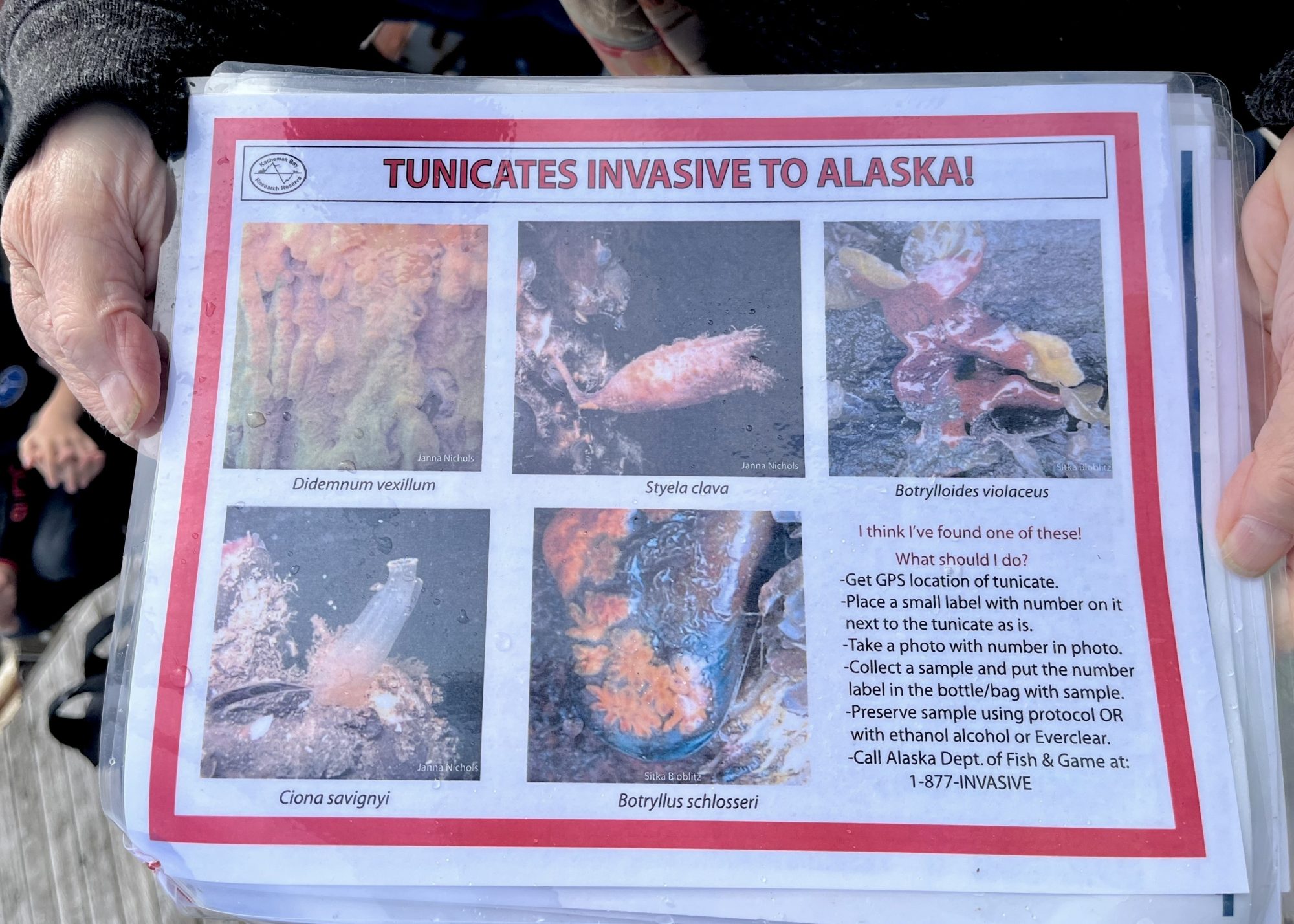
For a long time, Alaska avoided an influx of invasive species because of historically low shipping and other human-caused introductions compared to the Lower 48. However, in the past two decades, as traffic has increased and waters have warmed due to rising global temperatures, species like European green crabs and invasive invertebrates like sea squirts and barnacles have reached Alaska’s coastline.
Also, invasive species are expensive. A recent study conducted by the U.S. Department of Agriculture in 2021 found that invasive species have cost North America over $26 billion per year since 2010.
McCann and the Smithsonian have conducted bioblitzes in communities across Alaska, such as Sitka and Dutch Harbor. But communities like Petersburg are trying to get ahead of the problem while they still can.
In Middle Harbor
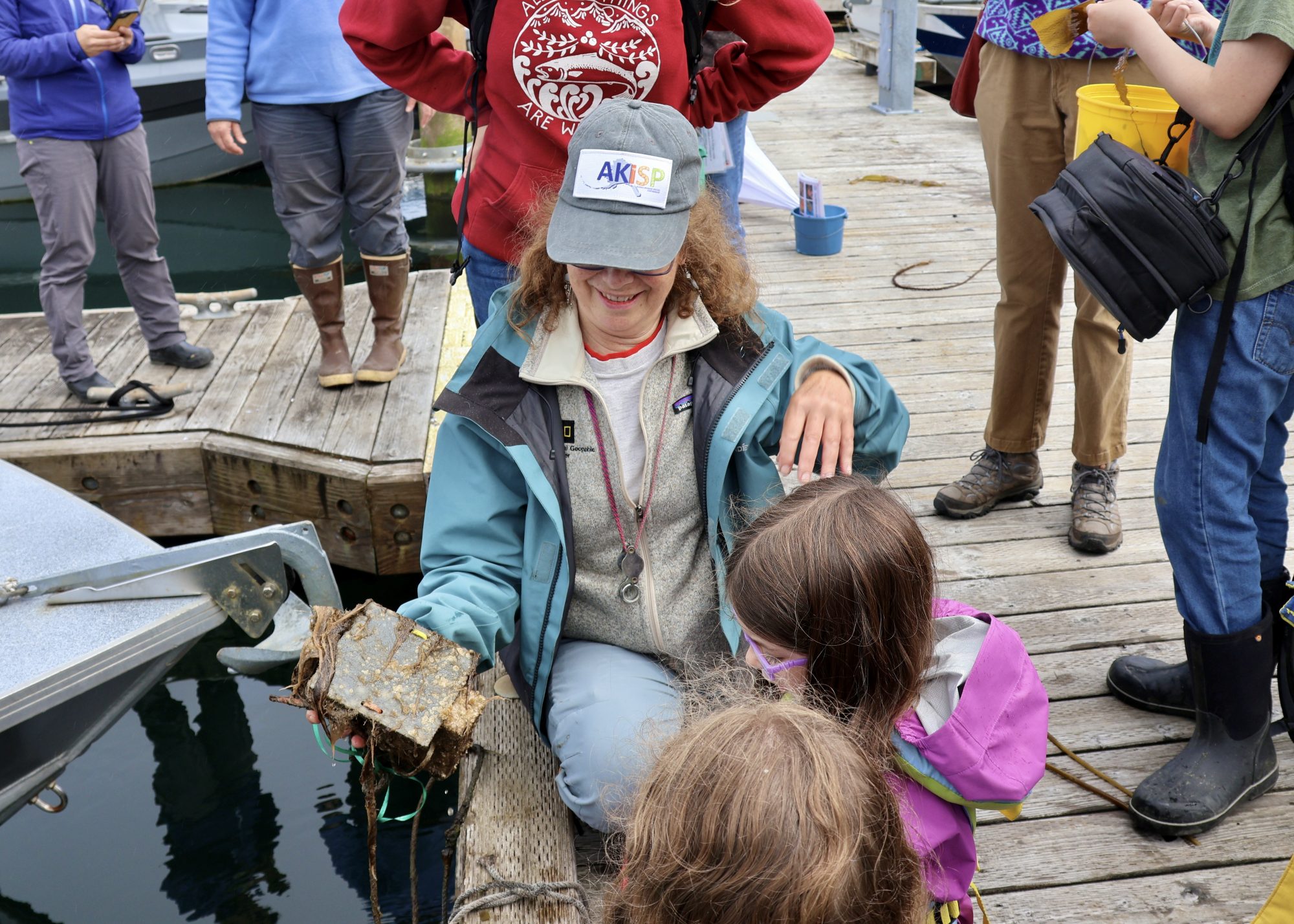
After about 30 minutes in South Harbor, the Bioblitzers moved over to Middle Harbor to look for collecting plates — slabs of square concrete attached to ropes that sink into the water so marine animals can grow on them. Petersburg High School is a part of the Smithsonian’s Citizen Science Monitoring Program, and students install the collecting plates around the harbor every summer.
“We put these plates out at a meter’s depth,” McCann said, “leave them out during the growing season for three months, and then we bring them in and take photographs and look at everything that has settled.”
McCann pulled a plate out of the water, but didn’t find any non-native tunicates.
Shortly after, however, she found a tunicate that she thought could be invasive on an old boat line.
“We found our first tunicate, guys!” she said to the group.
She scraped it off the line with a paint scraper and put it in a tupperware filled with seawater. Then, the group left the harbor to go inspect the specimens they collected.
Back at the lab
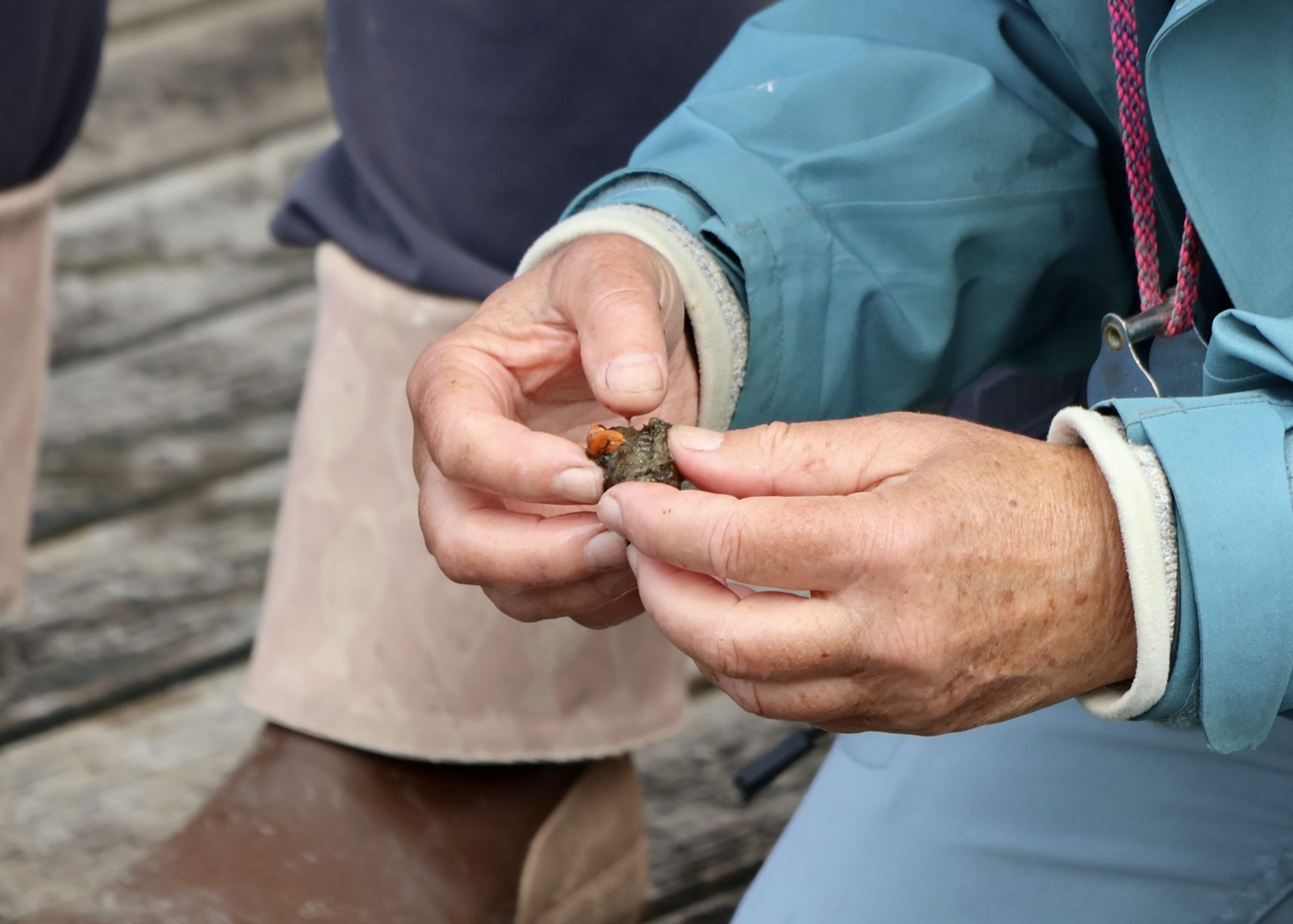
The Bioblitzers went to a makeshift lab set up in the local Parks and Recreation activity room.
McCann put her sample under a microscope, and concluded it was most likely not invasive.
Nearby was Sunny Rice, the local representative for the Alaska SeaGrant Marine Advisory program, which helps educate coastal communities on marine conservation. Rice also runs the summer science camp, and said it’s important to do this work in Petersburg.
“It feels like an opportunity to actually prevent it before it spreads and there’s the point of no return,” Rice said. “We don’t have that many intact ecosystems around, and Alaska has a lot of them, so I guess it’s our job to do what we can to keep them.”
The rest of the group also did not find any non-native tunicates. But when the invasive species do arrive, is there a point where you give up? McCann had an easy answer to that question.
“I don’t think we ever give up,” she said. “What we switch to is management. So managing the problem, knowing it’s not going away, but trying to contain it.”
If you think you’ve found an invasive species, you can report it to the Alaska Department of Fish and Game by emailing dfg.dsf.InvasiveSpecies@alaska.gov, or calling the Invasive Species Hotline: 1-877-INVASIV (1-877-468-2748).