The Petersburg Indian Association will be repatriating the remains of a 6-month-old Tlingit girl this week.
“Baby Girl” is one of three ancestors the local tribe will inter in Petersburg’s cemetery in late September.
Tribal Administrative Assistant Stephanie Aikins has been working on the repatriation project for over a year. Aikins and two other tribal delegates leave Sept. 1 for Seattle, where the remains of the Tlingit girl are currently kept at the Burke Museum of Natural History and Culture.
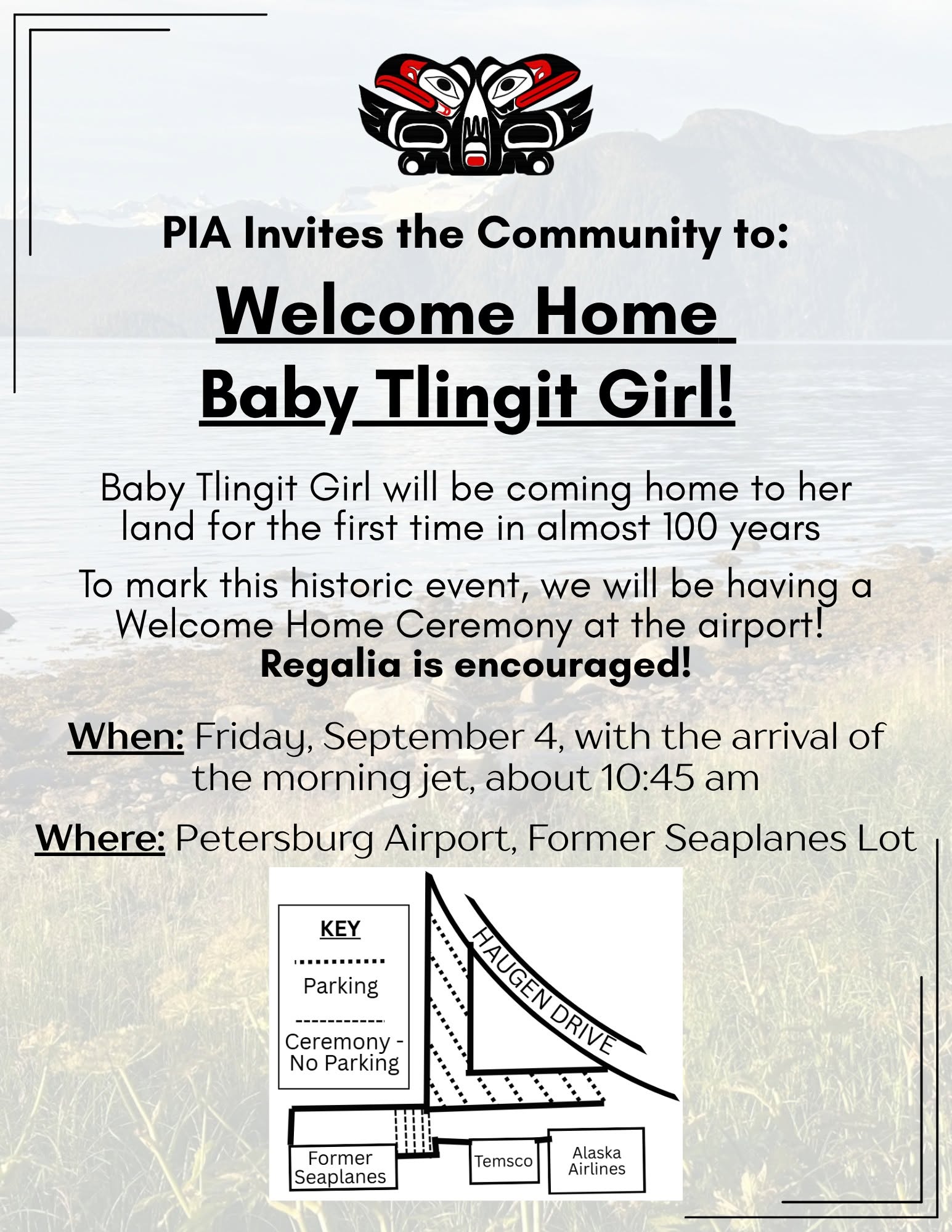
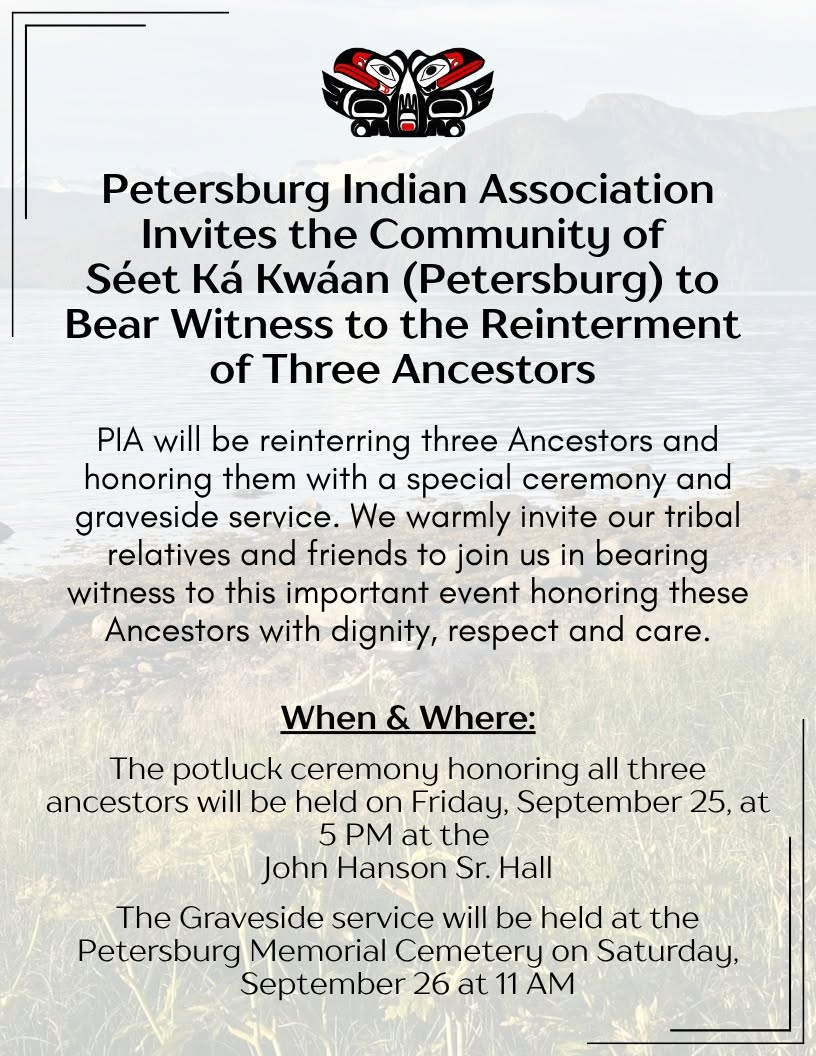
A welcome ceremony for the Tlingit girl is planned on Friday, Sept. 4, at the Petersburg Airport when they return home. PIA will be hosting a larger ceremony for all three repatriated ancestors the weekend of Sept. 25.
In an interview with KFSK’s Baiz Hoen, Aikins shares more about “Baby Girl” and learning how the ancestor was at the Burke museum.
Listen here:
This transcript has been lightly edited for clarity and brevity.
Aikins: That was kind of a snowball effect. One ancestor turned into two ancestors, turned into three ancestors, the third being Baby Girl. All I knew was that there was a little girl’s remains down in Seattle from this area. And the kind of aha moment was searching the newspaper archives on our library’s website, and there’s an article from January 11th, 1996, so over 20 years ago, talking about her and the Burke Museum trying to return her. And so they were very happy that I reached out to them to get the ball rolling again.
Hoen: Can you tell me a little more about Baby Girl? How old is she?
Aikins: That part’s a little bit of a mystery. She was found in Thomas Bay in 1928, so almost 100 years ago. By then, she was already more or less mummified. They tried to do DNA analysis on her, and they found that the mother’s side of her DNA is 100% Tlingit from this area. Her DNA is so old and broken, however, that the father’s side was a little bit undetermined. She was buried with a couple of furs, and those were believed to be sea otter and some kind of canine fur. That DNA is also so old and broken that it’s hard for them to discern.
Hoen: What’s happening on September 1st? Can you tell me the whole process of the next couple days?
Aikins: So September 1st, we fly down to Seattle. We get in at nighttime. The ceremony that we are going to hold at the museum is one where we will ask her for forgiveness for taking so long. At the same time, thanking the museum for taking such good care of her and being there for her. She has a very custom crate being made for her that we will watch her be packed in, and then we will have a send-off ceremony, and from there she will go to a warehouse to acclimate and be taken to Alaska Airlines to make her final leg home.
Hoen: And what happens when you all get home on September 4th?
Aikins: September 4th, I have a group of people who will be meeting us on the tarmac. She will be offloaded from the plane, and we have the drum and song group there to help welcome her. We see this as, you know, something that shouldn’t have happened. She shouldn’t have been taken from her resting place. However, this is also a moment of joy. She’s home, and that’s really powerful.
Hoen: What else have you guys been doing to prepare for this trip?
Aikins: It’s a lot of coordination. There’s no real protocol for this. And so it’s consulting with a lot of elders, it’s consulting with tribal historians. People who know protocol. So it’s finding the balance and maintaining the balance, things like that.
Hoen: What moved you to take on this work?
Aikins: There’s a lot of people that come to me and talk to me about this. You have people who are very passionate about this. You have people who are really unsure about death, and they get a little spooked by it. And so I wanted to do the right thing. I knew that something probably needed to be done, and I went with it. Like I said, the one turned into two, turned into three, and when Baby Girl came out, I was like, “Okay, if there’s any other ancestors, make yourselves known right now.”
And I’m a mom. I have a daughter, a little girl, and I’ve really grown attached in a way. I’ve kind of gone through the stages of grief with her a little bit, and I’m at the point where I’m really excited about this.