Stephanie Aikins stepped into her office, and gestured to a big wooden box under her desk.
“There she is!” Aikins said.
The box held the remains of Baby Girl, a 6-month-old Tlingit ancestor whom the Petersburg tribe repatriated from Seattle early last month. Aikins has been watching over her since she arrived.
Aikins is the administrative assistant for Petersburg Indian Association. The local tribe interred Baby Girl’s remains in the town’s cemetery in late September, along with the remains of two other ancestors that have been in the tribe’s possession for over a decade.
One is a human skull, believed to be 300 years old, that was found in the 1950s when the city was building the reservoir. The other is a human jawbone, thought to be prehistoric, that was found with a deer femur in the 1980s on a beach south of town.
Those ancestors were also in Aikins’ office, where she looked after them for over a year.
“It’s a party right now!” she said with a lighthearted laugh.
Aikins has been working on this repatriation project since May of last year. She found out that Baby Girl was at the Burke Museum in Seattle from a 1996 article in the local newspaper.
According to the article, she was found inside a cave in 1928 in Thomas Bay, near Petersburg. Her body was in a box “under a carefully made pile of rocks” and was buried with funerary objects. She was given to the Burke Museum in 1930.
The tribe applied for a grant to help cover the cost of the repatriation efforts through the Native American Graves Protection and Repatriation Act, or NAGPRA. They received about $24,000 to cover the costs of the interment ceremony and the travel fees to bring Baby Girl home.
At the beginning of September, Aikins and two other tribal representatives traveled to Seattle to receive Baby Girl.
A ceremony at Petersburg’s airport welcomed them home. There, the ancestor was given the Lingít name Gagaan, which means “sunshine.” Aikins said the emotions were palpable that day.
“You could really feel everybody’s emotions,” she said. “It’s a mixture of sadness and hope, but it’s strongly love. You could feel the love. And I’m fairly certain she felt that.”
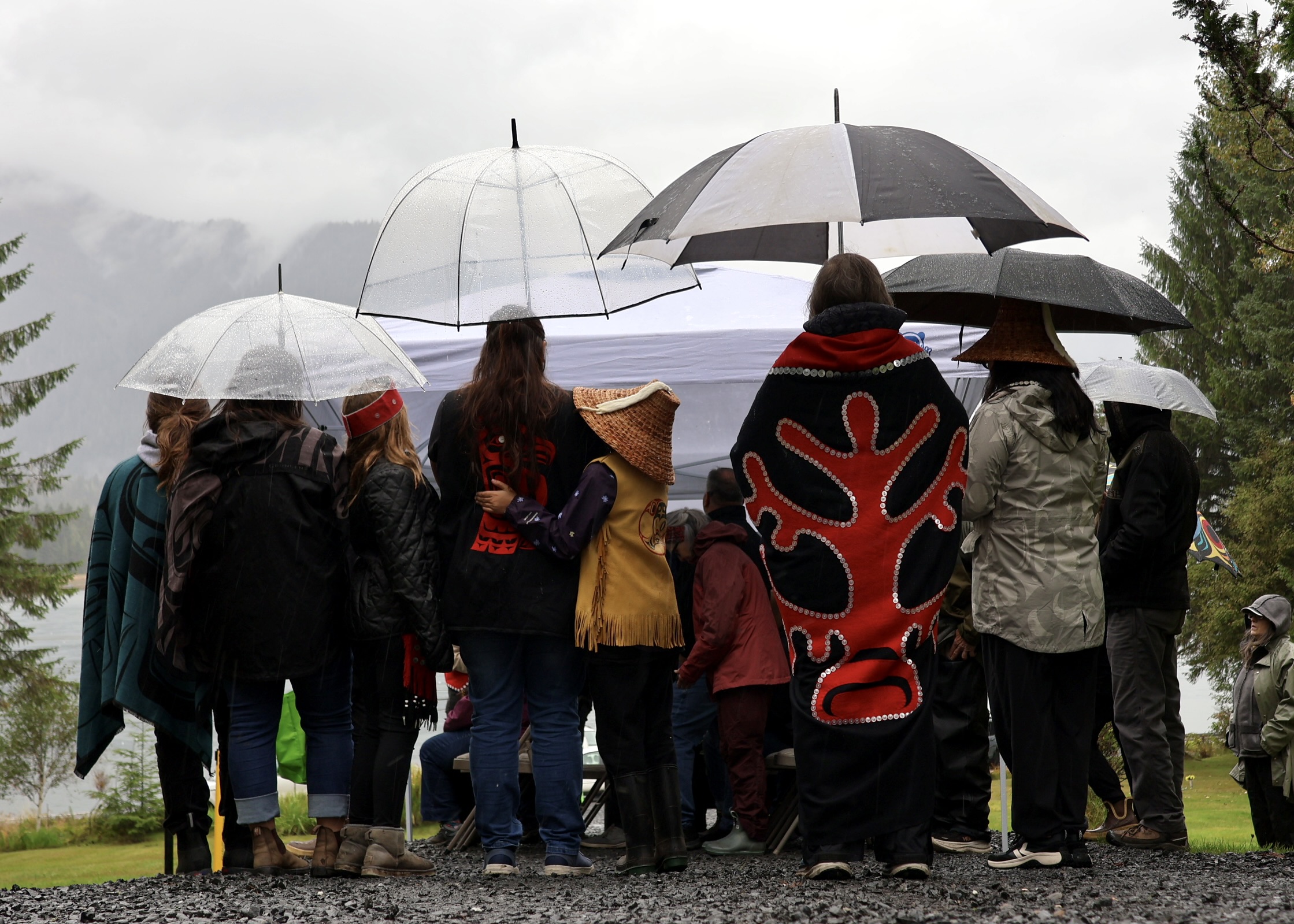
At a ceremonial potluck the night before the interment, the local community hall was packed with tribal members and residents. Bright evening sun streamed through the windows while attendees paid respects to the three ancestors before they would be laid to rest the next day.
Lgeik’I Eesh Will Ware is the housemaster for the T’aḵdeintaan clan. He has a granddaughter the same age as Baby Girl was, and said the ancestor’s homecoming brought up a lot of “deep emotion.”
“To our Tlingit people, our grandchildren are our most prized and precious thing,” he said. “So it was very emotional, but we choose to be happy that she’s now home among us.”
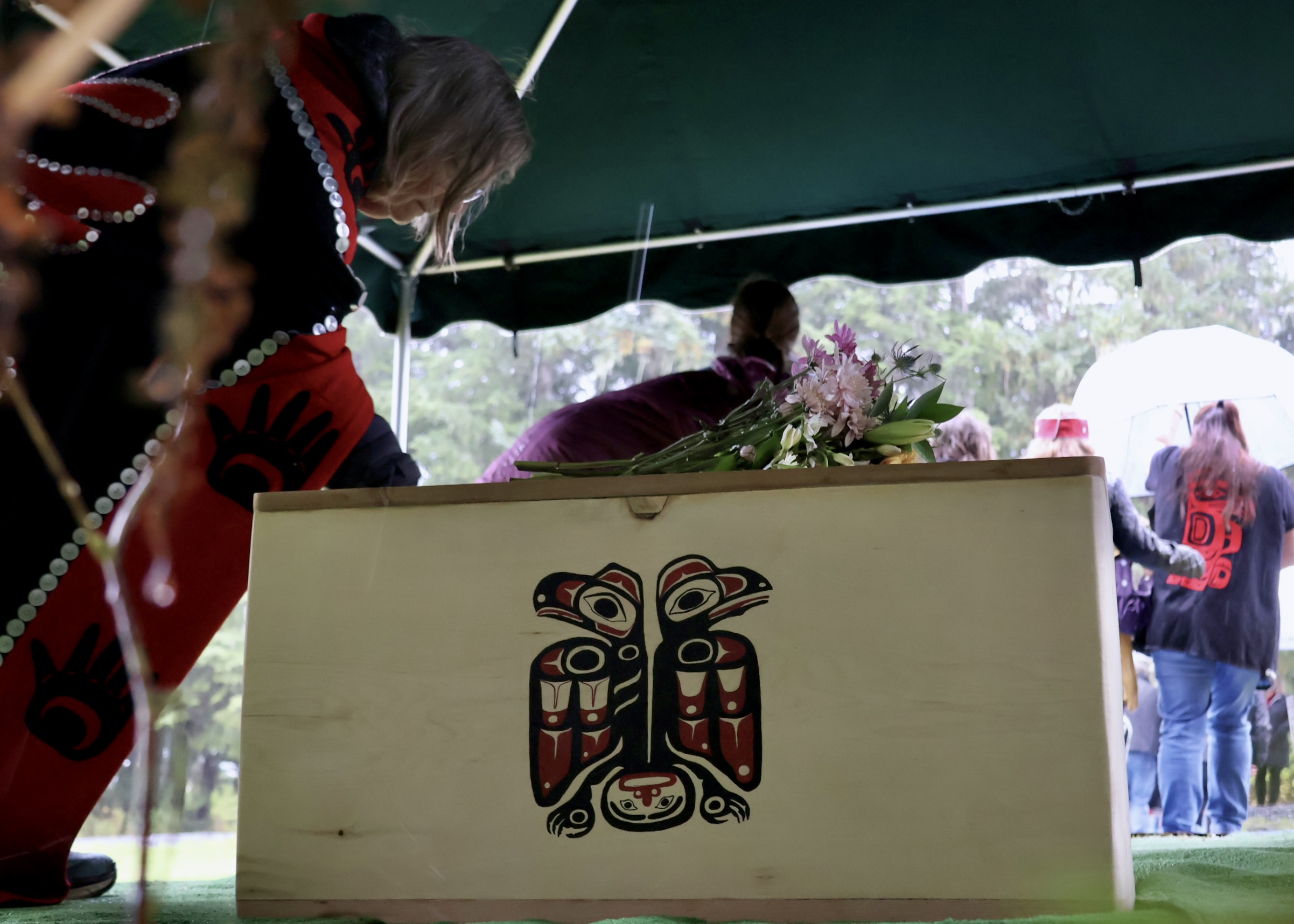
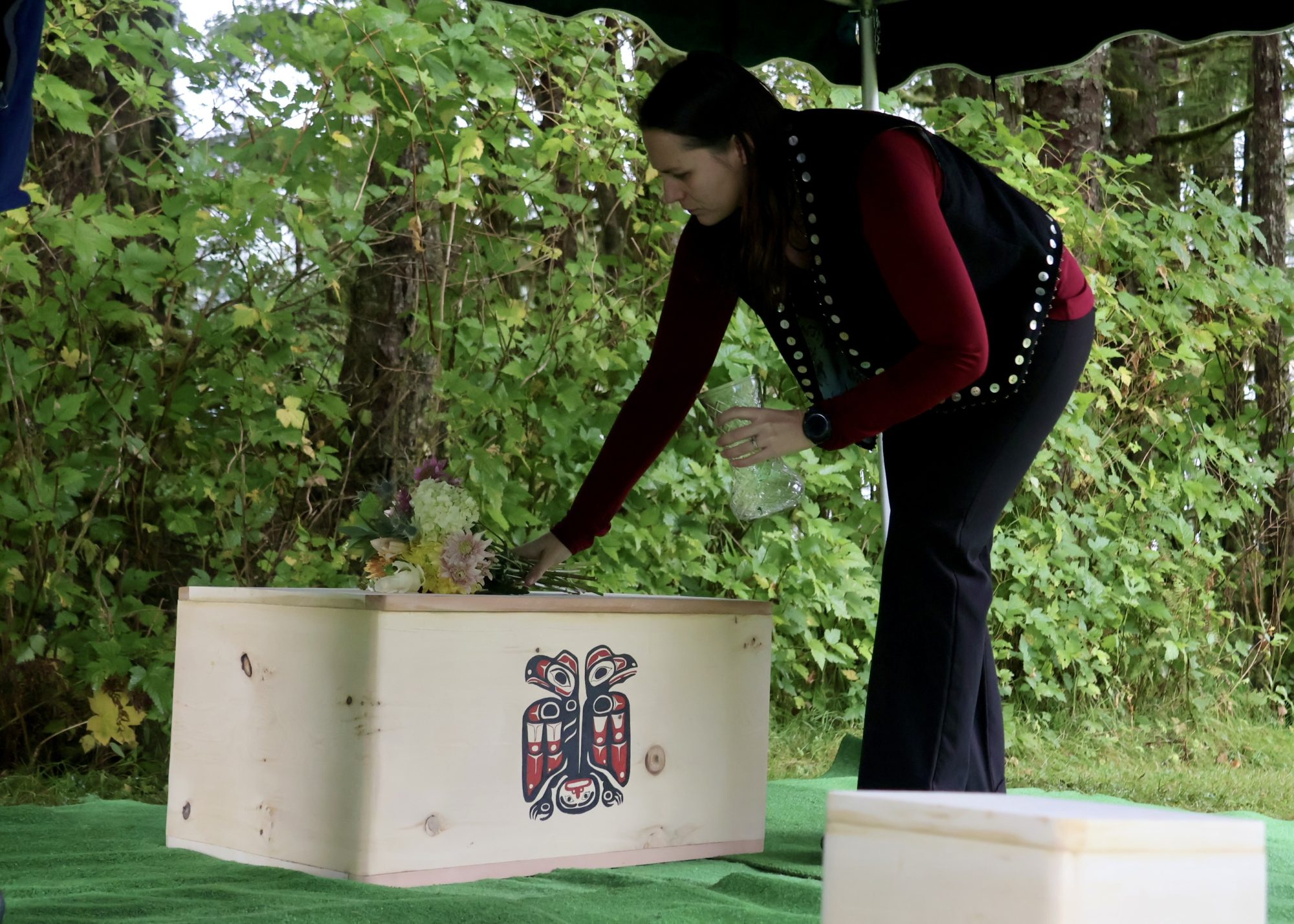
Each ancestor’s remains were held in handmade bentwood boxes, with red and black formline designs painted on the sides.
The boxes were made by Sitka elder Sha Wha Guwaakaa George Bennett Sr. He had helped guide the tribe through this process because there was no known tribal protocol for a repatriated ancestor.
In a video Bennett sent to the tribe, he said Baby Girl’s box was the biggest he ever made.
“Maybe she cried, ‘where’s my ancestors, where’s my homeland?’” he said. “Now that she’s home, her spirit is amongst them. Now she can rest.”
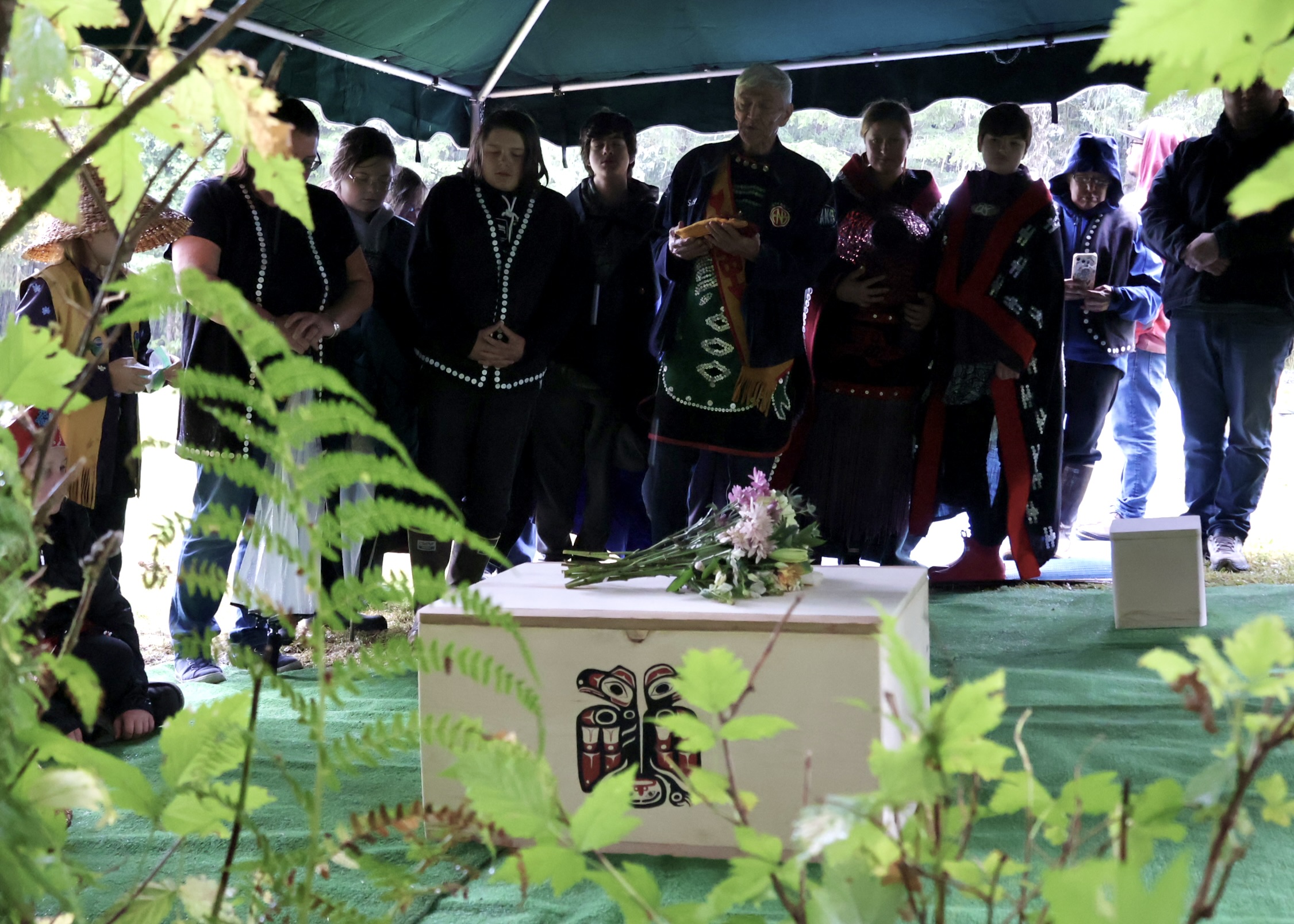
The following morning, about 40 people gathered at Petersburg’s cemetery in the pouring rain for a graveside service, bearing witness to the reinterment of the three ancestors. Many dressed in red and blue regalia.
“I want to say gunalchéesh for being here,” Aikins said, thanking the crowd. “I think it’s absolutely perfect that we had an absolutely gorgeous day yesterday, sunshine and everything, and now we get your typical Southeast fall time day.”
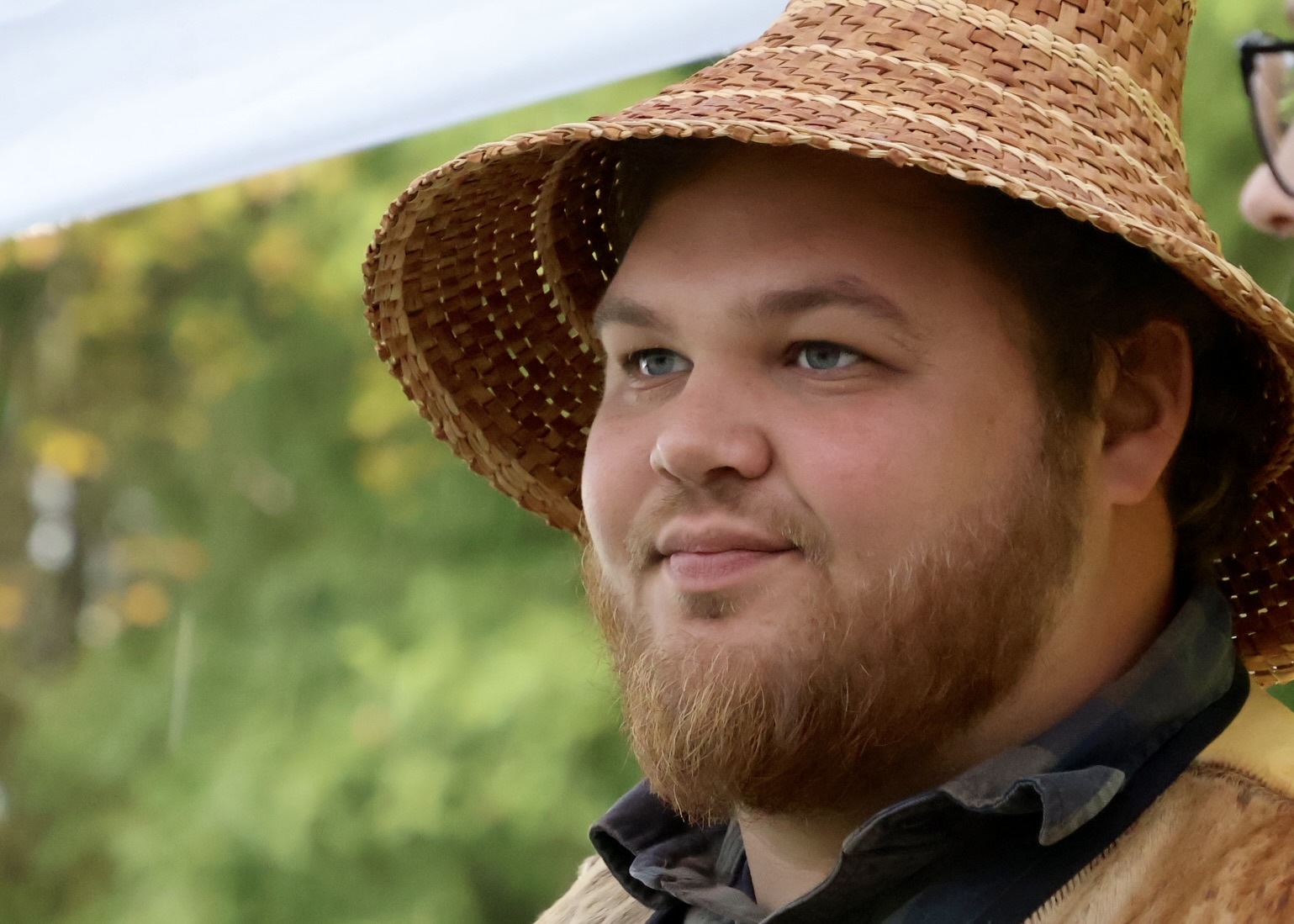
ShaaL’aanee Brandon Ware is the vice president of the tribal council. He was part of the group that went to Seattle to receive Baby Girl. At the cemetery, he expressed relief.
“When we went down to go get Baby Girl, there was a heaviness about it until we asked for forgiveness and actually went and got her,” he said. “Being able to do all this while we’re reinterring our ancestors today, it’s almost a sense of relief and excitement that this is finally happening and her family is back where they belong.”
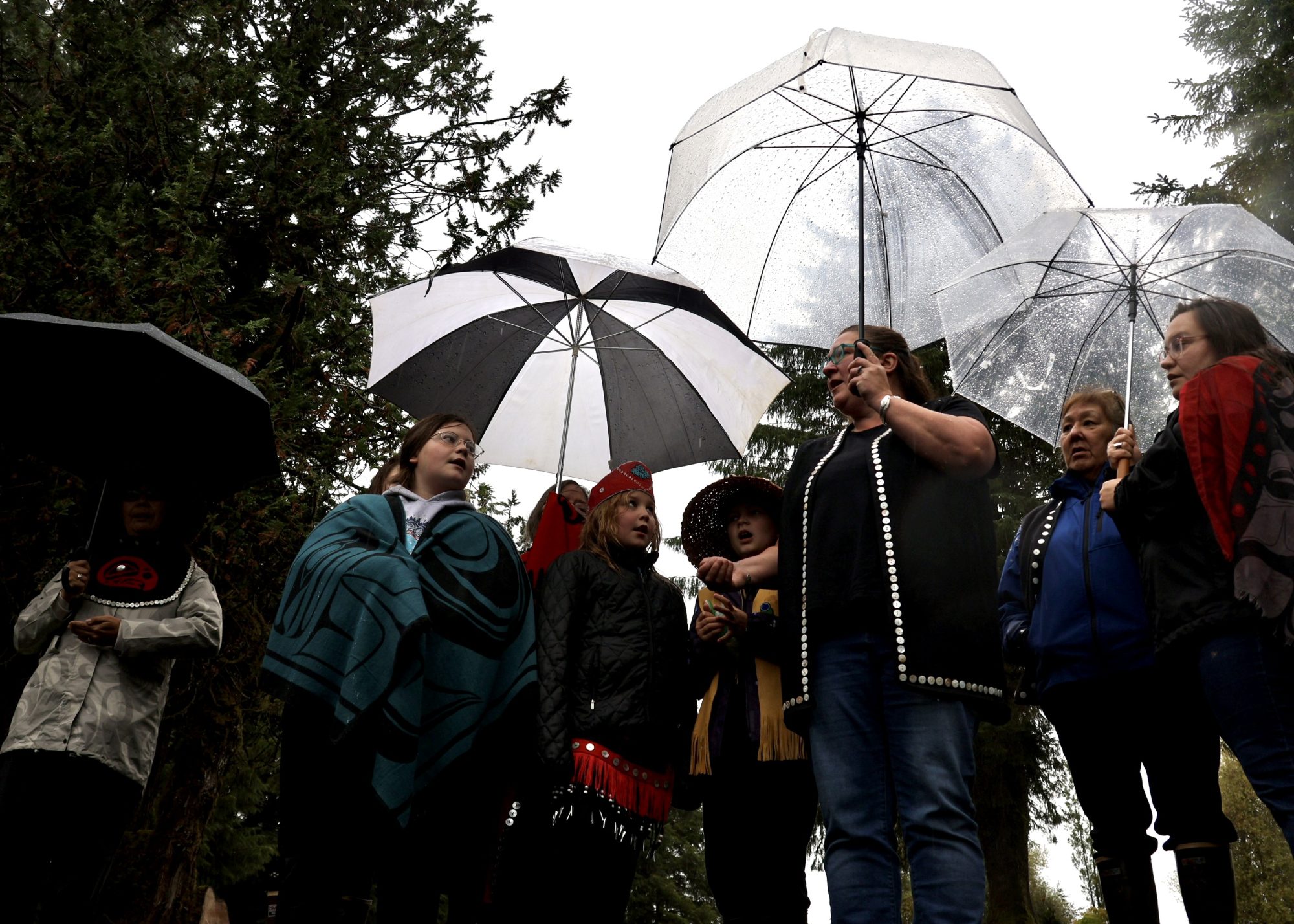
The Séet Ká Kwáan Song and Dance group, led by Laurel McCullough, performed a lullaby for Baby Girl.
“It’s such an old song that it probably would’ve been something that she had heard in her life,” McCullough said. “And so this would be something that would be comforting and that she would recognize.”
Dozens of people took turns paying respect to the ancestors at the gravesite, with prayer and reflection, before going their separate ways.