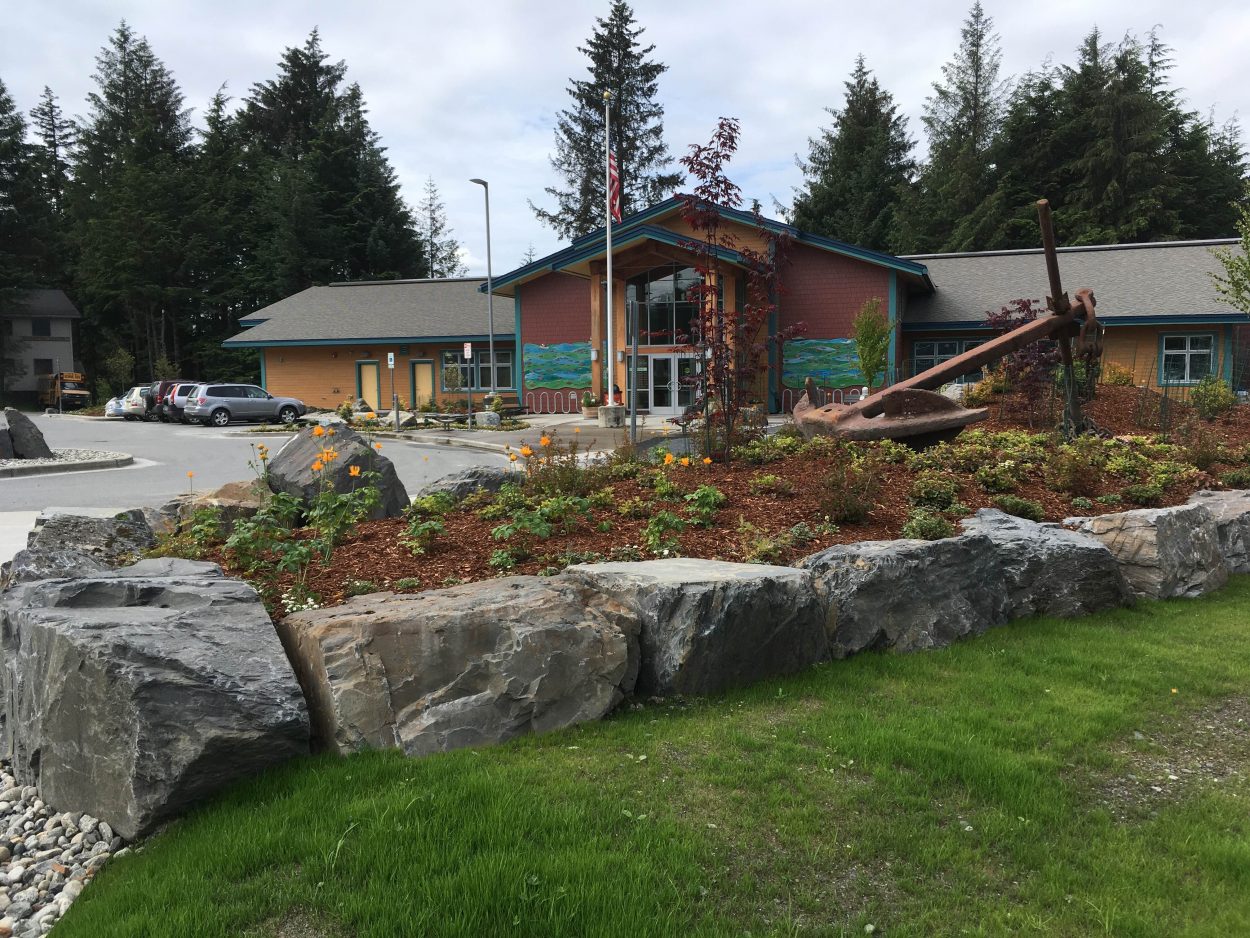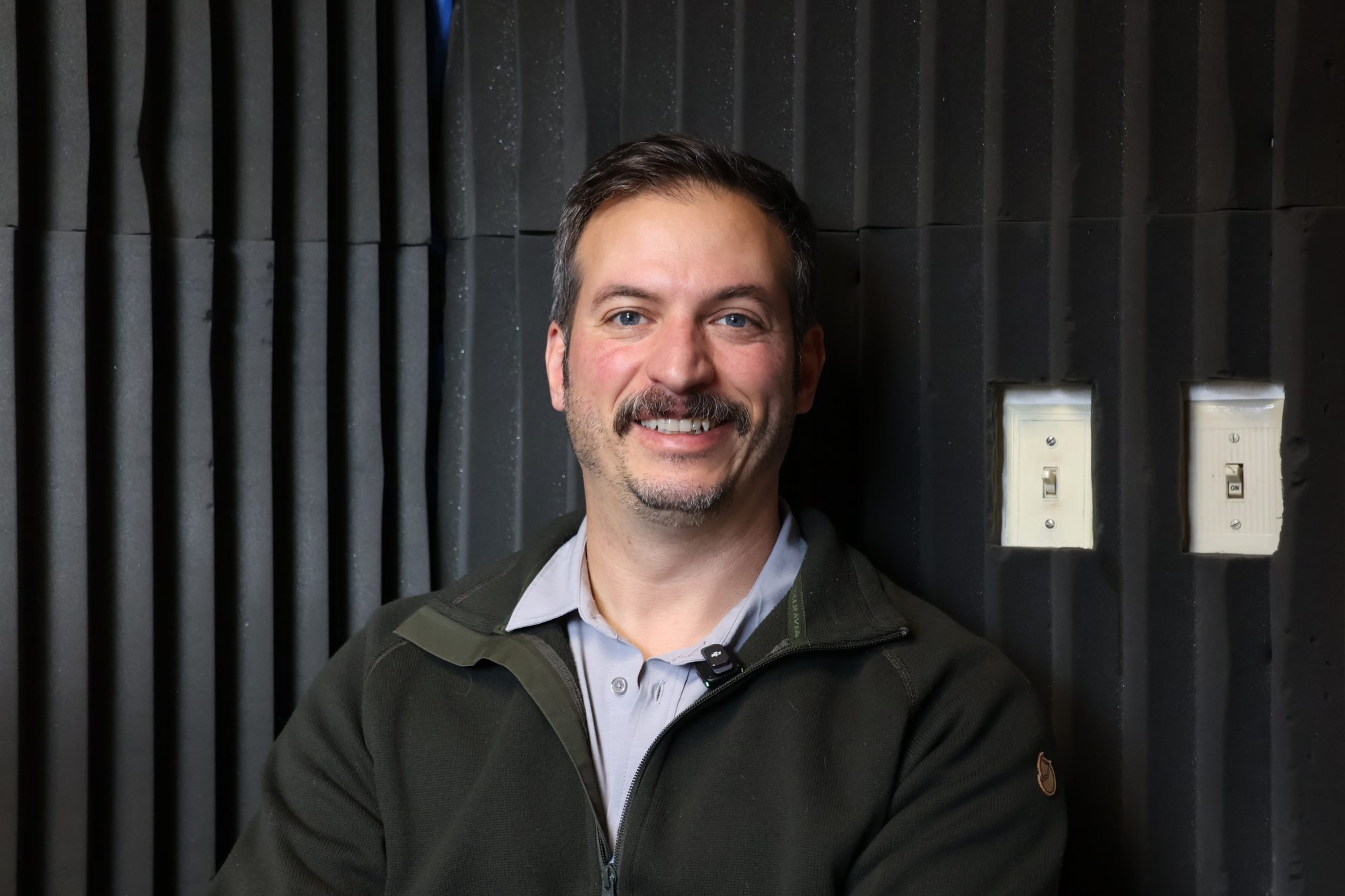
Lieutenant governor candidate Zac Johnson visited Petersburg on Oct. 1 as part of his campaign for office. Johnson is an independent, and is on the ticket with Democrat gubernatorial candidate Jonathan Kreiss-Tomkins.
This was Johnson’s first visit to Petersburg. His running mate visited the island town in July, and was the community’s state representative for eight years.
Johnson currently serves as a member of the Anchorage Assembly, and was formerly a Marine and an Alaska State Trooper. He spoke with KFSK’s Taylor Heckart about what it was like to join Kreiss-Tomkins in the race for Alaska’s top jobs.
Listen to the short version here:
Listen to the long version here:
TRANSCRIPT:
This interview has been edited for clarity and brevity.
Zac Johnson: Yeah, it was not something I saw coming at all for sure.
But it was, of course, an amazing opportunity, and you know I have so much confidence in Jonathan. I mean, he’s a strong candidate, he’s such a decent guy and such a hard worker.
And, kind of looking at how things have been going in Alaska these last eight years, and just feeling, like a lot of people, really disappointed, concerned about our future, and feeling really confident that Jonathan was the guy who was going to be able to turn it around. I was incredibly excited and honored when he asked.
And we had, of course, some long conversations about, what does this look like, what is it going to take to win this thing. But through it [I] just became more convinced that this was an opportunity I could not turn down.
Taylor Heckart: The role of lieutenant governor is so interesting because we’ve had some lieutenant governors who have preferred to stay out of the spotlight [and] some of them who have taken a more active role. If you were to be elected, where do you see yourself in the role as lieutenant governor, and maybe what are some of your priorities?
Zac Johnson: One of the things that Jonathan and I talked about, again, before joining the ticket, is to say that I don’t want to just sit in a corner and come out when it’s election season. I believe in his agenda, and I want to work with him to make it happen. So there’s a lot of work to do.
So we still haven’t figured out — you know, we got to get through the election first— kind of what’ll land on my plate versus his. There are things like public safety that I have a background in that I care about deeply, and I have some good relationships there, where I think I can add a lot of value for sure.
And then, within the prescribed duties of the lieutenant governor, I mean, elections is right up there at the top. And I think a lot of us, myself included, had some concerns about the way that’s been managed this year. So I see some room for improvement, and just want to invest myself in that work.
Certainly, as with a lot of things, [I] want to work with the legislature in a collaborative way. I think they’ve made some good efforts on that front. Obviously, they have not been entirely successful because the governor has a veto pen, and this governor certainly likes to wield it. But I see some opportunities there.
Taylor Heckart: And you brought up elections, which is what I wanted to talk to next.
For folks who may be unaware, the lieutenant governor has a very interesting job in overseeing the Division of Elections, and that has obviously been making a lot of news this election cycle — and has been relevant in Petersburg with a Petersburg candidate wanting to be on the Senate ballot.
Can you talk to me maybe a little more specifically about some of your concerns with the Division of Elections this year, and if you were to be elected what you’d do differently?
Zac Johnson: Yeah. I guess just to name a few, because I know we don’t want to be here all day:
I was disturbed when I saw that the Division of Elections handed over a large tranche of information on Alaska voters to the federal government — and did it without getting a rationale for why we needed to do that, nor in my mind a clear legal explanation for how we were obligated to do that.
And I think Alaskans, generally, we put a high value on our privacy. And it’s not to say that we should be uncooperative, but before we simply turn over vast sums of personal information for Alaskans, I think we need to understand what purpose it’s going to be used for. And so that was disconcerting.
And then, sometime after that, we saw that as they were going through the exercise of cleaning up the voter rolls — which is something we always should be doing — that a much larger list of names of potential non-citizens had come from the DMV than in years past. And a lot of people who we discovered later were in fact U.S. citizens and legally entitled to vote, had their names taken off.
And, again, it was one of those things where nobody could provide a clear explanation of why or how. I mean, when the question was asked, why was the list of names so much longer this year than in years past? We didn’t get a rational, coherent, answer to that. Not that I’ve heard yet. So that’s disconcerting.
And then also, when it was found that a mistake had been made, the question was asked, like, “Are you going to make efforts to fix it for the folks who we discovered, in fact, were legally able to vote?” And again, the answer was, “We’re not going to take that step.” So, you know, I find that disappointing.
Taylor Heckart: What is one thing you’d immediately do after taking office to better support rural communities in Southeast Alaska?
Zac Johnson: I think one of the first things we need to get to work on is the ferry system, right? The stories I’ve been hearing from folks in this part of the world have been pretty heartbreaking.
We were at a forum just the other day, and then Jonathan — you know, Sitka guy who worked in Juneau — had a story about how one year it took him five weeks to get his car back to Sitka after a session, which is just absurd.
And we were looking at some stats down at Southeast Conference this week, and ridership has dropped in half compared to where it was, I think 15-20 years ago, which is remarkable. And that is just so vital to this part of the state, I mean, we call it the highway system for a reason.
And it has been pointed out, I think fairly, like, look, if the Glenn Highway or the Richardson [Highway], if one of those was just suddenly severed and people couldn’t traverse the state freely, there would be an uprising. And I think it’s intolerable that we’ve allowed the system in Southeast to become so broken.
And Jonathan certainly has a lot of lived experience with that, a strong passion for the work, and I think that’s something that we want to get to right away, both in terms of making capital investments as well as operational improvements.
And I’ll just throw out as well: my wife is born and raised in Ketchikan, so she spent her childhood traversing Alaska on the marine highway system. So, if nothing else, she will be there to be a constant reminder of how important it is that we fix this.
Taylor Heckart: Well, Zac, you know, when I was talking to folks saying I was going to do this interview today, I think a lot of folks I heard from in Petersburg felt like they were maybe more familiar with JKT — because he’s Southeast — than they were with you.
Is there anything else that you would like to share about perhaps yourself or your policies so folks in Petersburg can get to know you better?
Zac Johnson: You know, Jonathan’s a Southeast guy. I’ve lived in Anchorage, Fairbanks, and there’s a lot of things in our backgrounds that are different, right? And we think we’re better for it, because Alaska is large and diverse.
I would like to just highlight, though, for my part, that even though I haven’t actually really lived in Southeast full time, it’s a part of the state that I spent a lot of time in and really feel a connection to and have grown to love. You know, as a trooper, which meant I spent three months down in Sitka for the DPS Academy, which was an incredible experience. Loved that. Well… okay, I didn’t love every part of the Trooper Academy, I love Sitka.
But then also, I married someone from Ketchikan, as I mentioned. We’ve been together for 10 years, and so I’ve gotten to spend a lot of time down there in that community, and through his campaign and other opportunities, gotten to travel a fair bit. Got out to Metlakatla earlier this year, which was amazing.
Of course, because I have a spouse who’s been in the legislature, and then also for my work as an assembly member, [I’ve made] a lot of trips to Juneau.
So, it’s a part of the state where I feel like I’ve gotten to know it well, and I think I’ve gotten to see some of the unique challenges you guys are dealing with down here, and certainly feel committed to try and improve things for y’all. Same as the rest of Alaska, but just recognizing the fact that this is a very distinct, unique place with different needs, different culture, and we want to be respectful partners.
Taylor Heckart: In the limited time we have left, is there anything we missed that we didn’t touch on that you wanted to make sure you said?
Zac Johnson: Oh boy, I just want to say it’s been an incredible adventure, these last few months running with JKT.
We have been struggling so badly. I mean, I have not found anyone yet who feels satisfied with the directional axis we’ve been going in, right? And it’s… how do we turn that around?
And you know, for JKT and I, we are deeply committed to service to the state, and I think our records prove it. We are the youngest ticket. We also — between the two of us — have the most years of experience in elected office compared to anyone else who’s in the race at this point.
So, we care about the work, and we know it, and we understand it. And we have worked incredibly hard to get where we are. We’ll keep working hard to get ourselves across the line in November.