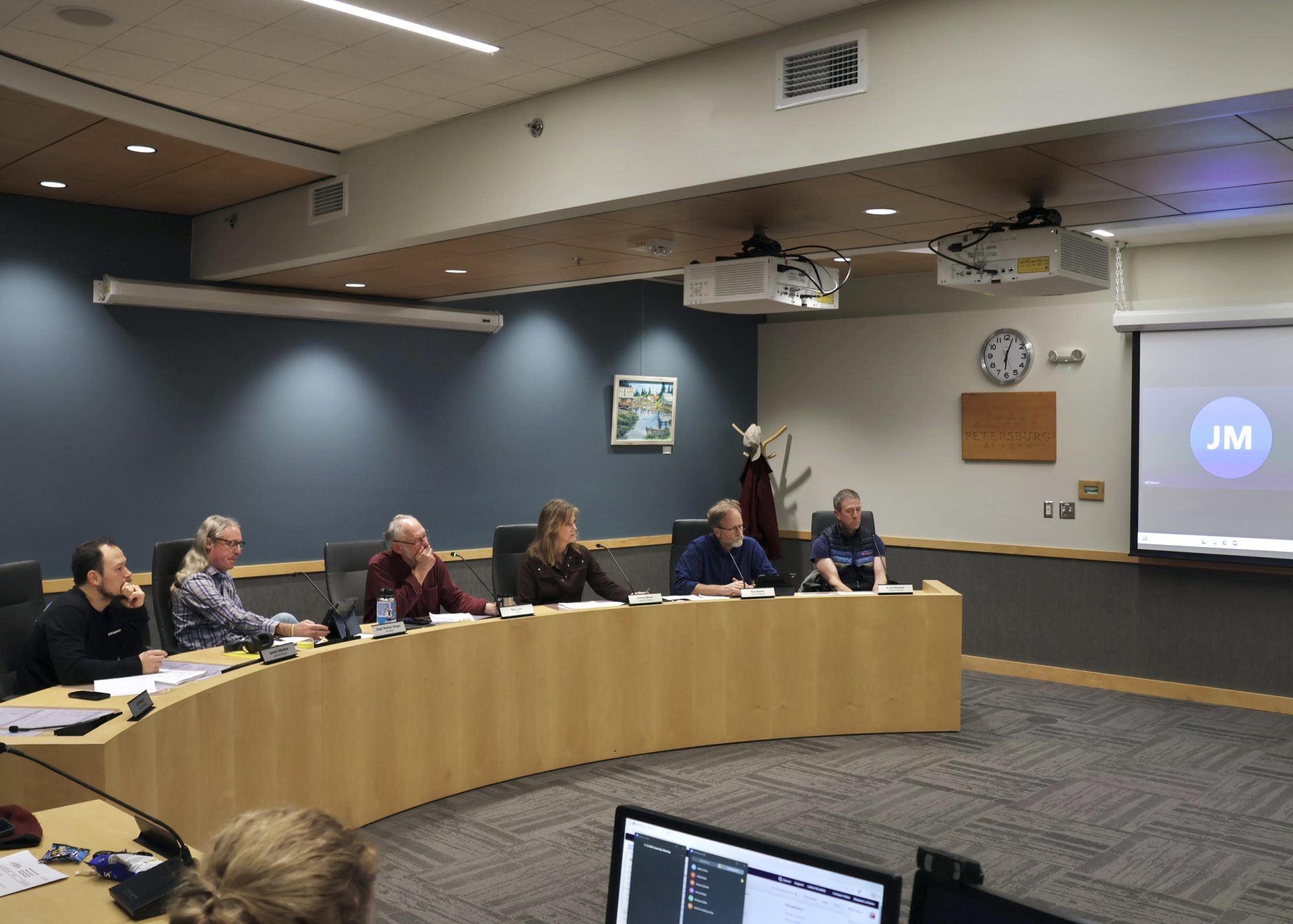
To give Borough staff time to look into what potential impact data centers could have on Petersburg, the Assembly has been considering a moratorium on issuing permits for the facilities.
Last week, assembly members voted 5–2 to broaden the proposed moratorium, so it would apply to “all” data center development.
Originally, the temporary freeze was aimed at “certain” projects — data centers that would use uncontained cooling systems, require more power than allowed, or rely on generators instead of Petersburg’s power grid.
The Petersburg community has mixed feelings about data centers. The moratorium’s authors are especially concerned about the potential for off-grid operation.
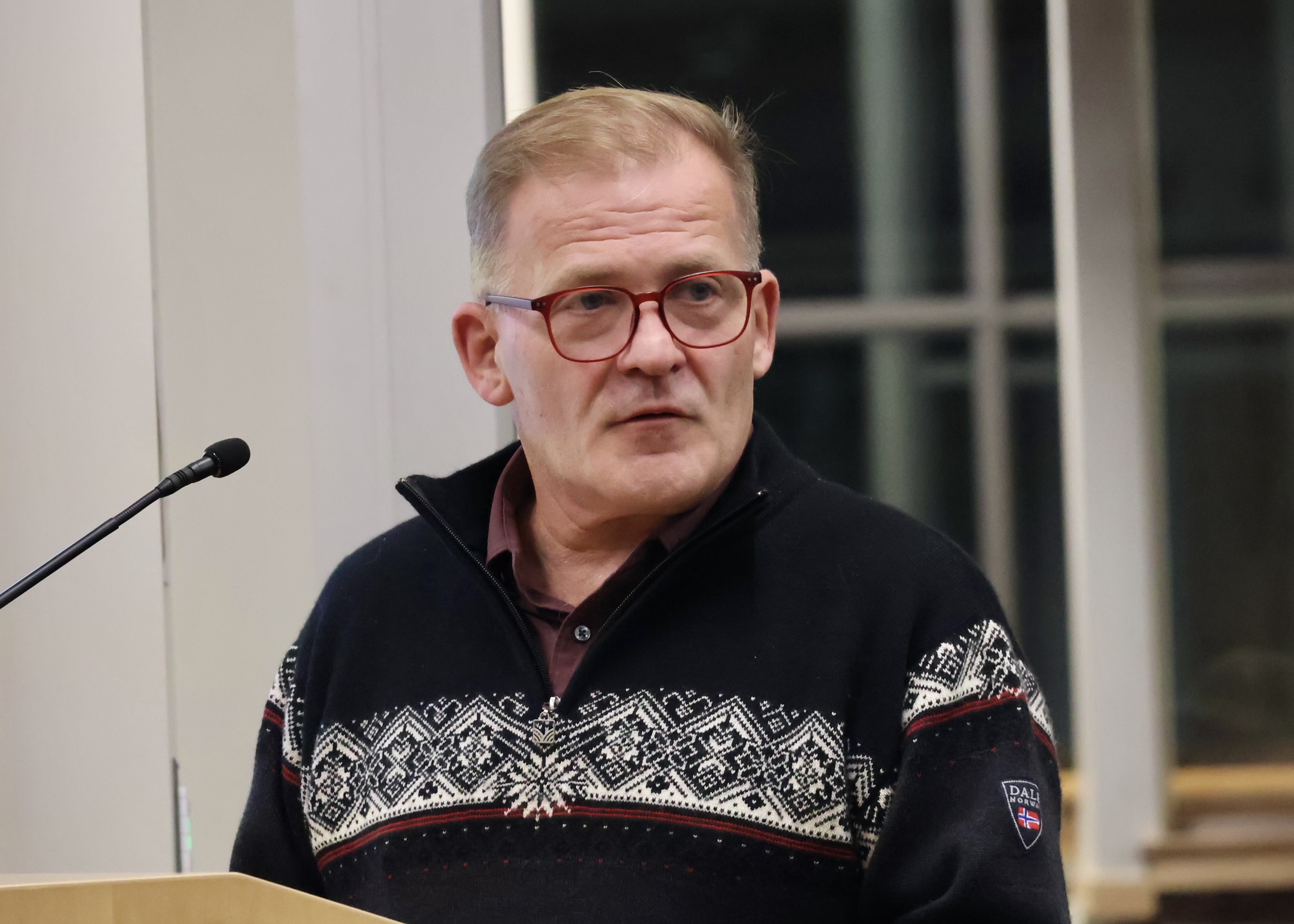
Utility Director Steve Harbour, who helped author the ordinance, testified at a public hearing for the moratorium in mid-November.
“I don’t know the right answer. I don’t know how we all feel morally on the data center issue. But I do know none of us wants generators running 24/7, and that’s the purpose of this ordinance, and keeping our water clean,” he said.
Harbour said the Borough can work on addressing big picture questions, but needs the moratorium in the meantime.
“It’s not perfect, and I agree that there’s a lot of mixed emotions and feelings in town. I’ve talked to people that think [a data center could] be good to help with rates. I’ve talked to many that think it’s bad,” he added. “We can have all sorts of public meetings and all that to decide. But we should do that after we pass this ordinance.”
Now, that measure is being revised so that the moratorium would apply to “all” data center development, regardless of whether a project runs off or on the local power grid, or what kind of cooling system it uses.
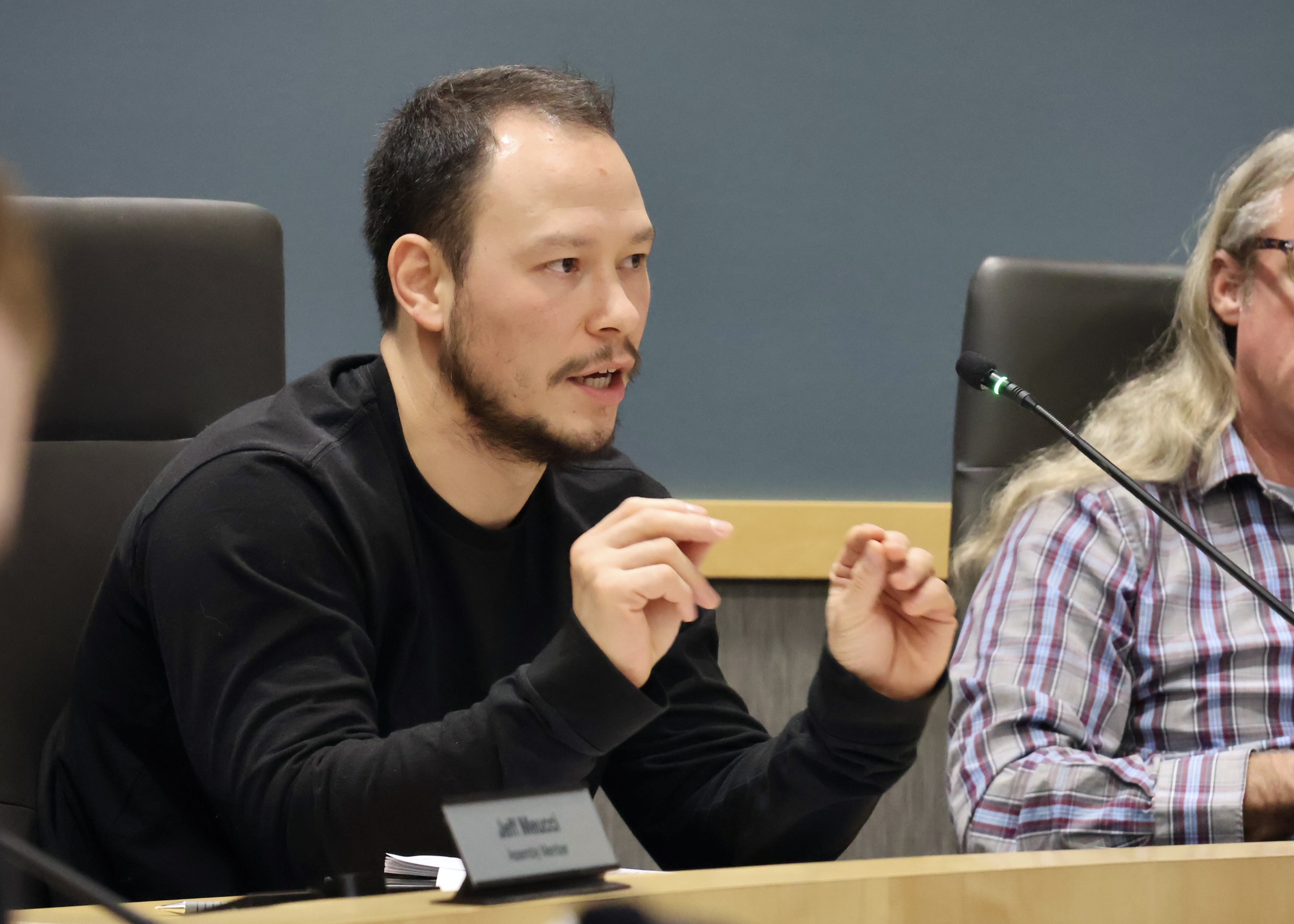
Assembly Member Jeff Meucci pitched the amendment.
“I think if we’re going to take a moratorium, we’re going to take a real moratorium, and stop any kind of additional building permits for any kind of data center,” Meucci said.
Meucci said he didn’t think the moratorium as-written would be broad enough.
“I’m afraid that by having a moratorium with leaving a door open, it kind of leaves us exposed,” he said. “I think it’s the Assembly’s responsibility to pass good policy, not to do policy based on a looming threat that is out there.”
Meucci proposed the change in previous meetings; it didn’t get enough Assembly support, until now.
“I like it. It gives us time, and I will be voting yes,” said Assembly Member James Valentine.
Even before the amendment was on the table, Valentine said he wanted the moratorium because there has been a lot of talk, without much clarity to act upon.
“I want to add all these protections for us, but we haven’t seen anything in front of us to actually, like, work with,” Valentine said. “At least one moratorium, to start, gives us a breath … so we can actually work on something instead of just talk.”
“This has gotten tougher and tougher as time goes on,” said Assembly Member Bob Martin. “I’m becoming more open to the full moratorium. But I still think the biggest open door here, as Member Meucci referenced, is diesel generation.”
Martin said he was concerned that broadening the moratorium at this point in the process would be a “big change” without a lot of time to vet the legality.
“But, I have noticed public sentiment is heading in the direction of a full moratorium. So I think I’m going to vote for the amendment,” Martin added.
But not all assembly members support the change.
The Borough Utility has guardrails, like power sale agreements, that protect Petersburg’s grid; but an off-grid facility that runs on diesel generators could technically bypass those protections.
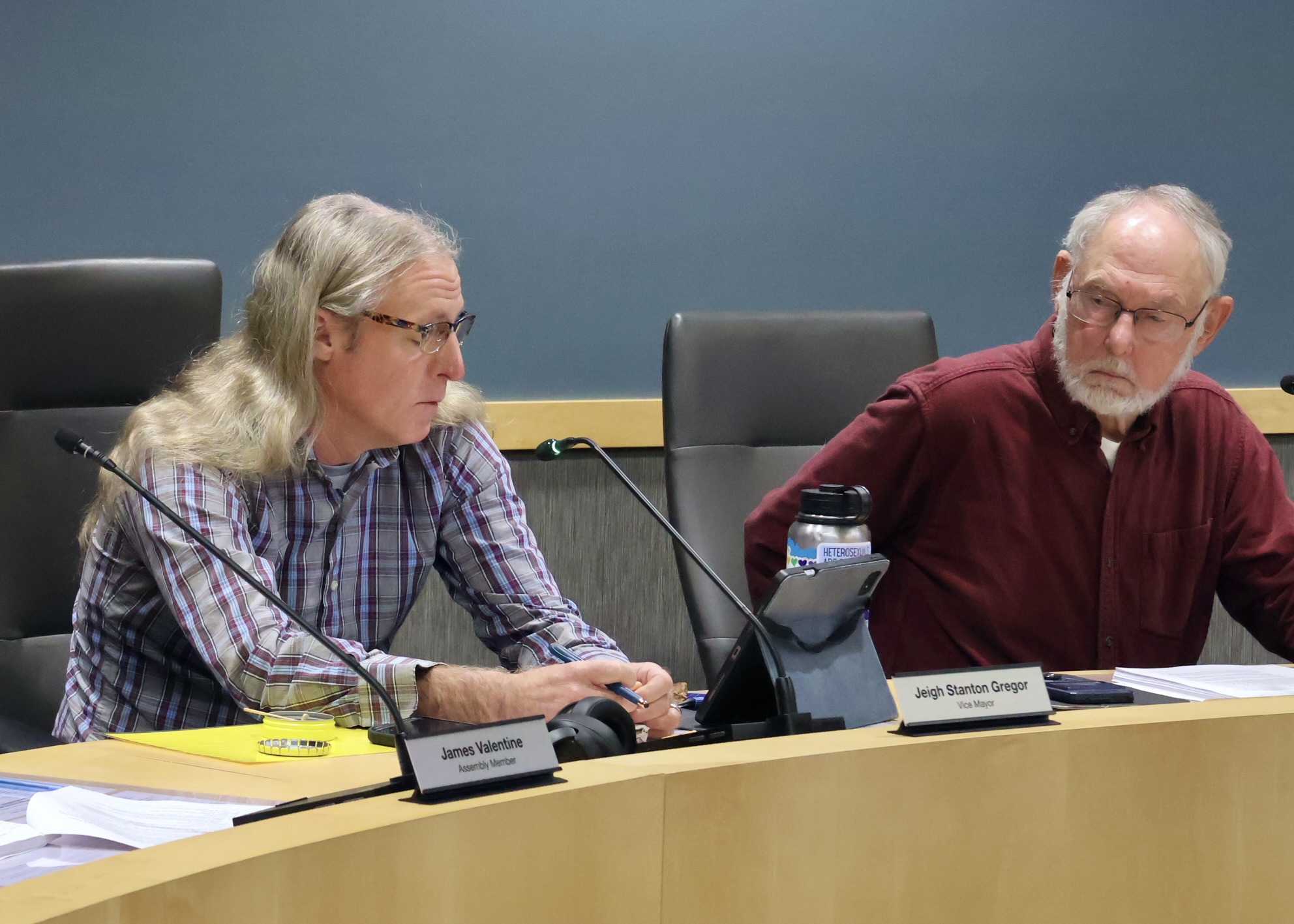
Vice Mayor Jeigh Stanton Gregor proposed the original moratorium, focusing on “certain” projects like that, to address the community’s “biggest vulnerabilities.”
Weighing in on whether to broaden the moratorium, Stanton Gregor said the change would be unnecessary.
“I think the amendment is a solution in search of a problem. I won’t be supporting it,” he said. “I don’t think it’s a necessary thing, given the protections we already have in place. My biggest concern was insulating ourselves from off-grid threats to our community.”
Mayor Bob Lynn was also against the amendment. He is the board chair of Southeast Alaska Power Agency, the wholesale hydropower supplier that specifically feeds three communities in the region. As each community has authority to make decisions about proposed projects concerning the town’s power grid, Lynn said he, too, didn’t see the point of broadening the moratorium to apply to on-grid projects.
“I’m gonna vote against [the amendment], but there’s still a lot of work to be done, and it’s not going to stop because I know that, from both Ketchikan and Wrangell’s perspective, they’re looking at large loads,” Lynn said. “All of us are going to be looking for power, and all of us are going to be looking to the future of what we can do. So I’m going to vote no, but … we have a lot of work ahead of us, no matter which way it goes.”
The Assembly approved the amendment, with Lynn and Stanton Gregor voting against.
But the Assembly agreed that there’s still more work to be done.
“I think this [amendment] kind of closes the gap. Now, there’s still going to be a ton of work to do until the moratorium expires. We can’t just put this to bed and say we’re good,” said Assembly Member Donna Marsh. “We’ve got to examine every possible scenario, so that we can respect public testimony and public opinion.”
The overall ordinance passed unanimously, 7–0, in its second reading. The measure will require one more round of Assembly approval before it can take effect.
For now, it’s too early to tell exactly what the updated moratorium will look like, as Borough staff work on a revised version before it is considered once again at the next assembly meeting, which happens Nov. 30 at 6:00 p.m.
There will be another public hearing for the proposed moratorium, as amended, during that meeting.